The fluorescent hum of the server room was the only sound as I stared at a stack of printouts, each detailing another vendor’s “quantum-resistant” solution. It’s been a long time since I believed the hype. Now, with the dust settling a bit on the whole post-quantum cryptography (PQC) noise, we’re left with two main contenders for digital signatures: lattice-based and hash-based schemes.
Look, nobody wants to get their digital pants pulled down by a quantum computer. This isn’t just some theoretical playground anymore. NIST’s got its standards out, and suddenly everyone’s scrambling to implement something that, a few years ago, most people couldn’t even pronounce. So, what’s the deal with lattice-based versus hash-based? It boils down to math, really. And math, as we all know, is where the real money gets made – or lost.
Lattice-based signatures? Think of it like trying to find your way through a ridiculously complex, multi-dimensional maze. They’re built on these things called lattices, which are basically just grids of points. The security comes from the sheer, mind-boggling difficulty of solving certain problems on these grids, like the Shortest Vector Problem (SVP) or the Closest Vector Problem (CVP). The idea is that even a massive quantum computer would choke on the complexity. CRYSTALS-Dilithium and Falcon are the poster children here, and they’re supposed to be fast. Real fast.
But here’s the kicker: lattice-based crypto isn’t just for signatures. Oh no. It’s versatile. It can do encryption, key exchange – all sorts of things. This is the Swiss Army knife approach. Naturally, the industry loves a Swiss Army knife. Fewer different solutions to integrate, fewer engineers to hire who actually understand it, and more opportunities for a company to lock you into their ecosystem.
On the other side of the ring, we’ve got hash-based signatures. These guys are the purists. They don’t mess around with fancy geometry. They’re banking on the fundamental security of one-way cryptographic hash functions, like your good old SHA-256. You know, functions that are easy to compute one way but practically impossible to reverse. Their security is tied directly to the proven hardness of these basic building blocks. They use structures called Merkle trees to authenticate multiple messages. Simple, elegant, and theoretically sound.
SPHINCS+ is the big name in hash-based signatures. And while it’s quantum-safe – very, very quantum-safe – it comes with a few… quirks. You want speed? Forget it. SPHINCS+ is reportedly about a thousand times slower to sign a message than something like Dilithium. And the signatures? They’re enormous. Think four times bigger than Dilithium. That’s a big deal if you’re moving data across a network; bandwidth isn’t free, folks.
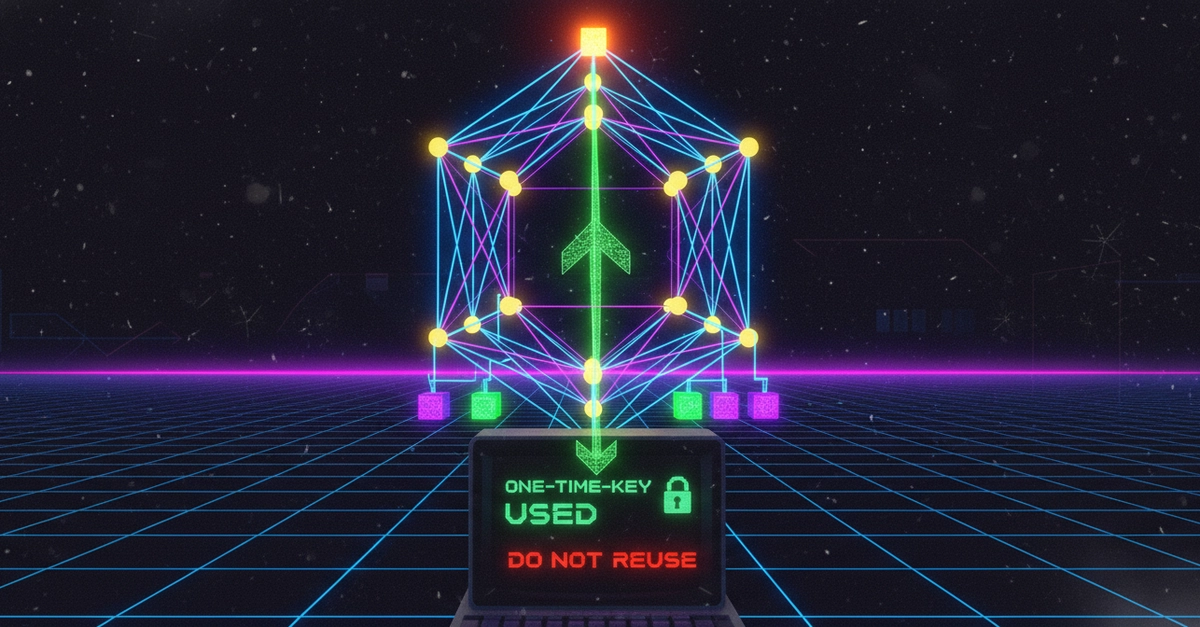
And let’s not forget the statefulness issue. Many older hash-based schemes are stateful. That means the system needs to keep a perfect, unbroken log of every single signature generated. Mess up that log, reuse a state? Poof. Your entire security scheme collapses like a cheap tent in a hurricane. SPHINCS+ is stateless, which is great for management, but that’s where you get those giant signatures and that glacial signing speed. For vendors selling cloud services or IoT devices, managing state can be a nightmare. That’s why the stateless, versatile, and fast lattice-based schemes are getting all the fanfare.
Who’s Actually Making Money Here?
This is where my cynicism kicks in. Lattice-based crypto offers a shiny, all-in-one package. It’s faster, it’s more flexible, and it’s easier to integrate into existing systems that already handle public-key encryption and key exchange. Who benefits? The companies that can build broad platforms around this math. They can sell you a whole suite of cryptographic services, all powered by the same underlying lattice problems. It’s the classic Silicon Valley playbook: build a foundation, then charge everyone to build on top of it.
Hash-based signatures, while possessing an almost infuriatingly high level of security confidence – because, let’s be honest, reversing SHA-256 is still a massive problem – are more niche. They’re fantastic for specific use cases where absolute long-term assurance is paramount, like signing critical code or in extremely high-assurance environments. Think of it as a specialized, ultra-reliable tool. The problem is, a specialized tool often doesn’t command the same kind of market share as a general-purpose one.
The choice between them is not about which is ‘better’ — it is about fit for purpose.
This quote from the original material is spot on, but let’s translate it from corporate-speak: it’s about who you’re trying to sell to and what problem you’re really solving for them. For broad deployment, for general-purpose internet security, for the stuff that needs to be fast and manageable at scale, lattice-based seems to be winning the marketing war. The sheer elegance of solving multiple cryptographic problems with one mathematical framework is too appealing to pass up for big tech vendors looking for an integrated solution.
Why Does This Matter for Developers?
If you’re a developer, this means choices. It means understanding the trade-offs. Are you building a system where tiny signatures are king, and you can tolerate slower speeds and meticulous state management? Hash-based might be your jam. Are you building a large-scale web application or a service that needs to be snappy and integrate with other crypto primitives? Lattice-based is probably going to be your default. The NIST standardization means both are becoming viable options, but the push for standardization often favors schemes that offer broader utility, which, surprise surprise, is where lattice-based crypto shines.
And that’s my unique insight: the PQC race isn’t just about cryptographic strength; it’s about market strategy. Lattice-based crypto’s versatility makes it inherently more attractive to large tech companies looking to offer comprehensive security solutions. Hash-based, while arguably more secure in its purity, risks becoming a niche player despite its impeccable security credentials. Who knows, maybe in ten years we’ll be laughing about this whole PQC kerfuffle while using quantum-resistant quantum computers.
Here’s a quick rundown to keep your head from spinning:
Lattice-Based Signatures:
- Math: Grids and tough grid-based problems (SVP, CVP).
- Speed: Generally very fast.
- Size: Moderate keys, moderate signatures.
- Versatility: High – can do signatures, encryption, key exchange.
- Management: Simpler, no statefulness issues.
Hash-Based Signatures:
- Math: Rock-solid hash functions (SHA-256) and Merkle trees.
- Speed: Slow, especially for signing.
- Size: Tiny public keys, but huge signatures.
- Versatility: Low – mostly just signatures.
- Management: Can be stateful (complex) or stateless (slow/large).
So, when you see vendors shouting about their new PQC solutions, ask yourself: is it truly the best solution, or is it just the one that’s easiest to bundle and sell? My money’s on the latter.
**
🧬 Related Insights
- Read more: Vault + Boundary: HashiCorp Reimagines SSH Access
- Read more: Tech Invoice Forge: The Offline Invoice Killer Cloud SaaS Deserves
Frequently Asked Questions**
Will these new quantum-resistant signatures replace my current ones? It’s highly probable that in the coming years, you’ll see widespread adoption of quantum-resistant signature schemes for new applications and upgrades to existing infrastructure. The transition won’t be instantaneous, but security standards are evolving rapidly.
Are hash-based signatures completely useless for everyday use? Not at all. While SPHINCS+ might be too slow and large for general web traffic, hash-based signatures remain excellent for specific, high-assurance tasks like code signing or securing firmware where efficiency is less critical than absolute, long-term security confidence.
Is one of these algorithms definitely going to be the ultimate winner? Unlikely. The post-quantum landscape is still maturing. Both lattice-based and hash-based schemes have unique strengths and weaknesses, suggesting they’ll coexist, serving different use cases within the broader cryptographic ecosystem.