The AI landscape. Everyone expected more AI tools, sure. But I don’t think many predicted this. Not just another wrapper for a large language model, but a full-blown, persistent, self-improving agent system that developers are apparently ravenous for.
Hermes Agent, birthed from Nous Research, has exploded onto the scene, a proof to a market hungry for something beyond the ephemeral conversations of typical chatbots. The data doesn’t lie: 140,000 GitHub stars in under three months, and a staggering 224 billion tokens processed in a single day on OpenRouter, surpassing established players. This isn’t hobbyist tinkering; this is serious, heavy-duty development.
The frustration of “chatbot amnesia” is palpable. We’ve all been there, painstakingly re-explaining context that the AI should have retained. Hermes Agent promises a persistent digital co-worker, one that remembers projects, learns from errors, and crucially, can run on your own infrastructure. This is the core value proposition, and the market’s reaction suggests it’s hitting a nerve.
Why is Hermes Agent Dominating GitHub Stars?
It boils down to fundamental design principles that address long-standing developer pain points. Reliability and self-improvement – capabilities that have historically been elusive in autonomous systems – are central to Hermes Agent’s appeal. Add to that its provider and model agnostic nature, freeing developers from the shackles of single-vendor lock-in. The ability to swap in hundreds of different models, even run them locally, is a significant draw.
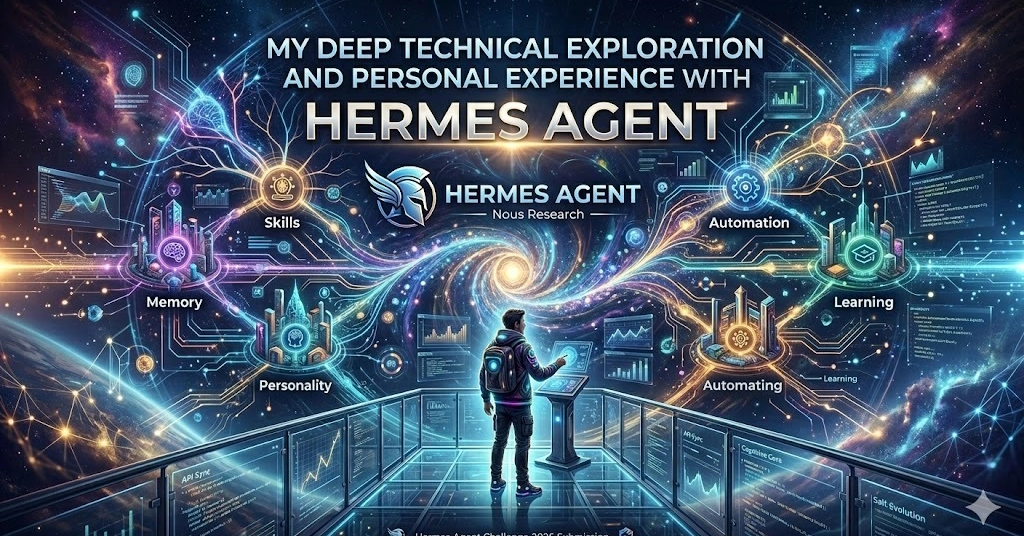
My own deep dive reveals an architecture built on five distinct pillars, a structure that elevates it far beyond mere conversational interfaces.
The first pillar: a genuine memory system. This isn’t a hacky context window. Hermes Agent maintains two small, curated text files on your hard drive – the environment facts file for learned conventions and lessons, and the user profile file for your preferences. This transparency is brilliant. You can literally open these files in a text editor and see what the AI “thinks” of you. For longer-term recall, it uses a local database with full-text search Bottom line: past conversations, cleverly sidestepping API context limits.
Then there’s the skills engine, my personal favorite. This is where the agent doesn’t just perform a task; it learns from it. When a complex, multi-tool task is executed, Hermes Agent autonomously creates a reusable skill document. The next time that task arises, the agent consults its own archived expertise rather than guessing. This is the bedrock of true AI self-improvement.
Personality as infrastructure is the third pillar. A global configuration file acts as a continuous system prompt, defining the agent’s default voice and behavior. Want a senior software engineer persona? You write it into that file, ensuring consistent behavior across sessions and devices.
Time-based automation is handled by a built-in scheduler. No complex cron jobs needed – just natural language prompts like, “Check the news every morning at nine o’clock and send me a summary.” These unattended tasks, from reports to backups, are executed in the background.
Finally, the fifth pillar is the closed learning loop. This is where the agent periodically reviews its actions, determines what information to retain in long-term memory, and refines its skills based on ongoing usage. It’s an explicit, built-in mechanism for continuous evolution.
The agent receives periodic nudges to review its recent actions. It decides what information is useful enough to persist into long-term memory and what should be forgotten. It improves its own skills during use.
This architecture represents a significant departure from the current paradigm. The market, it seems, is overwhelmingly in agreement.
Is This the End of Simple Chatbots?
Probably not entirely. Simple chatbot wrappers will always have their place for quick, disposable interactions. But for developers building complex applications, for those needing persistent state, and for anyone who values control over their AI’s infrastructure, Hermes Agent offers a compelling, and apparently, superior path.
The rapid adoption suggests that the AI development community has been waiting for an open, capable agent system. The success of Hermes Agent isn’t just about a well-designed piece of software; it’s a signal that the industry is ready to move beyond basic conversational interfaces and embrace more sophisticated, autonomous, and self-improving AI agents. The question now isn’t if these agents will become mainstream, but how quickly and which players will define the next generation of this technology.
🧬 Related Insights
- Read more: Solana Accounts: Just Database Rows With Flags
- Read more: Layoffs Killed the Ladder-Climbing Dream—Now It’s Side Hustles and Vibe Coding
Frequently Asked Questions
What exactly is Hermes Agent? Hermes Agent is an open-source, self-improving AI agent system developed by Nous Research, designed for persistence, learning, and local infrastructure deployment.
Why did Hermes Agent become so popular so quickly? Its popularity stems from its ability to act as a persistent digital co-worker, offering features like real memory, autonomous skill creation, and model agnosticism, addressing core developer frustrations with traditional chatbots.
Can I run Hermes Agent on my own computer? Yes, Hermes Agent is designed to be provider and model agnostic, allowing for local deployment on your own hardware and the use of various language models.