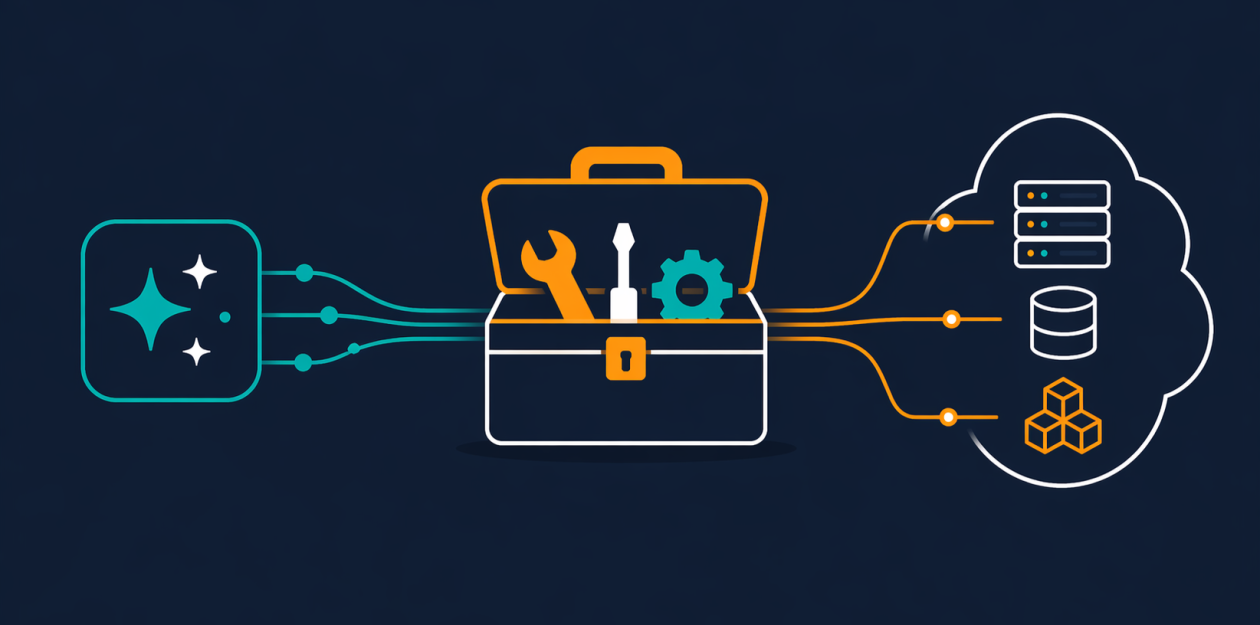
And just like that, the nebulous promise of AI agents doing serious work on AWS becomes… slightly less nebulous. The AWS MCP Server is now generally available, and frankly, it’s about time. For months, the buzz has been: how do you let these digital toddlers access a cloud infrastructure worth billions without them accidentally nuking the whole operation? This MCP Server is AWS’s answer. Not a silver bullet, mind you, but a step. A necessary one.
For years, we’ve watched AI coding assistants churn out code that’s just… wrong. Not subtly wrong, but fundamentally clueless about the current state of AWS. Their training data is ancient history, a digital fossil record. So, when they’re asked to build something, they default to the sledgehammer of the AWS CLI instead of the finesse of CDK or CloudFormation, and their IAM policies? A shotgun blast, designed for maximum access and minimal security. The result? Infrastructure that might work on a demo, but would make any production engineer weep.
The MCP Server aims to fix this with a constrained set of tools that, crucially, don’t eat up your AI model’s precious context window. The call_aws tool is the main event here – it’s supposed to let agents hit over 15,000 AWS API operations using your credentials. And they promise that new APIs will be supported within days. Days! We’ll see.
Now that it’s generally available, they’ve layered on some new bits. IAM context keys, which means you can get more granular with permissions without needing a separate IAM user just for the server. Documentation retrieval is also now unauthenticated – a small win, but a win nonetheless. And they claim to have trimmed down token usage per interaction. This, for complex, multi-step workflows, is actually a big deal if it pans out.
Here’s the thing that actually caught my eye: the run_script tool. This lets the agent write tiny Python scripts that execute server-side in a sandbox. It inherits your IAM rights but can’t touch the network. So, it can process data without opening up your whole digital pantry. Chaining multiple API calls and crunching results in one go? That’s a significant efficiency boost. It’s the difference between asking for ingredients one by one and getting a fully prepared meal.
And the biggest shift? Moving from Agent SOPs to ‘Skills.’ These are curated guides for common agent pitfalls. Think of them as guardrails, keeping agents on track with best practices. AWS service teams are supposedly contributing and maintaining these, which, in theory, means a shorter, more predictable tool list and less AI hallucination. It sounds good. Let’s hope it actually works that way.
For the enterprise types, there’s a clear separation of powers. You can use IAM policies to tell the MCP Server to, say, only read data, while a human user can make the actual changes. CloudWatch metrics under the AWS-MCP namespace will let you watch this AI activity separately from human actions – handy for auditing. CloudTrail, naturally, captures everything. It’s the veneer of control we’ve all been waiting for.
Can AI Agents Actually Build Production-Ready AWS Infrastructure?
The promise is simple: make AI agents useful beyond generating boilerplate code. Take the example they offer: asking an AI model (Claude Code with Opus 4.6) about storing embeddings on S3. The model, with its knowledge cutoff in May 2025, completely misses the newly released Amazon S3 Vectors. It gives generic answers, essentially guessing based on old data. This is the core problem the MCP Server aims to solve – bridging the knowledge gap.
When the MCP Server is invoked, it’s supposed to use the search_documentation and read_documentation tools to pull current info. This is where the magic should happen. If the agent can access up-to-date docs, it can theoretically provide accurate, relevant answers, like using S3 Vectors directly. This moves AI from a helpful assistant spitting out potentially outdated info to a more capable, informed participant in the development process.
The AWS MCP Server is part of the Agent Toolkit for AWS, a suite of tooling that includes the MCP Server, skills, and plugins that help coding agents build more effectively and efficiently on AWS.
But here’s the kicker, the skeptical veteran’s peek behind the curtain. Who is really making money here? AWS, obviously. They’re selling more cloud services, and making it easier for AI to consume them. Developers? Potentially. If this speeds up development cycles, reduces errors, and lowers costs, then yes. But the real winners are the companies building these AI agents and coding assistants that can now credibly claim to work with complex cloud environments. They’ve just been handed a much bigger playground, and the keys to the AWS kingdom, albeit through a very carefully constructed fence.
This isn’t just about giving agents access; it’s about making that access secure and audited. That’s the enterprise play. It’s about moving AI from the experimental sandbox into the production environment. And that’s where the real cash is.
What Does AWS MCP Server Actually Mean for Developers?
It means less manual grunt work, theoretically. Instead of an agent spitting out IAM policies that need days of review, it might produce something close to production-ready. It means agents that can actually query current documentation, saving you the time of Googling and cross-referencing old Stack Overflow answers. It means faster iteration cycles because the agent isn’t just guessing based on stale data.
However, don’t expect AI agents to suddenly become sentient cloud architects overnight. They’ll still need human oversight. These tools are designed to augment, not replace, human developers. The run_script tool, while powerful, is still running server-side with your permissions. A bug in an agent-generated script could still have significant consequences.
Ultimately, it democratizes access to complex AWS operations for AI. It’s a recognition that AI is no longer just for simple text generation. It’s becoming a tool for interacting with real-world, complex systems. The MCP Server is the bridge. The question is, how stable is that bridge, and who’s going to be the first to fall off?
🧬 Related Insights
- Read more: BlackSwanX Unleashes 374 Fighting AI Agents to Hunt Market Crashes
- Read more: CS Student Ditches AI Coding Crutch — Builds Real Backend Skills in Weeks
Frequently Asked Questions
What does AWS MCP Server do? It provides AI agents and coding assistants with secure, authenticated, and audited access to AWS services through a controlled set of tools, enabling them to build and manage cloud infrastructure more effectively.
Will this replace my job as a developer? No, the AWS MCP Server is designed to augment developer productivity, not replace developers. It aims to automate repetitive tasks, provide up-to-date information, and improve efficiency, allowing developers to focus on more complex and strategic work.
How secure is the AWS MCP Server? The server uses IAM credentials for authentication and authorization, allowing for fine-grained control over agent permissions. It also provides audit trails through CloudWatch metrics and CloudTrail logs for monitoring and compliance.