The other day, I asked a popular AI agent to debug a Python memory leak. It spat out a decent answer. Then, the next day, I asked the exact same question. It responded as if it had never encountered the problem before. Zero recall. Zero learning. Pure amnesia in a chat interface.
That’s not an agent. That’s a glorified autocomplete. And frankly, it’s insulting.
I’m done renting intelligence. So I spent a month running Hermes Agent on a $5 Digital Ocean droplet. This isn’t some marketing fluff. This is the unvarnished truth about what happens when you give an open-source agent the space to actually learn, and why I’m not going back to the pay-by-the-memory-loss subscription model.
Forget dependency hell. Installation was shockingly painless.
curl -fsSL https://raw.githubusercontent.com/NousResearch/hermes-agent/main/scripts/install.sh | bash
hermes model # Choose your provider
hermes chat # Start talking
Nine minutes. From zero to a running, self-hosted agent. No annoying upgrade pop-ups. No quiet data harvesting. No hoops to jump through just to get started. Just your agent. On your server. Under your control.
No more waking up in a cold sweat, wondering if your cloud provider decided to yank a feature or change its terms of service mid-project. Freedom.
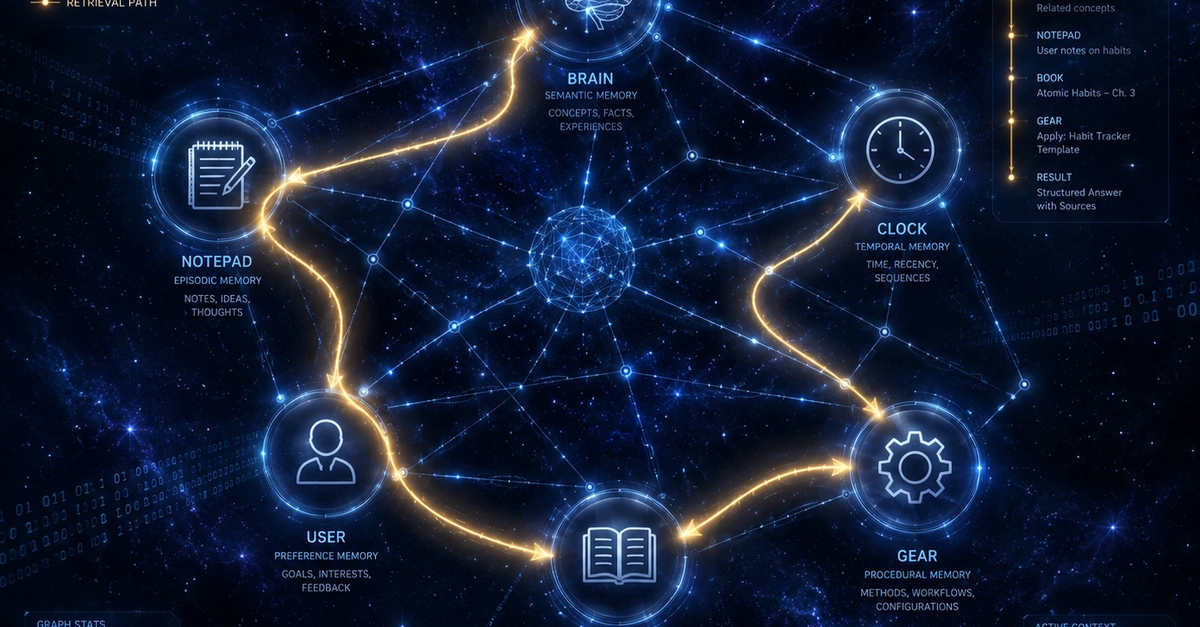
What sets Hermes apart isn’t some gargantuan model size, you see. It’s the memory architecture. Most agents cap out at Layer 1—the ephemeral context window. Hermes, on the other hand, constructs five distinct layers of memory:
Layer 1: Working memory. This is your standard, current conversation buffer. Every agent has this.
Layer 2: Procedural Skill Docs. These are Markdown files, automatically generated in ~/.hermes/skills/, detailing steps, tools, and reasoning for recurring tasks.
Layer 3: Contextual Persistence. Think session summaries, project context, all stored in a SQLite database with full-text search capabilities.
Layer 4: Long-term Semantic Memory. This is where the agent builds a model of you—your preferences, your style, your recurring patterns.
Layer 5: GEPA Skill-Learning Loop. Roughly every 15 tasks, the agent reviews its performance, refining existing skills or even creating entirely new ones.
By week two, my Hermes agent wasn’t just recalling facts. It was actively improving how it worked with me.
| Without Hermes | With Hermes (after 30 days) |
|---|---|
| Re-explain your preferences every session | Agent adapts automatically |
| Repeat complex workflows manually | One prompt triggers a saved skill |
| No memory of past mistakes | Learns what not to do |
| Cloud-hosted, data at risk | Self-hosted, full control |
| $0 now, unpredictable later | $6.47/month, predictable |
I pointed Hermes at a couple of GitHub repos to monitor. By week one, it was churning out basic summaries. Week two? It started grouping pull requests by theme, intelligently adding deployment timestamps I always need, and even applying my preferred formatting. All without me asking. It just learned.
After a few days of this, I peeked into its skill directory:
ls ~/.hermes/skills/
# Output:
# github-pr-summary.md
# daily-news-brief.md
# csv-analysis-template.md
By day ten, I could simply say, “do that analysis thing from Tuesday,” and with zero additional context, it would pull the correct skill and adapt it. This is the difference between mere automation and genuine autonomy.
Now, let’s be brutally honest. It’s not perfect. The reasoning depth has its limits when you throw it highly nuanced architectural decisions. You’ll also encounter silent failures—like a misconfigured GitHub token scope—that waste precious debugging time. Sometimes, there’s a bit of context bleed between unrelated tasks, and its skill generation can occasionally over-engineer simple one-off tasks. These are, however, fixable limitations on my infrastructure. I’d rather wrestle with a system I own than surrender my workflow to the whims of a corporate giant.
The actual costs are laughably low:
Server: $5/month API calls (via OpenRouter): $1.47 Total: $6.47/month
And the gains? Forget abstract metrics. We’re talking a rough 60% reduction in time spent on repetitive tasks. We’re talking a compounding colleague, not a fickle vending machine. We’re talking complete data ownership and zero risk of sudden, unexpected deprecation. At my consulting rate, the time saved alone easily justifies thousands of dollars in value within a single month.
Running Hermes locally fundamentally changed how I interact with AI. I started giving it harder problems. I trusted it with more sensitive context. I learned from its failures instead of immediately ditching it when something inevitably went wrong. The AI that knows you best isn’t the one with the biggest model. It’s the one that’s been diligently working with you the longest, on infrastructure you actually control.
Do This If:
✅ You’re thoroughly sick of tools changing the rules mid-game. ✅ You prioritize data privacy and the power of long-term compounding. ✅ You think in terms of infrastructure, not just fleeting tools.
Start Elsewhere If:
🔁 You just need a quick answer today (and that’s perfectly fine; cloud chatbots are built for that). ❌ You absolutely require enterprise-level SLAs or guaranteed 24/7 support. ❌ You’re the type of person who switches tools every single month anyway.
Here’s a no-excuses way to see this for yourself:
Spin up the cheapest VPS you can find (seriously, a $5/month droplet will do). Install Hermes:
curl -fsSL https://raw.githubusercontent.com/NousResearch/hermes-agent/main/scripts/install.sh | bash
hermes model
hermes chat
Give it one real, soul-crushing, repetitive task you loathe (think daily PR summaries, tedious CSV analysis, or the dreaded release-note triage). Then, just watch. See if it starts to feel less like a tool and more like an extension of yourself. A cheap, incredibly well-trained extension.
Why You Should Care About Self-Hosted AI Memory
This isn’t just about saving a few bucks. It’s about a fundamental shift in how we interact with AI. For years, we’ve been tethered to cloud providers, subject to their pricing changes, their feature deprecations, and their opaque data policies. Hermes offers an escape hatch. It democratizes AI by putting genuine intelligence and memory into the hands of individual developers and small teams, all for the price of a cheap server and a bit of curiosity.
Think about it: your AI agent learning your coding style, your project management nuances, your documentation preferences. That’s not just convenience; that’s a productivity multiplier that grows over time. It’s the difference between a disposable tool and a digital apprentice. And the fact that it’s open-source means you’re not beholden to anyone’s roadmap but your own.
🧬 Related Insights
- Read more: 30,000 npm Packages a Day: GitHub’s Fight to Stop Supply Chain Poisoning
- Read more: Sentinel’s Fraud API Exposes Antidetect Browser Tricks
Frequently Asked Questions
What does Hermes Agent actually do? Hermes Agent is an open-source AI agent designed for self-hosting. It focuses on building persistent memory and learning capabilities, allowing it to remember past interactions, adapt to your preferences, and refine its skills over time, all running on your own infrastructure.
Is Hermes Agent free? The Hermes Agent software itself is free and open-source. The costs involved are for the infrastructure it runs on (e.g., a $5/month VPS) and API calls to underlying language models (which can be kept very low).
Will this replace my job? No AI tool, especially one like Hermes that focuses on augmenting productivity with memory and learning, is likely to “replace” a human job in the near future. It’s designed to make you more efficient, freeing you up for more complex, creative, and strategic tasks. Think of it as a powerful assistant, not a replacement.