No-code for hackathons.
Because why not add another buzzword to the pile? Smart HackOS. It’s pitched as an all-in-one system. For the entire hackathon lifecycle. Sounds ambitious. Sounds like a recipe for disaster.
Organizing these things is already a tangled mess. You’ve got registrations, team formation, project submissions, a parade of judges. Spreadsheets are king. Messaging apps are the chaos engine. Standard event platforms? Too rigid. Building from scratch? Too much work for a weekend festival of coding.
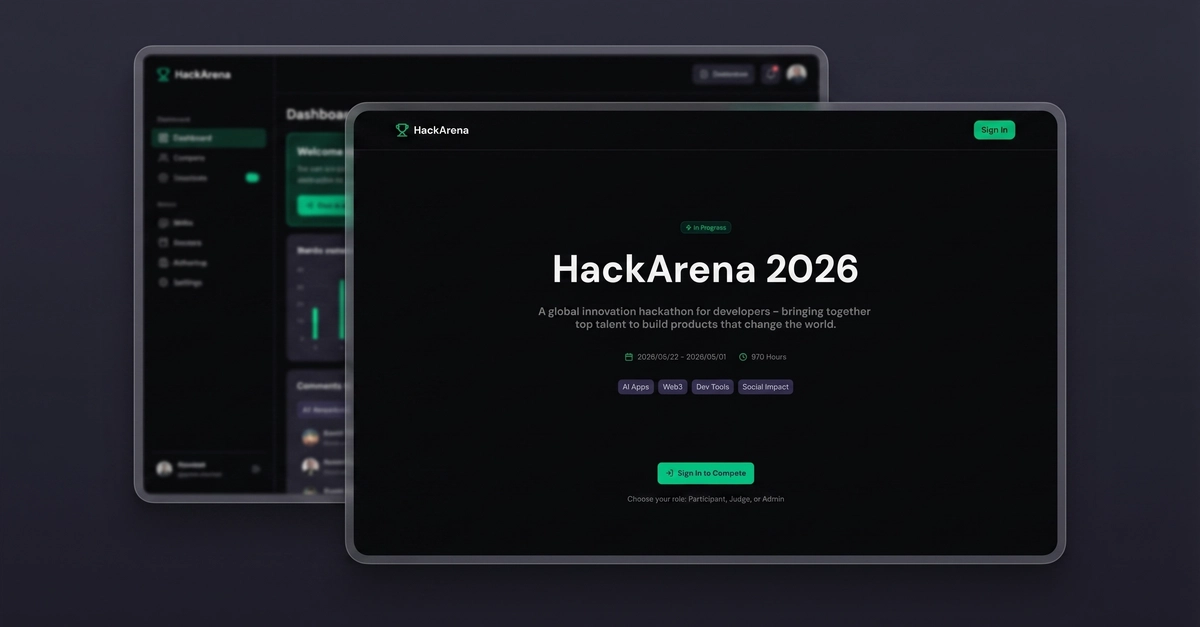
So, Momen steps in. A no-code platform. Smart HackOS is their demo. A system built entirely on Momen. The promise: scalable, custom event management. With strict data consistency. All visual. No code. Right.
Does Visual Logic Hold Up Under Pressure?
Smart HackOS aims to replace the spreadsheets. The disparate portals for hackers, mentors, and judges. It consolidates everything. Developer communities, corporate innovation labs, university event organizers—this is supposedly for you. If you like things centralized, that is.
Building this isn’t trivial. You need a database. A relational one. To map users to teams. Teams to projects. Momen claims to do this visually. Speed of no-code. Stability of traditional code. A bold claim.
Software is infrastructure, not just a slideshow. Momen allows you to architect complex relational data and precise logic visually, ensuring you have the speed of no-code with the stability of traditional code.
And here’s what it allegedly does:
- Authentication: Separate logins for hackers, judges, admins. Judges get special invite codes. Because security theater is important.
- Data Management: Create teams. Invite members. Save projects. Supports multiple file types and links. Standard stuff, really.
- Notifications: Automated alerts. Team acceptances. Submission deadlines. Judging results. Crucial for preventing last-minute panic.
- Structured Judging: Judges submit scores. Via a dedicated workflow. Ensures everyone follows the script.
- APIs: Export scores. Connect to Discord or Slack. For that authentic developer community feel.
The ‘Backbone’ and the ‘Brain’
The data model is PostgreSQL. Momen’s native PostgreSQL, naturally. It uses one-to-many and many-to-many relationships. Tracks to teams. Rubrics to scores. Identities are isolated. Foreign keys prevent orphaned data. Automated cleanup for empty teams. Sounds… standard. Like any decent database setup.
Backend logic uses something called Actionflow. ACID-compliant operations. Team creation with random invite codes. Retry logic for collisions. Judging validation to prevent incomplete submissions. Automated ranking using custom scripts. Pull scores, calculate weighted averages, update leaderboards. All the usual suspects. Done visually, apparently.
The interface? A visual editor. Conditional Views. The dashboard changes based on user role. Judges see grading rubrics. Hackers see submission forms. Logic variables control module visibility. Organizers don’t need to republish to open judging. Smart. Or just standard feature toggling.
Scalability. Modularity. Real-time capability. They boast 5,000 requests per second. Clone and reuse the platform. Dynamic leaderboards. Real-time updates. All the buzzwords are here.
RBAC is key. Role-Based Access Control. Segregates data between judges and participants. A must-have. Not a differentiator.
Building this with traditional code? Months. Months and months. Hiring a team? $15,000 to $50,000. Momen says their MVP takes 100 hours. A predictable, resource-based pricing model. Which means you pay them money.
The Skeptic’s Take
Here’s the thing. Hackathons are inherently chaotic. They’re about rapid iteration. Improvisation. Sometimes, beautiful messes. Can a strictly defined, visually-architected system capture that spirit? Or does it just paper over the cracks? The promise of no-code is seductive. It democratizes development. It speeds things up. But it also introduces its own set of constraints. Rigidity. Debugging visual logic can be a special kind of hell. You lose the direct line to the code. The ability to breakpoint precisely. To understand exactly what’s happening.
My unique insight? This isn’t about replacing coding. It’s about augmenting event management. It’s a tool. A very slick, well-packaged tool for a very specific problem. The danger is the marketing hype. The suggestion that this is somehow a better way to build software, not just a faster way to build this specific kind of software. Like calling a high-end coffee machine a revolution in beverage creation. It makes a decent latte, sure. But it doesn’t reinvent coffee.
Will it manage a hackathon? Probably. Will it handle the edge cases? The unexpected pivots? The sheer human factor that makes hackathons memorable? That’s the question.
There’s also the Momen dependency. What if Momen pivots? What if their pricing explodes? You’re tied to their ecosystem. Building with traditional code offers portability. Freedom. The ability to adapt. This offers convenience. For a price.
It’s an interesting experiment. A proof to the power of visual development platforms. But let’s not pretend it’s a new paradigm for software architecture. It’s a highly efficient way to build a specific, repeatable application. For a very specific use case. And that’s fine. Just call it what it is.
🧬 Related Insights
- Read more: The Hidden Chaos of Redis Upgrades on AWS — And the Dashboard That Tames It
- Read more: Google Antigravity IDE’s Hidden Quota Traps: 3 Months of Crash Data Reveals the Fix
Frequently Asked Questions
What is Smart HackOS?
Smart HackOS is a no-code platform designed to manage all aspects of a hackathon, from attendee registration and team formation to project submissions and judging.
How much does it cost to build with Momen?
Momen’s pricing is resource-based. Building a complex system like Smart HackOS with Momen is presented as significantly cheaper than hiring a traditional development team, with costs tied to usage rather than upfront development fees.
Can Smart HackOS be customized?
Yes, Smart HackOS is built on Momen, a visual development platform that allows for extensive customization of data models, backend logic, and user interfaces without writing traditional code.