The glow of the monitor flickered across a half-eaten bag of chips. That’s where many tech epiphanies, or at least honest realizations, begin.
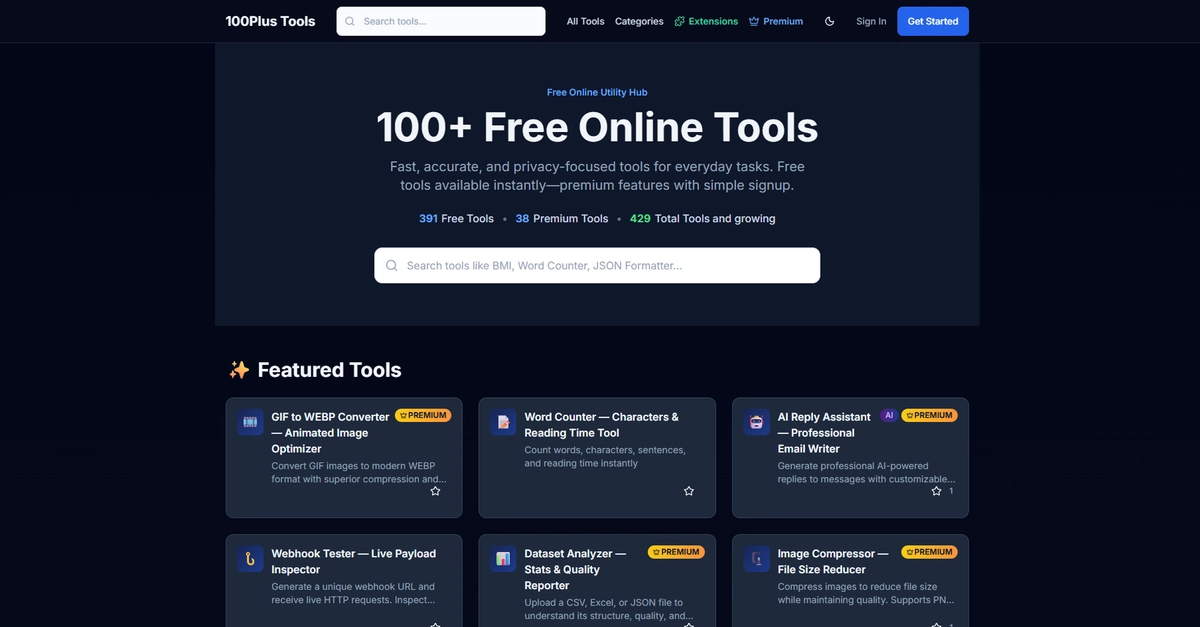
It’s easy to get caught up in the Silicon Valley fantasia, isn’t it? The endless cycle of buzzwords, the promises of changing the world with an app that essentially just rearranges pixels. But somewhere along the line, a developer wading through the digital detritus realized something profoundly simple: the generic audience he was aiming for with “100Plus Tools” wasn’t the one showing up. They weren’t flocking for another run-of-the-mill text converter or a basic calculator. No, the real users, the ones actually clicking around and coming back, were developers, DevOps folks, and QA engineers. People who needed their digital plumbing to just work.
And so, the pivot. From a sprawling, unfocused grab-bag of utilities to a laser-focused collection of browser-based tools designed for the nitty-gritty of development workflows. We’re talking APIs, data transformation, the glorious (and often painful) world of JSON, security helpers, and the always-fun dance of debugging webhooks. It’s a collection that’s ballooned to over 420 tools, and the numbers clearly indicate where the real need lies. This isn’t about chasing shiny new trends; it’s about providing genuine utility.
What’s a developer to do when the tool you need isn’t in your browser tab? Apparently, you build it into the browser itself. This evolution led to some nifty browser extensions. We’ve got API Detective, which does exactly what it sounds like – it spies on the hidden API calls websites are making, so you can figure out what’s going on under the hood without much fuss. Then there’s the API Error Decoder, which takes those cryptic 4xx and 5xx error messages and spits out something resembling actual English. Anyone who’s stared blankly at a server error will tell you that’s a godsend. And for those who want to cut down on the browser tab clutter, DevTab offers a cleaner new tab page with quick access to essential developer tools and shortcuts.
The Realization: Developers still just need fast, lightweight, focused tools that remove daily friction. They need visibility into data, fast encoding helpers, and solid debugging workflows that load instantly and don’t track their inputs.
This is the part that always makes me chuckle, and frankly, roll my eyes a bit at the broader industry. While everyone else is shouting about AI-powered everything, building models that can write poetry or generate sentient cats, the fundamental truth is that developers still need the basics. They need tools that are fast, private, and solve specific, recurring pain points. It’s the digital equivalent of a carpenter needing a reliable hammer and a sharp saw, not a robot that can paint the house and also tell jokes.
This strategic shift away from chasing the zeitgeist and toward building a truly useful developer ecosystem isn’t just smart; it’s a necessary correction. In an industry often infatuated with novelty, a commitment to solid, functional, privacy-conscious tools is a powerful differentiator. The real money, as always, is made by solving problems people actually have, not problems they’re told they should have.
It’s still a work in progress, with daily code updates and a constant push for improvement. The creator is actively seeking feedback, which is refreshing.
The Data Doesn’t Lie, Does It?
Look, we’ve all seen the startups. The ones with the slick pitch decks and the grand pronouncements about disrupting X, Y, and Z. They parade their user growth metrics, their impressive-sounding feature lists, all while the actual revenue numbers remain stubbornly elusive. It’s a classic Silicon Valley ballet: hype the product, build a community, and hope the money tree sprouts eventually. But here, the data itself became the strategist. The 100Plus Tools project started broad, a digital jack-of-all-trades, but the user analytics told a clear story. The vast majority of the traffic wasn’t from casual browsers or people looking for a quick conversion; it was from engineers, developers, and QA professionals. They were the ones returning, the ones digging into the more specialized utilities. This wasn’t just a trend; it was a clear signal that the market for generalized web tools was saturated, but a curated, developer-centric toolkit was a wide-open highway.
This forced pivot is a valuable lesson for anyone building digital products. The allure of chasing broad appeal can often blind creators to the specific, unmet needs within niche communities. Developers, in particular, are a discerning audience. They value efficiency, privacy, and tools that directly address their daily frustrations. When you can provide that, you don’t just get users; you get loyal advocates.
Why Are Simple Dev Tools Still a Big Deal?
The prevailing narrative, especially in the last year or two, has been dominated by the rise of AI. Generative AI, large language models, AI-powered development assistants – the buzz is deafening. It’s easy to get swept up in the idea that every tool needs to be infused with some form of artificial intelligence to be relevant. But the data from 100Plus Tools suggests a more grounded reality. Developers, despite the AI fanfare, still crave fundamental utility. They need tools that are fast, reliable, and, crucially, respect their privacy. The idea that a browser extension or a web app can simply “spy” on API calls or decode error messages without a convoluted setup is incredibly appealing. These aren’t necessarily “revolutionary” features in the AI sense, but they are practical solutions that save time and reduce friction. And for the people writing the code, that’s often more valuable than an AI that can write a haiku about their code.
It’s a reminder that even in an era of advanced computation, the most effective tools are often the ones that simplify complexity, not just automate it. The focus on privacy, speed, and direct problem-solving is a proof to the enduring need for well-crafted, human-centric developer utilities. Who’s making money here? The ones who can reliably provide those solutions, stripping away the fluff and delivering pure, unadulterated functionality. That’s a business model that, thankfully, doesn’t require a PhD in machine learning.
What is the one utility tool you use daily that you wish were faster or ad-free? Are there specific formatting, network, or API debugging pain points you face that are missing a dedicated tool? Check out 100Plus Tools and let your thoughts be known.