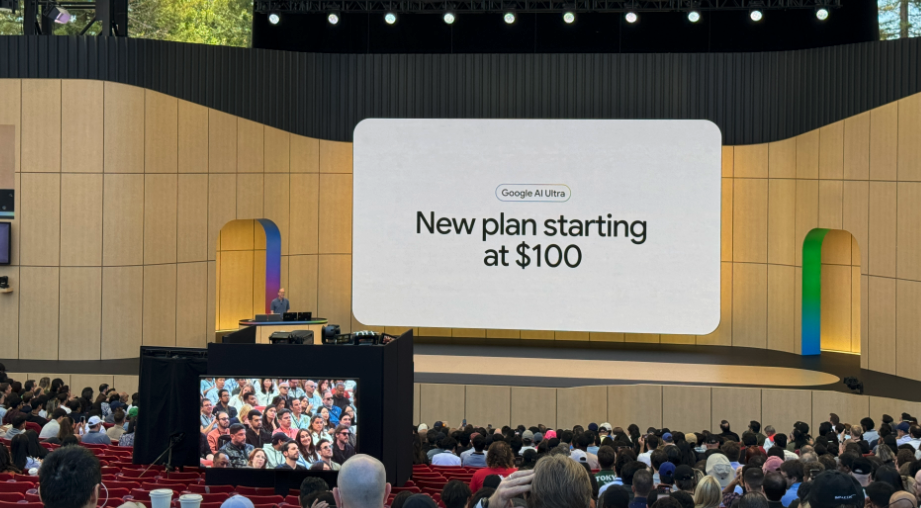
Google AI Ultra just got a whole lot cheaper — and more accessible. On Tuesday, the tech giant unveiled a new $100-per-month AI Ultra plan, slotting neatly between its existing $20 and $200 tiers. Even more striking: the top-tier AI Ultra plan, previously $250, has been slashed to $200, a rare move in the current AI market where prices are generally climbing. This isn’t just a pricing adjustment; it’s a clear signal of a maturing AI market, one where differentiation is key and broad access is becoming paramount.
The $100 AI Plan: A Familiar Price Point
If the new $100 price tag feels familiar, that’s because it is. Google is now squarely in lockstep with major rivals like OpenAI and Anthropic, all of whom now offer a $20/month, $100/month, and $200/month subscription structure. There’s also Google’s $8/month AI Plus plan, mirroring OpenAI’s cheapest offering. This homogenization of pricing suggests a common understanding of what developers and power users are willing to pay for advanced AI capabilities.
But Google isn’t just playing the price game. The company emphasizes that its higher-tier plans offer access to more exclusive products than competitors. The new $100/month plan, for instance, promises 5x higher usage limits within Google’s Antigravity development platform and the Gemini consumer app. Power users also snag “priority access to Google Antigravity and 20TB of cloud storage.” And for those who appreciate a good soundtrack to their coding sessions, the plan bundles in a YouTube Premium individual subscription — a surprisingly thoughtful perk for the AI-dev set.
AI Ultra subscribers, across both the new $100 and the discounted $200 tiers, will also be among the first to get their hands on Google’s latest AI agents: Gemini Spark, a 24/7 AI companion, and Gemini Omni, a cutting-edge multimodal model. This race to deploy the newest, most capable AI models is only intensifying.
Goodbye Prompts, Hello Compute
Perhaps the most significant underlying shift is Google’s move away from strict prompt limits to a “compute-used” model. Like its competitors, Google is now metering access based on the actual computational resources consumed by a user’s requests. This means the complexity of your prompts—whether it’s a simple text query or a demanding video analysis—directly impacts your usage. Google argues this is a “better way to allocate limits” because a basic text prompt requires far less compute power than, say, generating complex code or analyzing visual data.
These compute-based limits will reset every five hours, with a weekly cap. And in a move that’s becoming standard practice, once users hit the ceiling on flagship models, they’ll be automatically shunted to smaller, less resource-intensive models instead of being cut off entirely. For those who still need peak performance beyond their subscription benefits, the option to pay per-token API fees for continued access to the largest models remains.
The Data Suggests a Market Maturation
Let’s be clear: this isn’t just about Google offering more for less. It’s a data-driven recalibration of a burgeoning market. The fact that Google is actively cutting the price of its premium tier, rather than raising it or maintaining it at $250, suggests an analysis of market penetration and adoption rates. The initial land grab for early adopters might be over; now, the focus shifts to sustained engagement and broader market capture. The $100 tier acts as a crucial on-ramp, widening the funnel for developers who might have found the $200 tier too steep for exploring advanced features.
This competitive pricing and feature parity across major AI providers also indicates a healthy dose of skepticism within these labs themselves regarding long-term pricing strategies. The initial premium pricing was likely a test, a way to gauge demand and fund rapid development. Now, with established usage patterns and a clearer understanding of operational costs relative to revenue, companies are finding a more sustainable — and dare I say, sensible — price point.
Why This Matters for Developers
For developers, this is unequivocally good news. The reduction in price for top-tier access and the introduction of a mid-tier option democratize access to powerful AI tools. It means more experimentation, more innovation, and a faster feedback loop for building the next generation of AI-powered applications. The compute-based model, while potentially more complex to track initially, offers a more granular and potentially fairer way to consume resources. It rewards efficiency and penalizes outright abuse, aligning incentives better than simple prompt caps.
The inclusion of YouTube Premium is a smart, albeit perhaps cynical, nod to the realities of developer workflow. Those endless tutorial binges are a significant part of how many learn and stay updated. By bundling it, Google is not just providing AI tools; it’s attempting to embed itself more deeply into the developer’s entire digital life. It’s a subtle, but effective, play for user stickiness. The question is, will this race to the bottom on price and the feature-matching spree ultimately stifle true innovation, or will it simply broaden the base upon which it can be built?
🧬 Related Insights
- Read more: Claude Code’s 30-Minute Feature Factory: The Workflow That Outpaces Solo Devs in 2026
- Read more: System Design: Why It Beats Coding (For Real)
Frequently Asked Questions
What does Google’s new $100 AI Ultra plan include?
The $100 AI Ultra plan offers 5x higher usage limits in the Antigravity development platform and Gemini consumer app, priority access to Google Antigravity, 20TB of cloud storage, a YouTube Premium individual plan, and early access to Gemini Spark and Gemini Omni. It operates on a compute-used model.
Why is Google cutting the price of its top AI plan?
Google is cutting the price of its $250 AI Ultra plan to $200, which suggests a strategic market adjustment to attract more users and remain competitive as the AI market matures. It’s a move to increase adoption and engagement by making premium access more affordable.
How does the new ‘compute-used’ model differ from old prompt limits?
The ‘compute-used’ model, which Google is adopting, bases usage limits on the computational resources consumed by a prompt (complexity, features, length). This replaces older daily prompt limits, which were a less nuanced measure of resource consumption and could be gamed more easily. Google claims it’s a fairer allocation method.