Has the government finally stopped talking about AI and started doing something with it?
Look, we’ve all heard the breathless pronouncements. AI is going to change everything. For years, it felt like we were stuck in a perpetual AI demo reel – fascinating glimpses of the future, sure, but rarely translating into tangible, widespread change. Well, strap in, because the ground is shifting. We’ve officially entered what Google Public Sector CEO Karen Dahut calls the “agentic era,” and the proof is surfacing not in Silicon Valley labs, but in the very agencies tasked with keeping our nation running and its citizens safe.
This isn’t just about more efficient forms or faster email searches. This is about a fundamental platform shift, akin to when the internet itself transitioned from an academic curiosity to an indispensable utility. These AI agents, empowered by platforms like Google Workspace with Gemini, are becoming the new workhorses, the unseen gears in the machinery of government. The question Dahut poses – “what creates impact?” – is the one these agencies are now demonstrably answering.
The DOT’s Speedy Digital Overhaul
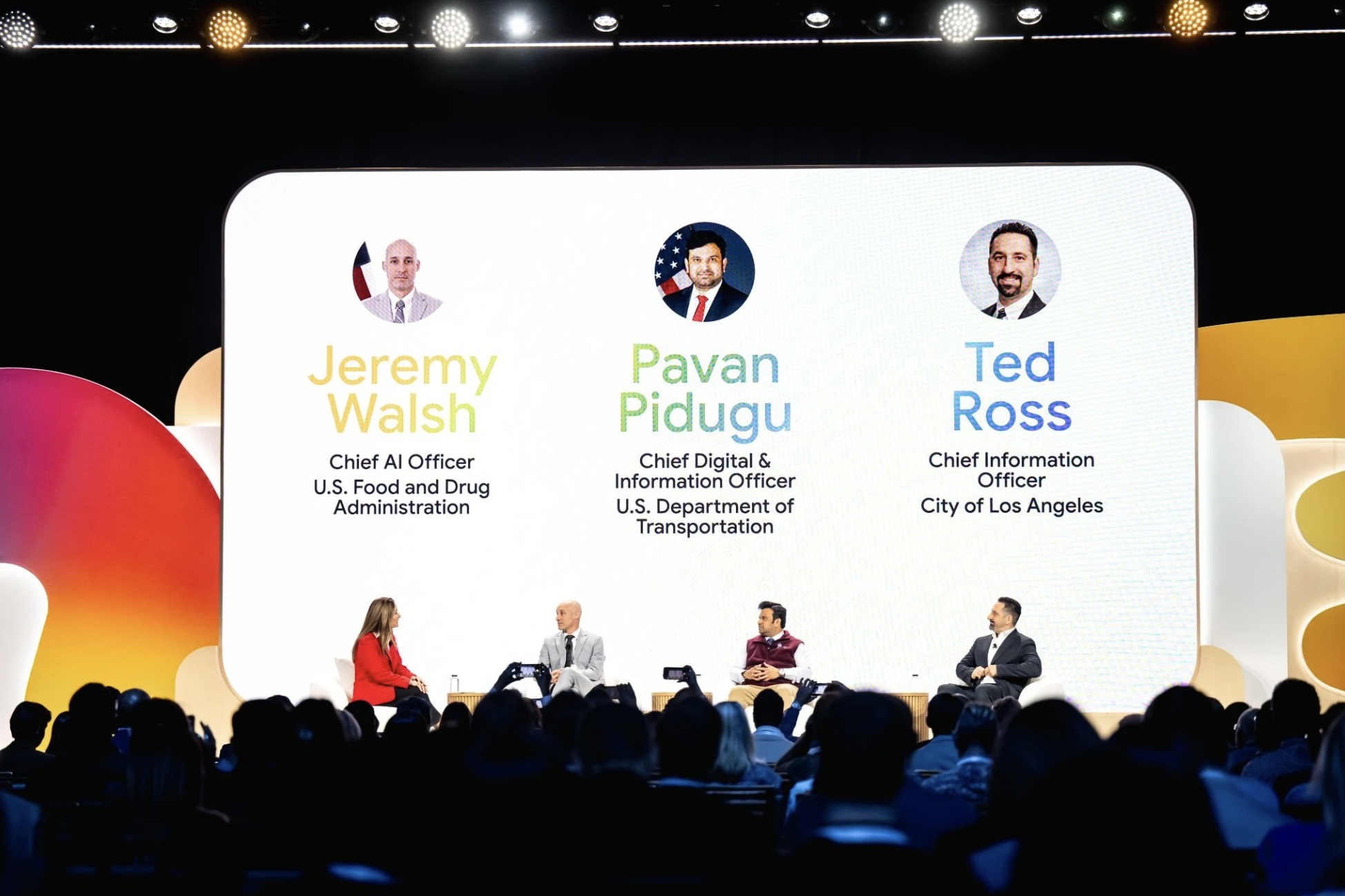
Pavan Pidugu, Chief Digital and Information Officer at the U.S. Department of Transportation, dropped a statistic that’s borderline unbelievable: they spun up a production environment with Google Workspace in just twenty-two days. Twenty-two. Days. Think about the glacial pace of government IT projects. This isn’t just a win for speed; it’s a win for sanity. In less than six months, they migrated over a billion emails. That’s not just moving data; it’s retooling an entire workforce, ditching legacy systems that probably felt like they were built in the stone age, and doing it at a pace that would make many private sector companies blush. The payoff? A stronger, safer transportation network.
FDA: Accelerating Life-Saving Treatments with AI
Jeremy Walsh, the FDA’s Chief AI Officer, is tackling a challenge that directly impacts human lives: getting life-saving drugs to market faster. The traditional drug development cycle can be a decade-long marathon. Now, using agentic AI, the FDA can analyze candidate data against massive historical datasets in mere minutes. This isn’t just shaving off time; it’s potentially shaving years off the process.
By using AI agents to move the agency toward a real-time regulatory environment, the FDA is compressing decades-old workflows.
That 80% AI adoption rate across their 18,000-person workforce is staggering. It means AI isn’t a niche tool for a few data scientists; it’s becoming embedded in the daily workflows of regulators and researchers. Imagine a world where critical medical breakthroughs arrive years earlier. That’s the promise this level of AI integration holds.
Los Angeles: Scaling for Global Events
Ted Ross, CIO for the City of Los Angeles, has a slightly different, but equally monumental, challenge: preparing for the 2026 World Cup, 2027 Super Bowl, and the 2028 Olympic and Paralympic Games. We’re talking about millions of visitors, thousands of employees across 45 departments, and a city with a linguistic diversity that’s truly global. Ross calls AI tools “force multipliers.” They don’t replace people; they amplify their ability to serve – and serve well – on a scale that’s hard to even conceptualize.
Embedding Gemini into everyday tools means faster, more accessible services for visitors and residents alike. When you’re dealing with four million residents who speak over 224 languages, a tool that can bridge those communication gaps and streamline service delivery isn’t just helpful; it’s essential infrastructure.
Is This the Dawn of Truly Effective Government AI?
The common thread here isn’t just the adoption of new technology; it’s a deliberate strategy focused on leadership, scale, and putting people first. Dahut outlines three pillars for this agentic transformation:
- Empower leaders and teams to disrupt the status quo: This is the cultural bedrock. You can’t just bolt AI onto old ways of working. Leaders need to foster an environment where experimentation and rapid results are not just allowed, but encouraged.
- Scale for lasting impact: Pilots are great, but true transformation happens when AI becomes agency-wide. This requires the bold leadership we’re seeing from Walsh and Pidugu, enabling their teams to tackle complex, mission-critical challenges.
- Prioritize human-centered adoption: This is perhaps the most critical. AI should solve immediate employee pain points. When technology makes people’s jobs easier and more effective, adoption follows naturally. Ross’s point about amplifying the workforce, not replacing it, is spot on here.
What’s my unique insight here? We’re witnessing a fascinating inversion of the typical tech adoption curve. Usually, the private sector innovates and the public sector lags, burdened by bureaucracy and legacy systems. But in the agentic era, the sheer scale of mission-critical problems in government – public health, national infrastructure, citizen services – is creating an intense pressure cooker for impact. This pressure is forcing innovation at a speed and with a focus on tangible outcomes that the private sector, sometimes distracted by shareholder value, can sometimes miss. It’s a powerful reminder that sometimes, the biggest leaps forward come not from profit motives, but from necessity and a clear mandate to serve.
The blueprint for agentic transformation is being drawn, and it’s being drawn in the halls of government. The question is no longer if AI can create real-world impact, but how we can all learn from these pioneers and architect our own agentic futures.