AI is a platform shift.
Seriously. We’re not talking about a new library or a slightly faster compiler here. This is a paradigm overhaul, a seismic event that will reshape the digital landscape more profoundly than the internet itself. Think of it like the jump from horse-drawn carriages to the automobile – it didn’t just make travel faster; it redefined cities, economies, and entire ways of life. That’s the scale we’re talking about with AI, and if you’re not paying attention, you’re going to get left in the digital dust.
Imagine this: for decades, we’ve been building software like master craftsmen, meticulously hammering out every line of code, every logic gate. We were the architects, the builders, the entire construction crew. Now, AI is handing us a blueprint and a crew of hyper-competent, tireless workers who can assemble skyscrapers in days. We’re not just getting new tools; we’re getting a whole new way to build.
Look at these recent interview questions from FPT Telecom for a Backend Developer Intern. They aren’t just testing rote memorization; they’re probing how you’d architect strong systems against the gnawing chaos of concurrency and unexpected network failures. These aren’t theoretical puzzles; these are the everyday dragons a modern backend developer must slay.
The Race for the Last Widget
Consider the classic race condition: one product left, two buyers simultaneously hitting “checkout.” The tech lead’s question here is deceptively simple but exposes a core challenge in distributed systems. It’s a digital tug-of-war where the data integrity of your inventory is on the line. How do you prevent that stock count from dipping into the negative abyss?
The provided solution, leaning on ACID properties and pessimistic locking within database transactions, is elegant. It’s like putting a velvet rope around that last product. When User A starts the purchase, the system throws up a “Hold On, Someone’s Buying This!” sign. User B, bless their eager heart, has to wait their turn. Once A’s transaction clears, their inventory count hits zero, the rope comes down, and if B tries to buy the now-vanished item, they’re politely shown the “Sold Out” sign. This isn’t just about preventing negative inventory; it’s about preserving the very consistency of your data, the bedrock upon which user trust is built.
But here’s the kicker, the bit that truly highlights the AI-infused future: While the human solution is clear, imagine an AI assistant that could predict this contention before it happens, intelligently optimizing transaction queues or even proactively suggesting alternative stock to User B based on their past behavior. That’s not just faster; that’s predictive intelligence woven into the fabric of your system.
The Ghost in the Payment Machine
Then there’s the nightmare scenario: Customer pays, VNPay confirms, but the client’s browser crashes mid-callback. The order sits in limbo, eternally “Pending Payment.” This is where the passive nature of webhooks, like a dutiful but perhaps unobservant messenger, can falter.
The proposed solution – a cron job diligently polling VNPay for status updates – is a solid, pragmatic fix. It’s the system’s way of saying, “Okay, webhook, you missed your cue. I’ll just go ask VNPay myself.” This proactive polling ensures that even if the communication channel breaks, the system eventually gets the right message. It’s like having a diligent detective who, if the witness doesn’t show up, goes straight to the source.
Where AI could truly transform this is in its ability to dynamically adjust polling intervals based on perceived network stability, transaction volume, or even the risk profile of the user. An AI could learn that during peak sales, VNPay callbacks are less reliable and ramp up its own proactive checks, or conversely, scale back when the network is strong, saving computational resources.
Taming the Flash Sale Stampede
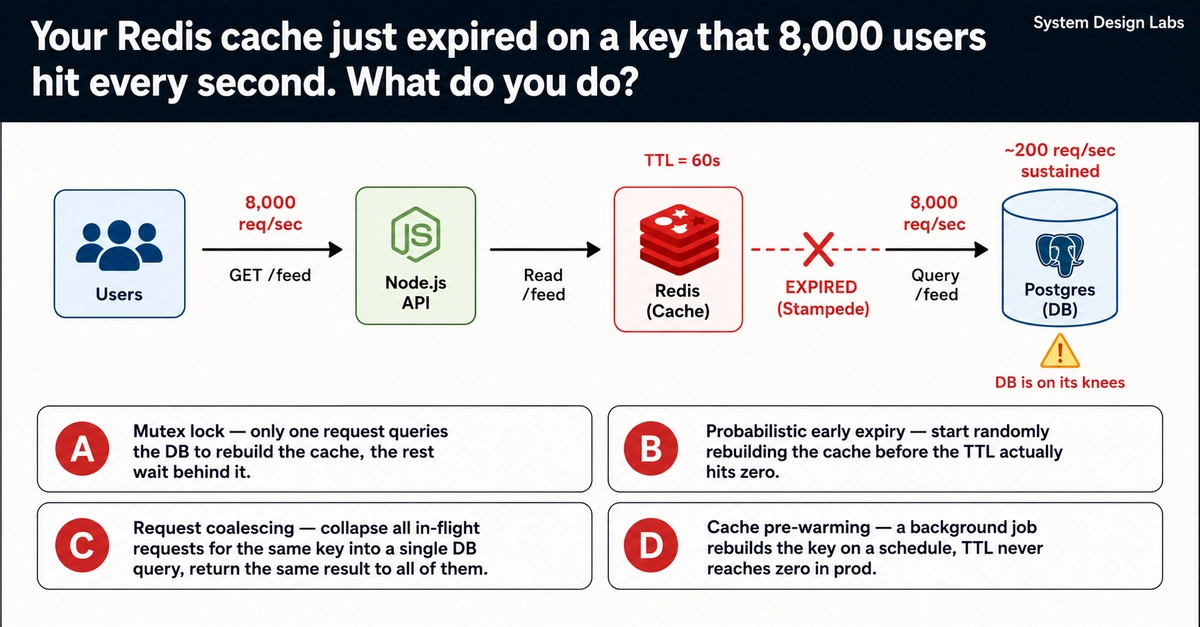
And finally, the flash sale. This is the digital equivalent of Black Friday’s main entrance – a pure, unadulterated traffic tsunami aimed squarely at your database. If your backend is just a single, overworked server, it’s going to fold faster than a cheap suit.
Caching and rate limiting are the tried-and-true shields here. Caching, specifically with in-memory stores like Redis, is like setting up a high-speed express lane for frequently accessed, static data. Instead of digging through the entire warehouse (your database) for every request, you’re pulling items from a perfectly organized, lightning-fast display shelf right at the front. Rate limiting acts as the bouncer, politely (or not so politely) telling excessive traffic – be it genuine users or malicious bots – to calm down or get out. It’s essential for preventing a complete system meltdown.
But AI takes this further. Imagine AI-powered caching that doesn’t just store static data but predicts what data will be needed next and pre-loads it. Or AI-driven rate limiting that can distinguish between a genuinely enthusiastic user hitting refresh too many times and a sophisticated DDoS attack, adapting its defense strategy in real-time. This isn’t just about handling spikes; it’s about intelligently orchestrating resilience.
The leap from merely using AI as a tool to building on top of AI as a fundamental platform is the most significant development in computing since the microprocessor. It demands a new mindset, new architectural patterns, and a willingness to let go of old assumptions.
This shift isn’t about replacing developers; it’s about augmenting us, freeing us from the drudgery of low-level infrastructure and repetitive tasks to focus on higher-level problem-solving and creative innovation. The future of backend development isn’t just about writing code; it’s about orchestrating intelligent systems, guiding AI agents, and architecting the next generation of digital experiences. Are you ready to build that future?