Look, let’s cut through the AI hype for a second. What does this announcement about “agent harnesses” actually mean for your average Joe developer staring at a screen at 2 AM, fueled by questionable coffee and sheer willpower? It means you’re still doing the boring setup. It means that fancy AI coding assistant you just signed up for? It’s not magically aware of your company’s convoluted legacy codebase or your team’s arcane linting rules. You’re still the one writing those AGENTS.md files, those .cursor/rules documents, meticulously detailing the project’s DNA for a machine that, frankly, can’t quite grasp it on its own. Yet.
This whole “agent harness” thing is just a fancy term for the onboarding documentation you’ve been creating for years, now disguised as a tech problem. Think about it: every time a new AI coding tool pops up – Claude Code, Cursor, Gemini CLI, you name it – they all rely on this hidden layer of context. What kind of project is this? What framework are we using? Which files are sacrosanct? What arcane incantations (commands) actually run tests or linters? Without this briefing, these supposedly intelligent agents are just glorified autocomplete, prone to subtle, maddening mistakes that you’ll end up fixing anyway.
It’s the same old song and dance, different repo, same boilerplate. Different agent, same boilerplate. It’s a bit like hiring a brilliant intern but then spending hours writing them a step-by-step manual for how to even understand the office, let alone do their job. And then you have to do it all over again for the next intern, or the next AI tool.
But in practice, the quality of an AI coding session often depends on the context layer around the agent.
Before the agent starts coding, it needs to know: what kind of project this is, what framework it uses, what files are important, what commands run tests, what commands run linting, what paths should not be touched, what tools are available, what memory should persist, what failure modes to avoid, what coding conventions to follow, when human approval is required.
This is the core of the problem. The original thought is that the Large Language Model (LLM) should just know. It should be able to slurp up your entire repository and figure out everything. And sure, they’re getting good. They can write some code, sure. But deterministically generating perfect, project-specific ground truth from scratch, every single time? Nah, not yet. They’re smart, but they aren’t omniscient. So, we’re stuck being the human Swiss Family Robinson of AI context. We write the instructions, we copy the rules, we maintain separate files for every damn agent that comes down the pike. It’s a small amount of work per repo, but collectively? It’s a mountain of busywork.
The Bridge, Not the Moat
Now, enter <a href="/tag/harnessforge/">harnessforge</a>. The idea here isn’t to build another AI coding agent that claims to do it all. No, this thing is supposed to be the bridge. It’s a local, open-source tool designed to generate that crucial “harness” – those startup files and configuration bits that give the agent its context. You run a command, it inspects your repo, and spits out files like AGENTS.md, SOUL.md, MEMORY.md, or .cursor/rules. Think of it as a boilerplate generator specifically for AI coding assistants. It’s not reinventing the wheel; it’s just making sure the wheel has a clear, understandable map before it starts rolling.
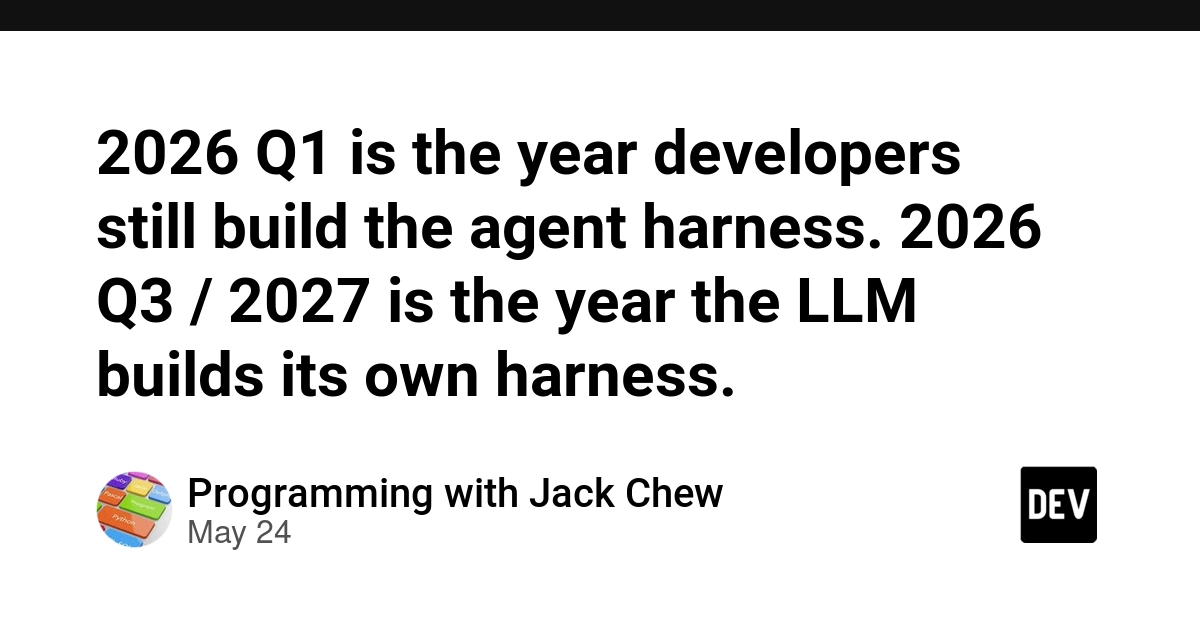
The author’s bet, and it’s a pretty sensible one given the current state of things, is that we’ll be manually building these harnesses for the first quarter of 2026. Then, by the third quarter of 2026 or into 2027, the LLMs themselves will get smart enough to generate their own context. Until then, tools like harnessforge are basically a lifeline, making AI coding workflows more reliable and less frustrating. It’s a temporary fix, and that’s okay. The goal is to make the current AI coding experience less painful, not to create another permanent layer of developer overhead.
Why Does This Matter for Developers?
This isn’t just about some niche tool; it’s a symptom of a broader trend. We’re still in the early days of truly autonomous AI development. For now, developers are the essential glue holding these systems together. That means learning to work with these agents effectively, which, ironically, still involves a lot of manual configuration and understanding the underlying project structure yourself. So, while the AI agents are supposed to save us time, we’re currently spending that time configuring them to be useful. It’s a bit of a paradox. But as the author rightly points out, this isn’t the permanent state of affairs. The AI is getting better, and eventually, it should be able to infer this context itself. Until then, embrace the harness forge.
This whole situation reminds me a bit of the early days of cloud computing. Everyone was excited about the raw power, but someone still had to figure out how to provision servers, configure networks, and manage storage. It was a new layer of complexity that eventually got abstracted away by more sophisticated tooling and managed services. We’re in that same transition phase with AI coding assistants. We’re building the foundational “infrastructure” for AI to work effectively within our existing development workflows. The question isn’t if this layer will disappear, but when and how.
And that, my friends, is why you should take a look at harnessforge now. Use it. See how it streamlines your AI coding sessions. And then, when the LLMs finally catch up and start building their own harnesses, you can toss it aside like last year’s buzzword. It’s a pragmatic solution for a temporary, but significant, problem.