Platform engineering has emerged as one of the most discussed topics in software engineering. Gartner named it a top technology trend, major conferences dedicate entire tracks to it, and companies are creating platform engineering teams at a rapid pace. But the relationship between platform engineering and DevOps is often misunderstood. Some treat them as competitors, others as synonyms, and neither characterization is accurate.
Understanding how platform engineering evolved from DevOps, what problems it solves that DevOps alone does not, and how the two disciplines relate is essential for engineering leaders deciding how to structure their organizations.
The DevOps Promise and Its Growing Pains
DevOps emerged in the late 2000s as a cultural movement to break down the wall between development and operations teams. The core principles were sound: shared responsibility for the full software lifecycle, automation of manual processes, fast feedback loops, and continuous improvement. Organizations that adopted DevOps practices saw dramatic improvements in deployment frequency, lead time, and recovery from incidents.
But as DevOps matured, a pattern emerged. The principle "you build it, you run it" placed increasing operational responsibility on application developers. In theory, this creates accountability and ownership. In practice, it often means that application developers spend significant time configuring CI/CD pipelines, managing Kubernetes manifests, setting up monitoring, handling security scanning, and writing Terraform code.
The cognitive load on development teams has grown as the infrastructure ecosystem has become more complex. A modern application might involve containers, orchestration, service mesh, observability stacks, multiple cloud services, security scanners, and compliance checks. Expecting every development team to become expert in all of these domains is unrealistic and inefficient.
What Platform Engineering Is
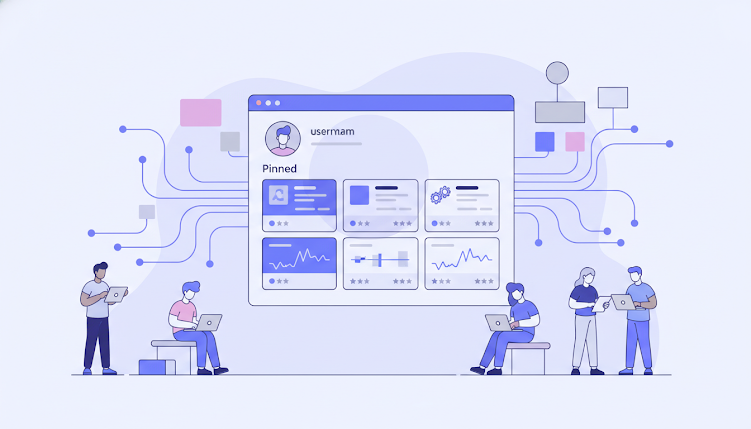
Platform engineering is the discipline of designing, building, and maintaining internal developer platforms (IDPs) that enable development teams to self-serve the capabilities they need for the full software lifecycle. Instead of every team individually learning how to set up a Kubernetes cluster, configure CI/CD, or implement observability, a dedicated platform team provides these capabilities as self-service products.
The key distinction is the product mindset. A platform team treats internal developers as customers. The platform is a product that must be useful, reliable, well-documented, and continuously improved based on user feedback. This is fundamentally different from a traditional infrastructure team that processes tickets or a DevOps team that embeds engineers into product teams.
What an Internal Developer Platform Provides
A typical internal developer platform might include:
- Application scaffolding. Templates and golden paths for creating new services with all necessary configurations pre-built.
- CI/CD pipelines. Standardized build and deployment workflows that teams can adopt without custom pipeline engineering.
- Infrastructure provisioning. Self-service interfaces for requesting databases, message queues, storage buckets, and other infrastructure resources.
- Observability. Pre-configured dashboards, alerting, and logging that new services get automatically.
- Security and compliance. Automated security scanning, policy enforcement, and compliance checks built into the deployment pipeline.
- Developer portal. A service catalog and documentation hub where developers can discover available services, APIs, and platform capabilities.
How Platform Engineering Relates to DevOps
Platform engineering does not replace DevOps. It builds on DevOps principles and addresses the scaling challenges that emerge as organizations grow. The relationship can be understood through three lenses:
DevOps Provides the Principles
Automation, shared ownership, fast feedback, and continuous improvement remain the foundational principles. Platform engineering applies these principles at the organizational level by building systems that make DevOps practices accessible to all development teams, regardless of their infrastructure expertise.
Platform Engineering Provides the Product
Where DevOps describes a culture and set of practices, platform engineering produces a tangible product: the internal developer platform. This product codifies best practices, security requirements, and operational standards into reusable building blocks that teams can consume without deep infrastructure knowledge.
Both Aim to Reduce Friction
DevOps reduces friction between development and operations. Platform engineering reduces friction between developers and the complexity of modern infrastructure. They are complementary, not competing, approaches.
The Golden Path Concept
A central concept in platform engineering is the golden path: a recommended, well-supported way to accomplish common tasks. A golden path for deploying a new microservice might include a specific language runtime, a standardized project template, a pre-configured CI/CD pipeline, Kubernetes manifests with best-practice defaults, and integrated observability.
Golden paths are opinionated but not mandatory. Teams can deviate when they have a legitimate reason, but the default path should handle the vast majority of use cases. The benefit is that teams spend less time making infrastructure decisions and more time building product features.
When Organizations Need Platform Engineering
Not every organization needs a dedicated platform engineering team. The investment is justified when:
- Multiple teams are solving the same infrastructure problems independently. If five teams each build their own CI/CD pipeline or monitoring setup, centralization through a platform team eliminates duplication.
- Developer cognitive load is slowing feature delivery. If developers spend more than 30% of their time on infrastructure tasks, a platform that provides self-service capabilities can reclaim that time.
- Operational standards are inconsistent across teams. If some services have excellent observability while others have none, a platform ensures baseline standards.
- The organization is growing rapidly. Onboarding new teams and developers is faster when there is a platform with golden paths and documentation rather than tribal knowledge.
Building a Platform Team
A successful platform team requires a combination of skills:
- Infrastructure engineering. Deep knowledge of cloud platforms, container orchestration, networking, and security.
- Software engineering. The platform itself is a software product that requires good software engineering practices: version control, testing, CI/CD, and documentation.
- Product management. Understanding developer needs, prioritizing features, gathering feedback, and measuring adoption require product thinking.
- Developer advocacy. The platform must be marketed internally. Documentation, tutorials, office hours, and champions within product teams drive adoption.
Common Anti-Patterns
- Building a ticket queue instead of a platform. If the platform team becomes a bottleneck that processes requests manually, it is an infrastructure team with a new name, not a platform team.
- Over-engineering before understanding needs. Building a sophisticated platform before talking to developers about their actual pain points leads to low adoption and wasted effort.
- Making the platform mandatory without making it good. Forcing teams onto a platform that does not meet their needs breeds resentment. The platform should be compelling enough that teams choose to adopt it.
- Ignoring the developer experience. A platform that is powerful but difficult to use will not be adopted. Usability is as important as capability.
Measuring Success
Platform engineering success should be measured by its impact on the development teams it serves:
- Time to first deployment for a new service or team.
- Developer satisfaction measured through surveys and adoption rates.
- Deployment frequency and lead time across teams using the platform.
- Incident metrics like mean time to detection and recovery for platform-managed services.
- Cognitive load reduction measured by the percentage of time developers spend on infrastructure versus product work.
The Pragmatic View
Platform engineering is not a repudiation of DevOps. It is the natural evolution of DevOps principles applied at scale. Small teams with a few services may not need a dedicated platform. Large organizations with dozens of teams and hundreds of services almost certainly do. The goal is the same as it has always been: enable developers to deliver value to users quickly, safely, and sustainably. Platform engineering is one increasingly important way to achieve that goal.