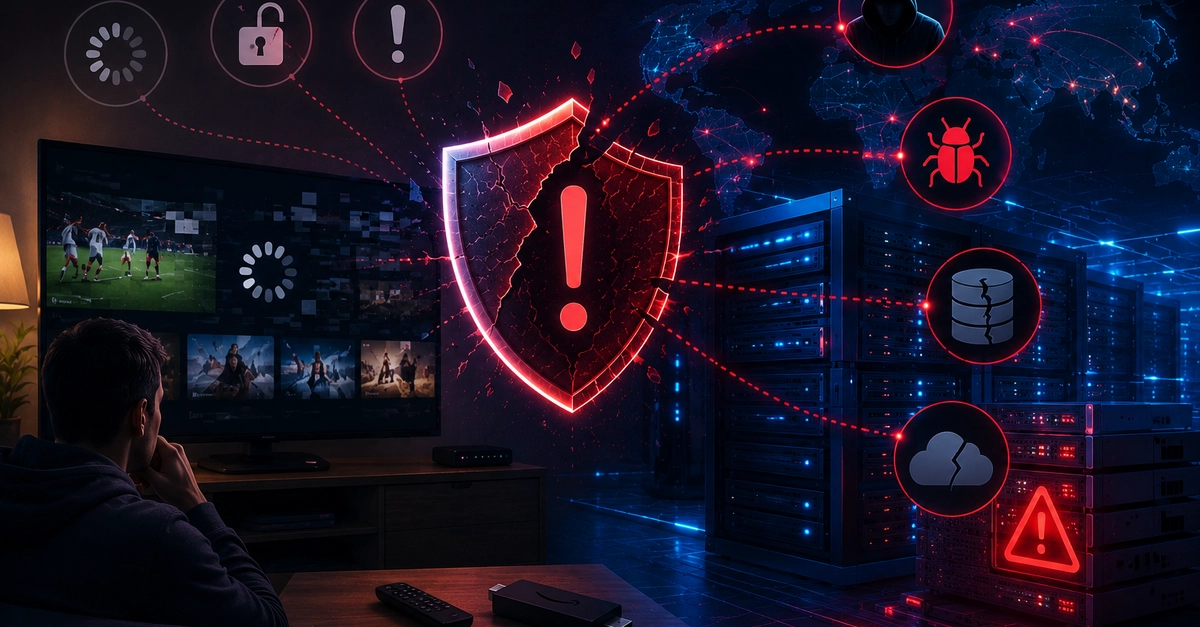
For years, the narrative around IPTV outages has been simple: bad internet, overloaded servers. A convenient explanation that lets users off the hook and places the blame squarely on the provider’s bandwidth. But lurking beneath the surface, a far more insidious threat has been quietly gaining traction, fundamentally altering the reliability equation: infrastructure security.
This isn’t about a few inconvenient glitches anymore. When critical vulnerabilities, especially those targeting foundational systems like Linux, web panels, or streaming middleware, crop up, the impact on IPTV platforms is swift and brutal. Users experience it not as a technical anomaly, but as a tangible degradation of service – think incessant buffering, authentication failures, or worse, entire channels vanishing into the digital ether.
The notion of IPTV as merely a “playlist” is, frankly, an anachronism. A modern IPTV setup is a sprawling, interconnected beast. It’s a complex dance of reverse proxies, load balancers, transcoding nodes, authentication APIs, CDNs, databases, caching systems, and reseller panels, all glued together by custom middleware. The fragility of this ecosystem is astonishing; a single vulnerable component can destabilize the entire operation with unnerving speed.
And here’s the kicker: providers often prioritize uptime above all else, delaying critical patches to avoid even the slightest hiccup in service. This creates a dangerous feedback loop, where the very act of maintaining stability ironically increases the risk of catastrophic failure.
Why Should Viewers Care About Backend CVEs?
The instinctive reaction for many users is, “I’m just watching TV; why should I care about server-side CVEs?” It’s a fair question, from a user’s perspective. But infrastructure problems invariably trickle down.
When a serious security incident hits, the technical jargon might remain hidden, but the consequences are starkly visible to the end-user. Random buffering? That could be overloaded mitigation systems scrambling to cope with an attack. Login failures? Authentication services might be under siege. Channels disappearing? The backend routing could be compromised. Even playback instability can be a direct result of emergency infrastructure changes made in response to a breach.
The Unsettling Reliance on Legacy Systems
What truly sets the IPTV ecosystem apart is its peculiar fondness for aging deployments. It’s not uncommon to find providers still clinging to older Ubuntu versions, outdated PHP panels, legacy Xtream-style middleware, and unmanaged dedicated servers, all poorly isolated. This reliance on legacy tech broadens the attack surface considerably, making them far more attractive targets than many mainstream SaaS platforms.
Unlike established enterprise streaming giants, many smaller IPTV operators lack the resources for dedicated security teams, automated patch management, or strong incident response workflows. This means updates are often an afterthought—delayed or, in some grim cases, never implemented at all.
Streaming services are notoriously resistant to scheduled downtime. Even brief maintenance windows can trigger a cascade of negative consequences: customer complaints, refund demands, pressure from resellers, and ultimately, subscriber churn. The pressure to maintain uninterrupted service is immense, leading some providers to postpone essential updates, a decision that, ironically, amploys the likelihood of more significant outages down the line. It’s a classic trade-off: patch now and risk temporary disruption, or delay and risk a far more damaging compromise later.
Modern infrastructure attacks aren’t always the stuff of Hollywood blockbusters. The most significant operational risks today frequently manifest as service degradation, resource exhaustion, network abuse, credential leaks, API exploitation, and bot traffic amplification. For streaming systems, even partial instability can drastically degrade playback quality. A full-blown “catastrophic breach” isn’t even necessary for users to notice that something is fundamentally wrong.
From an operational standpoint, certain areas consistently appear underestimated across smaller streaming platforms. Vulnerabilities often become dangerous simply due to prolonged delays in patching. Authentication systems, control panels, and stream nodes should never reside on the same exposed environment. A surprising number of IPTV APIs remain unnecessarily exposed, with providers often only discovering problems after users flood their support channels with outage reports.
Of course, regular users can’t patch backend infrastructure themselves. But there are still practical steps they can take. Avoiding public credential sharing, using strong, unique passwords for IPTV panels and apps, being cautious with unofficial APKs, keeping devices like Firesticks updated, employing VPNs for privacy, and recognizing the inherent instability of providers with poor operational practices are all smart moves.
Ultimately, reliability in IPTV is intrinsically linked to the professionalism of its backend infrastructure maintenance. As these systems become increasingly complex, vulnerabilities affecting Linux servers, middleware, APIs, or authentication layers will continue to have tangible downstream effects on everyday users, even if the technical intricacies remain a mystery.
What Can Users Do?
While end-users can’t directly patch server vulnerabilities, their awareness and choices can still influence the ecosystem. Opting for providers with a demonstrated commitment to security and operational best practices is paramount. Consumers who consistently experience instability or inexplicable service disruptions should consider that the root cause might be deeper than a simple internet issue. This isn’t just about buffering; it’s about the fundamental integrity of the services they rely on.
There’s a growing correlation between streaming reliability and infrastructure security. As IPTV platforms evolve, their backend stability becomes increasingly critical. The days of ignoring server vulnerabilities are over; the impact is too direct, too visible, and too damaging to the user experience. It’s time for providers to treat security with the urgency it demands, before even more services buckle under the weight of their own digital neglect.
🧬 Related Insights
- Read more: GitHub Copilot CLI’s Rubber Duck: Second AI Opinion or Clever Upsell?
- Read more: Avalanche Fuji Testnet: Why It’s Crushing Ethereum for Beginner dApp Builders
Frequently Asked Questions
What are the common symptoms of IPTV security vulnerabilities for users?
Users typically experience increased buffering, login failures, channels disappearing, and general playback instability, often without understanding the technical backend cause.
Why do IPTV providers delay patching security updates?
Providers often delay updates to avoid any temporary service interruptions, fearing customer complaints, refund requests, and subscriber churn, even though this increases the risk of larger future outages.
Can I protect myself from IPTV infrastructure security issues as a user?
While you can’t fix backend issues, you can protect yourself by using strong passwords for your IPTV accounts, being cautious with unofficial apps, and considering VPNs for privacy. Choosing providers with good operational track records is also key.