The start of 2026 was supposed to be about AI reaching new plateaus, maybe a quantum leap or two in cloud efficiency. We were all looking up, expecting the next big platform shift to be a gleaming, frictionless digital utopia. Instead, what we got was a brutal, real-world reminder of just how easily the lights can go out.
And go out they did. Q1 2026 wasn’t just a collection of technical glitches; it was a geopolitical and infrastructural battleground. Government-directed shutdowns, prolonged internet blackouts – think Uganda and Iran – made a dramatic comeback, a sharp pivot from the relative calm of the previous year. This wasn’t the smooth, interconnected future we’d been sold; it was a starkly analog reality crashing into the digital age.
Remember those predictions about AI becoming the new operating system? Well, it turns out the old operating systems, the physical infrastructure and the political will (or lack thereof), still hold an astonishing amount of sway. When governments decide to pull the plug, the AI models sitting in data centers suddenly become as useful as a pocket protector in a hurricane.
The Shifting Sands of Control
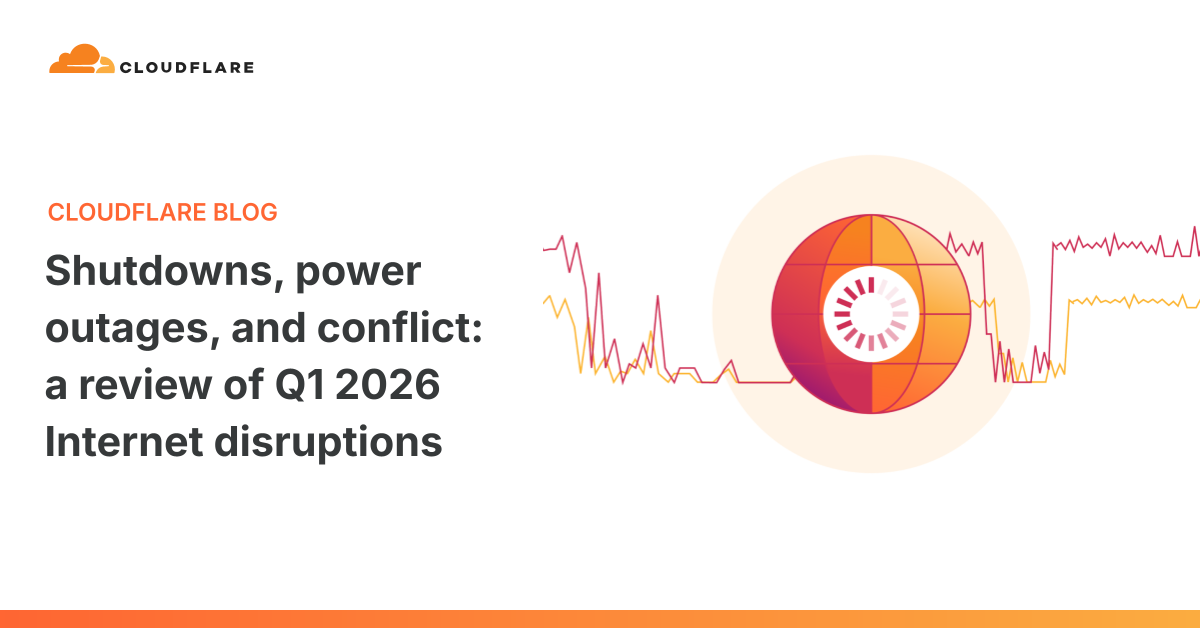
Government-directed shutdowns weren’t just an anomaly; they were a headline act. Uganda, in the lead-up to its January presidential election, plunged its citizens into digital silence from January 13th until the 26th. The rationale? “Curb misinformation, disinformation, electoral fraud and related risks.” A familiar refrain, often deployed when a regime wants to control the narrative. Domestic traffic at the Uganda Internet Exchange Point (UIXP) cratered, a near 99% drop from roughly 72 Gbps to a measly 1 Gbps. Globally, Cloudflare saw Uganda’s traffic vanish, then flicker back to life only after the election results were declared. This wasn’t just a regional hiccup; it was a global statement about state power in the digital age.
Iran fared even worse, enduring not one, but two nationwide internet shutdowns. The first, starting January 8th, lasted until January 21st, with intermittent returns and further cutoffs. The loss of IPv6 address space beforehand was a chilling precursor, a technical tremor before the seismic political event. Then, on February 28th, as military strikes escalated, the internet went dark again, a chilling echo of wartime tactics used to isolate and control.
The UCC reportedly defended the shutdown as necessary to “curb misinformation, disinformation, electoral fraud and related risks.” Domestic traffic at the Uganda Internet Exchange Point (UIXP) dropped from approximately 72 Gbps to 1 Gbps as a result of the action taken.
When the Lights Go Out
But it wasn’t just about deliberate throttling. Power outages, often the mundane bogeyman of connectivity, took on a new menace. Cuba suffered three separate collapses of its national electrical grid, each time dragging its internet connection down with it. It’s a sobering thought: the digital world, powered by invisible electrons, is fundamentally beholden to the very physical world it claims to transcend. You can have the most advanced AI chatbot, but if the lights are out, it’s just so much silicon.
And then there’s the kinetic aspect. Military action continued its disruptive dance, particularly in Ukraine, where connectivity became a casualty of war. The Middle East also felt the ripple effects, with hyperscale cloud infrastructure taking hits. It’s a brutal intersection – the digital infrastructure we rely on is increasingly becoming a target in the physical conflicts of our time.
Beyond the headline-grabbing events, the usual suspects made their appearances. Severe weather knocked out connectivity in Portugal, cable damage did its thing in the Republic of Congo. Even a technical hiccup at Verizon Wireless in the US, and some ‘unknown issues’ in Guinea and the UK, served as micro-doses of what happens when the plumbing breaks. Each instance, whether caused by a nation-state, a faulty transformer, or a stray anchor, chipped away at the illusion of constant, unassailable connectivity.
Why Does This Matter for Developers?
This isn’t just news for the geostracked and the policy wonks. This is our world. As developers, we build the applications, the services, the very fabric of this digital existence. We’ve been racing to build atop AI, assuming a stable, ever-present network. Q1 2026 forces a hard reset on that assumption.
We need to think about resilience, about graceful degradation, about what happens when the internet isn’t just slow, but gone. It’s about building systems that can withstand the digital equivalent of earthquakes and blackouts. It’s about understanding that our meticulously crafted code runs on a foundation that can be shaken by forces far beyond our control.
This era of AI as a platform shift isn’t just about smarter algorithms; it’s about building for a world that is more interconnected than ever, yet paradoxically, more vulnerable to disconnection than we perhaps realized. The future isn’t just about building up, it’s about building solid. It’s about acknowledging that the platform beneath our feet might just be a bit less solid than we thought.
The Corporate Spin vs. Reality
While Cloudflare diligently maps these disruptions, it’s worth peering through the corporate PR lens. Companies will undoubtedly frame these events through the lens of their own solutions – enhanced network monitoring, better outage detection, etc. And yes, that’s valuable. But let’s not confuse the diagnostic tools with the disease. The fundamental issue isn’t just detecting outages; it’s understanding the increasingly complex geopolitical, economic, and infrastructural pressures that cause them.
We’re at a juncture where the promise of an always-on, AI-powered digital future is being tested by the messy realities of the physical world and human conflict. It’s a fascinating, and at times, terrifying, period to be building in.
🧬 Related Insights
- Read more: WordPress Backend, SPA Frontend: The Headless CMS Hack That’s Turbocharging Sites
- Read more: What is CI/CD?
Frequently Asked Questions
What caused the most internet disruptions in Q1 2026? Government-directed shutdowns, power outages, and military action were the primary drivers of significant internet disruptions during the first quarter of 2026.
Were there more internet shutdowns in Q1 2026 than the previous year? Yes, Q1 2026 saw a prominent increase in government-directed internet shutdowns compared to the same quarter in 2025.
How did military actions affect internet connectivity? Military actions impacted connectivity in conflict zones like Ukraine and also disrupted hyperscale cloud infrastructure in the Middle East during Q1 2026.