Forget the shiny consumer demos from Google I/O 2026. While Gemini Spark booking dinner reservations might be a neat party trick, the real seismic shift — the one that’ll echo through server rooms and developer workflows for years to come — wasn’t about an end-user feature. It was about how disparate AI agents will finally learn to talk to each other. I’m talking about Google’s new Agent2Agent (A2A) Protocol, and believe me, this is the under-the-hood tech that developers should be fixating on.
Why? Because we’ve been building incredibly smart, isolated AI silos. Think of it: the last couple of years have been a gold rush for agentic frameworks. LangGraph, crewAI, IBM’s BeeAI, Google’s own Agent Development Kit (ADK) — all have churned out powerful, specialized agents. But ask a LangChain agent to delegate a sub-task to a proprietary ADK agent? You’ll hit a wall of incompatible data formats and proprietary APIs. We’ve effectively created highly intelligent microservices, only to forget the universal translator to connect them. It’s like inventing the smartphone but forgetting to invent the internet. Madness.
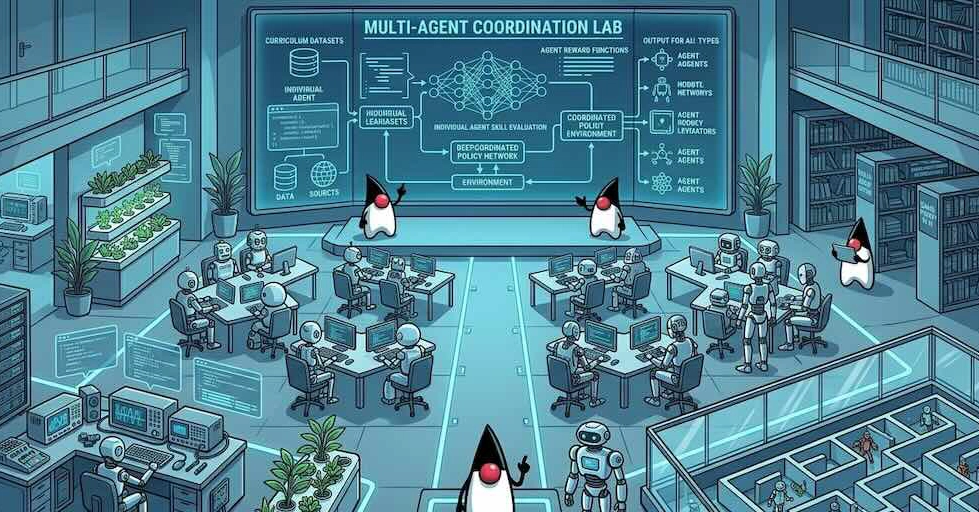
Enter A2A, the protocol that Google is now pushing as an open-source Linux Foundation project. This isn’t just another RPC mechanism; it’s a purpose-built standard designed to untangle the chaos of autonomous AI interactions. Imagine agents discovering each other, negotiating tasks, and actually collaborating, irrespective of the underlying model or framework they’re built upon. It’s the universal translator for the burgeoning agentic web.
So, how does this magic actually work?
A2A eschews the need for agents to expose their internal memory or proprietary logic. Instead, it provides a standardized rulebook for interaction. First, you have Agent Cards. Think of these as AI agent LinkedIn profiles: a discoverable JSON file advertising capabilities like “Fluent in Python” or “Enjoys reading massive SQL databases.” Then comes the familiar client/server model, but adapted for AI. An A2A Client agent sends a request, and an A2A Server agent exposes a compatible endpoint to receive and execute the job. Crucially, agentic work isn’t instantaneous. A2A introduces Tasks to track job status, so your system doesn’t hang indefinitely, and Artifacts, which are the actual deliverables streamed back once the job is complete.
Why This is a Big Deal for Real People (and Developers)
This isn’t just about cleaner code; it’s about fundamentally reshaping software architecture for the agentic era. True interoperability means we can finally ditch monolithic AI applications. Picture this: a specialized inventory agent, built with Anthropic’s MCP, notices low stock. It uses A2A to securely ping a completely different supplier agent developed by a third-party vendor. They negotiate an order, all without either party exposing their internal codebase. That’s massive.
And then there’s fault isolation. By breaking complex workflows into discrete, A2A-compliant agents, your system gains incredible resilience. If one specialized agent starts hallucinating or fails, the entire workflow doesn’t crumble. You simply update the Agent Card’s URL to point to a better-performing agent. It’s like hot-swapping components on a live system, but for AI.
Preserving opacity is another huge win, especially for enterprise adoption. Multi-agent systems have been hobbled by fears of data leaks. A2A allows agents to collaborate while maintaining strict boundaries. My agent can ask your agent to solve a problem, and your agent just returns the answer. My agent remains completely blind to the 47 janky proprietary tools your agent used behind the scenes. Your secrets are safe.
The TL;DR of Google I/O 2026? The future of AI isn’t one giant, omnipotent God-Model. It’s a massive, interconnected web of specialized multi-agent systems getting work done behind the scenes.
My own take? This feels like the reincarnation of the early web, but with intelligence. We’re moving from the era of bespoke, closed-source AI monoliths to an open ecosystem where specialized agents can plug and play. It’s a shift from building a single, all-knowing AI to architecting an intelligent ecosystem.
So, what’s the takeaway for you, the developer? Stop trying to make your single agent a know-it-all. Focus on making it an A2A Server. The developers who master wiring these autonomous systems together aren’t just building software; they’re architecting the next decade of the web. The ones who ignore this protocol will find themselves stuck building in walled gardens, while the rest of us are building the interconnected future.
Is A2A the Future of AI Interoperability?
I think it has to be. The alternative — each framework reinventing its own clunky communication layer, locking users into vendor-specific ecosystems — is unsustainable and frankly, a massive waste of engineering effort. The move towards open standards for AI communication is as inevitable as the move towards open standards for web communication was in the 90s. A2A, by virtue of being backed by a company like Google and positioned as a Linux Foundation project, has the wind at its back to become the de facto standard. It’s not just about efficiency; it’s about preventing fragmentation that would stifle innovation.
🧬 Related Insights
- Read more: HarfBuzz’s WebGL Slug Demo: Slick, But Does Text Shaping Need GPU Muscle?
- Read more: Zero Trust: The Security Model You Didn’t Know You Needed
Frequently Asked Questions
What does the Agent2Agent (A2A) Protocol actually do?
A2A is an open standard that allows different AI agents, built on various frameworks and models, to discover each other, negotiate tasks, and collaborate. It acts as a universal translator for the agentic web, enabling interoperability.
Will A2A replace my job as a developer?
No, quite the opposite. A2A is designed to make building complex AI systems more manageable and scalable. Developers will shift from building monolithic AIs to architecting and integrating specialized agents, requiring new skills in system design and agent orchestration.
How does A2A ensure security and data privacy?
A2A focuses on standardized communication protocols rather than exposing internal agent logic or data. Agents interact through defined interfaces, and sensitive information is not shared by default, preserving opacity and allowing enterprises to maintain control over their data.