Look, I’ve been wading through the React swamp for… well, let’s just say longer than most of these kids have been coding. And every damn year, it’s the same damn story. Someone, somewhere, decides all the existing UI component libraries are garbage. Too heavy, too opinionated, too hard to make look like anything other than a generic template. So, naturally, they build their own. And then, surprise surprise, they trot it out with a fanfare, promising it’ll solve all your problems.
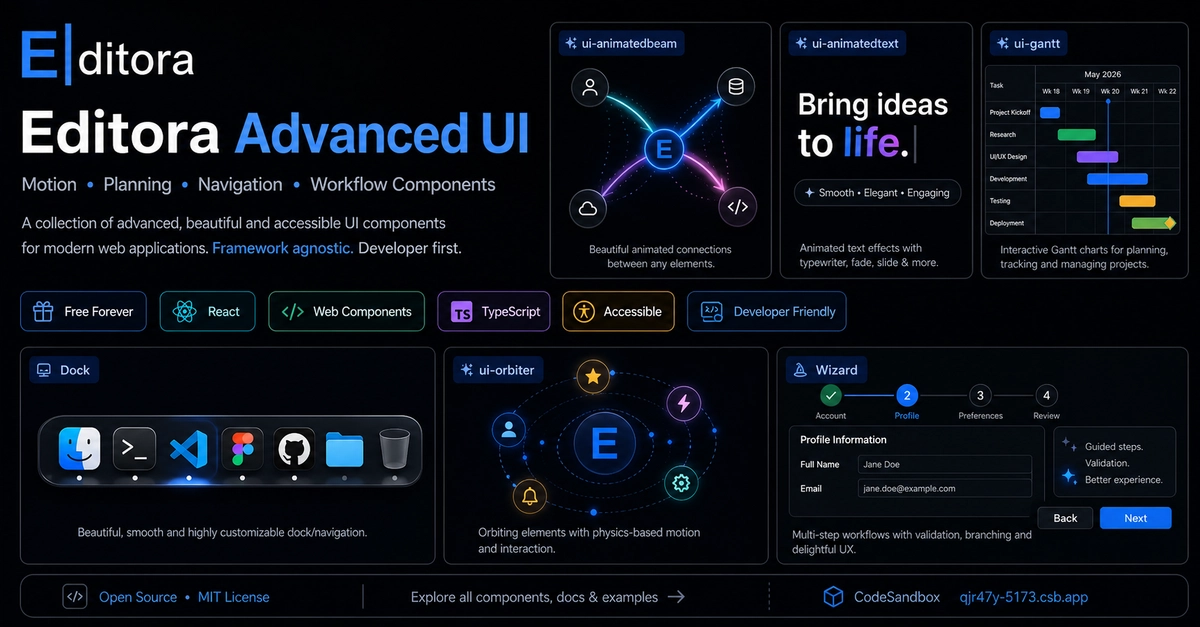
This latest entrant, @editora/ui-react, is no different. The pitch? A “modern React UI component library designed for scalable SaaS and enterprise applications.” Yawn. It’s a familiar refrain, isn’t it? We’re told it’s built for speed, for a slick developer experience, with a modular architecture and TypeScript-first principles. All the buzzwords are there, neatly packaged.
But here’s the question I always ask: who’s actually making money here, and more importantly, why? Is this truly an innovation, or just another shiny object to distract developers from the messy realities of building actual, profitable software?
Let’s talk about enterprise. That’s the magic word, isn’t it? The golden ticket. Suddenly, your little hobby project is “enterprise-focused.” Apparently, @editora/ui-react is meant for SaaS dashboards, admin panels, AI applications, CMS platforms, and internal enterprise tools. Big words. Big markets. But building for the enterprise means more than just having a few extra components. It means rigorous testing, bulletproof stability, security audits that would make your eyes water, and a support contract that costs more than a small car.
Is this library, fresh out of the oven, really ready for that kind of crucible? Or is it just a nice set of building blocks that might, might, eventually get there? The author mentions “still improving the ecosystem every week.” That’s… reassuring? Or is it code for “we’re still figuring this out, please don’t break it on us”?
The lessons learned here are standard fare for anyone who’s spent more than a weekend on a front-end project. Consistency. Accessibility. DX. API design. These aren’t revelations. They’re table stakes. The real trick is executing on them at scale, across a team of developers, over years, not weeks.
Here’s the thing about these libraries: they often start with the best intentions. A developer, frustrated with the status quo, pours their heart and soul into building something better. And sometimes, they succeed. Look at something like Chakra UI or Material UI – they’ve become industry mainstays for a reason. But many more fizzle out, or become so niche that only their creator uses them.
Is @editora/ui-react another one of those? The promise is there, certainly. The components are intended to feel modern, flexible, and production-ready. But “production-ready” for a small team hacking away on a side project is a universe away from “production-ready” for a Fortune 500 company processing millions of transactions a day.
The Enterprise Promise: Still Waiting?
This library boldly claims to be “Enterprise-focused components.” My cynicism kicks in. What does that really mean? Does it integrate with existing enterprise authentication systems? Does it handle complex data grids with thousands of rows without breaking a sweat? Does it come with the kind of documentation that doesn’t make you want to pull your hair out? These are the questions that separate a cute component set from a tool that can actually run a business.
The author states,
Build reusable UI components that feel modern, flexible, and production-ready from day one.
“From day one” is a strong claim for something that’s clearly still under active development. I’ve seen too many “production-ready” libraries crumble when pushed. The key here isn’t just the components themselves, but the surrounding ecosystem, the long-term commitment, and the financial backing – or lack thereof – that supports it.
Who’s Actually Paying for This?
The most critical question, as always, is about sustainability. Is @editora/ui-react a personal passion project, or is there a business model behind it? Is the author planning to monetize support, offer premium features, or is this purely an open-source endeavor hoping for community adoption? Without a clear path to revenue or a strong funding mechanism, even the best-built libraries can vanish overnight when the maintainer gets a better offer or simply burns out. That’s a risk any enterprise looking for long-term stability needs to consider.
Ultimately, @editora/ui-react might be a fine library for smaller projects or teams that want a clean, modern look and feel without the overhead of something like Ant Design. But the enterprise claims? That’s a bridge I’ll need to see it cross, not just talk about crossing. We’ve heard this song before.
🧬 Related Insights
- Read more: Physics Makes Websites ‘Alive’: A Vanilla JS Deep Dive
- Read more: Custom Compression Crushes Gzip on Discord Messages—3.5x Wins, Bug Stories Included
Frequently Asked Questions
What does @editora/ui-react do?
It’s a collection of reusable UI components built with React, designed to help developers create modern SaaS and enterprise applications more efficiently.
Is it suitable for large enterprise applications?
While marketed for enterprise use, its long-term stability and scalability for very large, mission-critical applications are still developing. It’s best suited for projects where rapid iteration and a clean aesthetic are priorities.
How is it different from other React UI libraries?
The developer claims it’s less bloated, more customizable, and less design-opinionated than many alternatives, focusing on a modular architecture and a fast developer experience.