We all expected AI’s healthcare revolution to be inclusive. The narrative was clear: powerful algorithms, trained on mountains of data, would unlock diagnoses, predict outbreaks, and personalize treatments for everyone. But here’s the thing: that promise has always been built on a shaky foundation, one that too often excluded vast swathes of the global population, particularly in regions like Africa. For countless individuals, the AI designed to save lives was never trained on their specific biology, their environmental factors, or their lived health realities. It was a critical, and frankly, alarming, oversight.
Enter Fisibel. This isn’t just another synthetic data generator. It’s a multimodal African synthetic health data infrastructure platform that’s not just using AI, but is specifically leveraging Google’s Gemma 4 to address this profound disparity. Forget the abstract talk of AI’s potential; Fisibel is tackling a very real, very human problem: the absence of representative health data for AI models aimed at improving lives in Nigeria and, by extension, across the African continent.
Why Does This Matter for Developers?
The implications for developers are enormous. The core challenge Fisibel tackles – the lack of diverse, representative data – is a universal one in AI development. For too long, the default has been datasets skewed towards populations that are readily digitized and well-resourced. This creates a feedback loop of biased AI, where the most advanced tools inadvertently reinforce existing inequities. Fisibel’s approach, by focusing on multimodal ingestion and grounding generation in real-world statistics, offers a blueprint. It demonstrates that with careful architectural design and the right foundational models, we can begin to build AI that truly serves everyone.
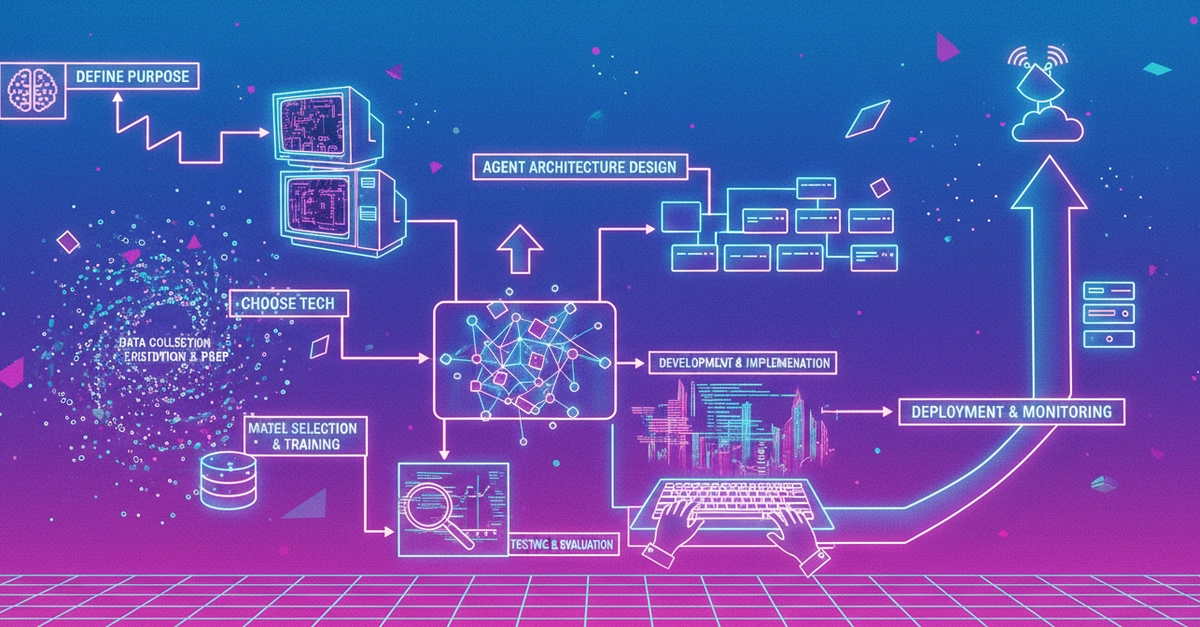
The pipeline itself is elegant in its ambition. You upload a real health record image – a diagnosis, a lab report, a patient chart. Gemma 4, acting as the intelligent core, then multimodally ingests this image. It doesn’t just see pixels; it understands the clinical patterns, the symptoms, the treatments, the geographic markers. This is crucial. It’s Layer 1: Multimodal Ingestion, and it bypasses the often-clunky OCR preprocessing steps, going straight for semantic understanding of clinical documents.
Then comes the grounding. Before a single synthetic data point is conceived, Fisibel pulls live African health indicators from WHO and World Bank APIs. This isn’t just a nod to accuracy; it’s a commitment to statistical fidelity. Gemma 4 uses these verified statistics as strict constraints. The output isn’t arbitrary; it’s mathematically tethered to the actual health landscape of Africa. This is Layer 2: Statistical Grounding. They’ve even built a “Scientific Validation Mirror” – a live chart that visually confirms the alignment between Fisibel’s synthetic output and the real-world WHO statistical baseline. When the blue line (synthetic) hugs the grey line (real-world), you have immediate, visual reassurance that you’re not building on fiction.
A New Kind of Data Generation
Layer 3 is where the magic happens: Synthetic generation with clinical logic. Here, Gemma 4 weaves together the extracted clinical patterns from the initial ingestion with those precise WHO and World Bank distributions. The result? Synthetic datasets that aren’t just random noise. They’re designed to enforce categorical consistency, maintain realistic age distributions, align with geographically accurate Nigerian LGAs, and, critically, ensure clinically coherent symptom-treatment pairs. It’s data that makes sense in a medical context.
And to ensure this synthesized reality is strong, Fisibel employs a rigorous scoring mechanism. Every generated dataset receives a 0-100 score from a two-layer algorithm. The primary driver (80%) is Gemma 4’s own evaluation, checking for feature relationship coherence, realistic distributions, risk factor consistency, and logical coherence across sample rows. The secondary layer (20%) is a straightforward completeness check – a function scanning every cell to ensure there aren’t glaring gaps. The final score is a weighted average. The Lagos malaria dataset, for instance, hit an impressive 94%.
The AI-Powered Quality Check
But the quality assurance doesn’t stop there. Before any dataset is deemed “training-ready,” it undergoes a final AI-powered data quality recommendation layer. This produces a “Model Readiness Score,” with penalties explicitly calculated across five dimensions: missing values, duplicate rows, low row count, and potential PII exposure. This isn’t a black box; it’s a transparent assessment designed to flag issues before they corrupt downstream models.
“No real patient data ever leaves the platform. Only privacy-safe synthetic equivalents that preserve the statistical reality of African health.”
This quote cuts to the heart of Fisibel’s ethical and technical achievement. They’ve navigated the treacherous waters of data privacy by creating a system that generates representative data without ever touching the original sensitive records. It’s a model that could, and should, be replicated across other underserved demographics globally. The challenge of building AI that truly benefits humanity has always been about who is included in the data. Fisibel, with Gemma 4 as its engine, is a powerful step towards a more equitable future for AI in healthcare.
🧬 Related Insights
- Read more: Forget Direct AI Prompts: Interview It First and Watch Magic Happen
- Read more: Frontend Car Rental App: Face Auth Simulation?
Frequently Asked Questions
What does Fisibel actually do? Fisibel is a platform that uses Google Gemma 4 to create privacy-safe synthetic health datasets specifically for African populations, addressing a critical gap in AI training data.
Is Fisibel’s data real? Fisibel generates synthetic data that is statistically grounded in real WHO and World Bank health statistics and clinical patterns extracted from real health records, but it is not original patient data.
Will this replace the need for real patient data? Fisibel’s synthetic data aims to supplement and de-risk the use of AI in healthcare for underrepresented populations by providing representative training data, not to entirely replace the need for real-world data collection in all contexts.