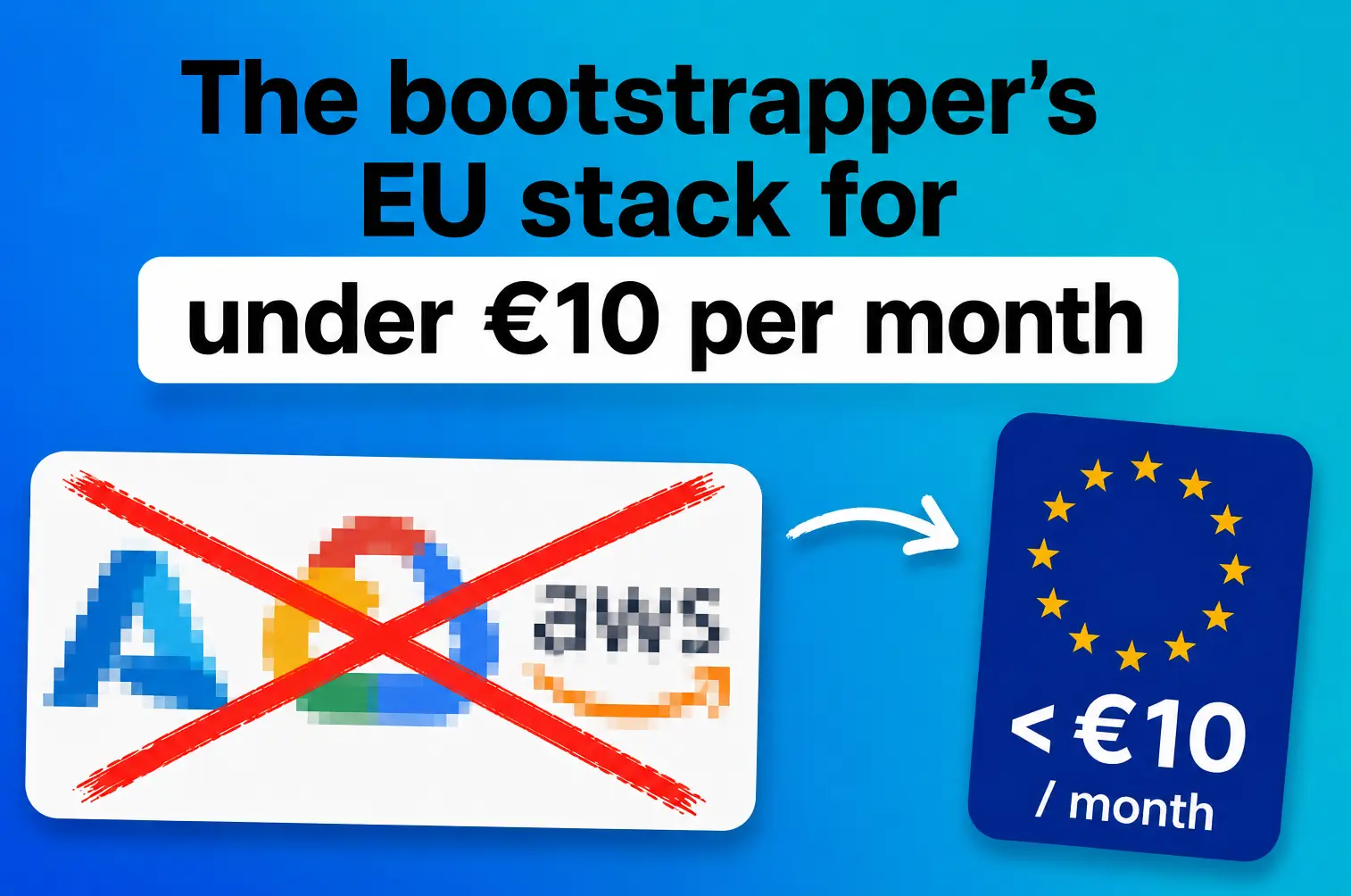
Here’s the thing: the digital sovereignty crowd has been preaching to the choir for years. Mostly to deaf ears. But suddenly, the message is getting through, not because of grand pronouncements on data privacy, but because it’s just plain cheaper. Building an entire functional web application from scratch, running entirely on European infrastructure, for less than ten euros a month? It sounds like a fairy tale spun by venture capitalists desperate for good news. Yet, astonishingly, it’s becoming a reality.
Forget the siren song of AWS free tiers that vanish faster than free donuts in the breakroom. This is about building something real, something that ships, something that doesn’t require you to have your credit card details etched into the bedrock of Silicon Valley before you’ve even sold your first widget. The EU ecosystem, bless its bureaucratic heart, has finally caught up. And it’s surprisingly… functional.
Cheap Compute: The Foundation of Frugality
Let’s cut to the chase. Nobody’s giving away permanent compute. That’s not how infrastructure works, and if you believe otherwise, I’ve got a bridge in Brussels to sell you. But cheap? Oh, absolutely. Hetzner Cloud’s CX33 server is the darling of the budget-conscious bootstrapper. For around €7 a month, you get 4 vCPUs, a respectable 8GB of RAM, and 80GB of disk. Enough to choke a modest Django or Rails app, manage a PostgreSQL database, keep Redis spinning for caching, and even juggle a few background workers. And you’ll still have change left over. This isn’t a fragile setup; it’s enough grunt to get you through significant growth before you even think about scaling up. For your standard-issue CRUD app, it’s practically a data center in your pocket.
Netcup, the grizzled veteran, offers a compelling alternative. They’ve been at this since 2003, and their VPS plans start under €5. The console might not win any design awards, but the price-performance ratio is a knockout. Stability and affordability – a potent combination.
Email, Notifications, and the Art of Not Annoying Users
Every application needs to send emails. Password resets, magic links, order confirmations. The mundane, yet critical, digital bread-and-butter. Thankfully, the EU has players with genuinely usable free tiers. For transactional emails, you’re covered. But what about keeping your users engaged? Newsletters. Email marketing. Suddenly, you’re managing lists and sending blasts. Again, not free. But there are EU options with free tiers generous enough to get you well into the hundreds of subscribers before you even need to open your wallet. It’s a far cry from the days when launching an email campaign meant a significant upfront investment.
Spying Responsibly: Analytics Without the GDPR Headache
Google Analytics. The GDPR landmine. The obnoxious cookie banner that screams ‘I don’t respect your privacy.’ And for most startups tracking their first hundred visitors? Utter overkill. Thankfully, the EU has stepped in with simpler, free, and, dare I say, privacy-friendly alternatives. Simple Analytics offers a free plan that’s clean, cookie-free, and sports a dashboard that won’t induce a migraine. If your product lives on mobile or desktop, TelemetryDeck’s generous free tier is a godsend. Suddenly, understanding your users doesn’t require selling your soul (or your users’ data) to a US behemoth.
Keeping Tabs: Monitoring for the Paranoid (and Practical)
This is where many bootstrappers trip. They get caught up in building features and forget that things break. Uptime monitoring is non-negotiable. UptimeRobot’s free plan offers 50 monitors. Fifty. That’s more than you’ll need for your initial foray. For those crucial cron jobs and background tasks that you really don’t want to fail silently, Healthchecks.io is your go-to. Twenty checks are free, and if you’re feeling particularly ambitious (or cheap), you can always self-host the open-source version.
Gathering Feedback: Forms Without the Friction
Forms. The humble workhorse of user interaction. Tally offers an absurdly generous free plan: unlimited forms, unlimited responses. Need in-app surveys instead of standalone questionnaires? Formbricks, open-source with a free hosted tier, has you covered.
Authentication: Passkeys Over Passwords?
You could build your own authentication system. If you enjoy masochism, go right ahead. Or, you could use Hanko. Their free tier includes passkeys – the modern, passwordless way to log in. It’s open-source and self-hostable, too. Finally, a reason to get excited about logins.
Payments: The Price of Doing Business
No payment processor is truly free. That’s the business model. But the bootstrapper-friendly version means no monthly fees. You pay only when you make a sale. Mollie, the EU’s answer to Stripe, fits the bill perfectly. Selling digital goods globally? Creem acts as a Merchant of Record, handling VAT and sales tax. It’s a bit pricier per transaction, but it saves you from an accounting nightmare.
The Real Cost: Pennies, Not Pounds
The only non-negotiable cost is your compute. The Hetzner server clocks in at €7. You could go even cheaper with a smaller rig. When you start hitting those free-tier limits, congratulations, you have a product! The upgrades are incremental, a few extra euros here and there. A higher tier on an email service, a slightly beefier Hetzner box. The stack scales with you, smoothly, because each component offers a sensible paid tier above its free offering.
This isn’t some ideological crusade for digital sovereignty. This is pragmatic engineering. It’s the cheapest, most credible way to ship something in 2026 without offering your credit card details to a US hyperscaler before you’ve even got a user. The EU tech stack is finally good enough. You can build your entire dream on the equivalent budget of a monthly coffee. And that, my friends, is a genuinely compelling business case.