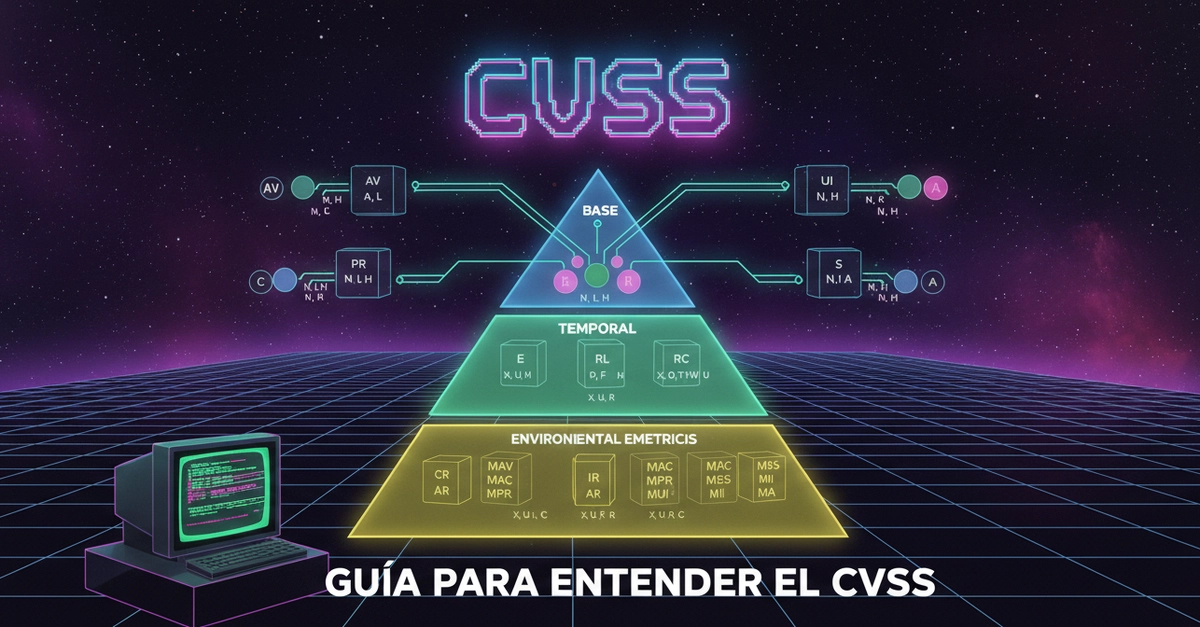
The IT Slack channel buzzes with a new CVE, and someone inevitably drops a CVSS vector like it’s a secret handshake. Everyone nods sagely, pretending to grasp the nuance, but let’s be honest: most folks just glance at that juicy 9.1 CRITICAL and move on.
Which is, you know, fine if you just want to know how bad it is. But what if you wanted to know why? Because why dictates how you actually react, and ignoring that part is how you end up chasing your tail.
CVSS, or the Common Vulnerability Scoring System for the uninitiated, isn’t just a number generator. It’s supposed to be a descriptor, a compressed snapshot of an attack’s mechanics. Right now, you’re likely bumping into two versions: the ubiquitous v3.1 and the shiny new v4.0, which promises more detail. We’ll touch on both.
The Scales of Doom (and Not-So-Doom)
Just so we’re all on the same page:
0.1–3.9 LOW 4.0–6.9 MEDIUM 7.0–8.9 HIGH 9.0–10.0 CRITICAL
Think of a CVSS vector like mapping out a home invasion. It’s answering specific questions about the burglar and their method:
🏠 Analogía **¿Desde dónde puede atacar el ladrón?** ¿Desde la calle, o tiene que estar en el jardín? *(Attack Vector)* **¿Es difícil entrar?** ¿Puerta abierta o cerradura de alta seguridad? *(Attack Complexity)* **¿Necesita una llave?** ¿O entra sin nada? *(Privileges Required)* **¿Alguien tiene que abrir la puerta desde adentro?** *(User Interaction)* **¿Qué se puede robar?** Documentos, muebles, o puede romper cosas también. *(Impactos: C/I/A)*
Let’s dissect an actual, thorny example: CVE-2024-9465 from Palo Alto Expedition. The provided vector looks like this:
CVSS v3.1 CVSS:3.1/AV:N/AC:L/PR:N/UI:N/S:U/C:H/I:H/A:N
This looks like gibberish to most. Let’s translate:
Código Nombre Valor en este CVE Qué significa en palabras simples
AV:N Attack Vector — Network 🔴 Peligroso El atacante no necesita estar cerca físicamente. Puede atacar desde cualquier lugar del mundo por internet.
AC:L Attack Complexity — Low 🔴 Peligroso El ataque es fácil de ejecutar. No requiere condiciones especiales, timing exacto ni conocimiento avanzado. Cualquiera con el exploit puede hacerlo.
PR:N Privileges Required — None 🔴 Peligroso El atacante no necesita ninguna cuenta ni contraseña previa. Llega, ataca, listo.
UI:N User Interaction — None 🔴 Peligroso Ningún usuario tiene que hacer clic en nada, abrir ningún archivo ni visitar ningún enlace. El ataque funciona solo.
S:U Scope — Unchanged ⚪ Neutral El impacto se queda en el sistema atacado. No 'salta' automáticamente a otros sistemas.
C:H Confidentiality — High 🔴 Crítico Toda la información confidencial queda expuesta: contraseñas, API keys, configuraciones. El atacante puede leer todo.
I:H Integrity — High 🔴 Crítico El atacante puede modificar o crear datos. En este caso, puede escribir archivos arbitrarios en el sistema.
A:N Availability — None 🟢 Sin impacto El atacante no puede tirar el sistema. El servicio sigue disponible mientras lo explotan en silencio.
See? AV:N + AC:L + PR:N + UI:N spells out a terrifyingly accessible attack: anyone on Earth, with minimal effort, no credentials, and no user help required. Combine that with C:H (total data exposure) and I:H (file manipulation), and you’ve got a recipe for disaster, especially if that “system attacked” happens to hold the keys to the kingdom.
The v4.0 Upgrade: More Lines, More (Potential) Clarity
The v4.0 version attempts to bring more granularity, particularly by splitting the impact on the Vulnerable System from the Subsequent System – a smart move, frankly, because we all know one compromised box can be a gateway drug for the entire network.
Here’s how that Palo Alto vector shakes out in v4.0:
CVSS v4.0 CVSS:4.0/AV:N/AC:L/AT:N/PR:N/UI:N/VC:H/VI:L/VA:N/SC:H/SI:N/SA:N
Código Nombre Valor Qué significa
AV:N Attack Vector — Network 🔴 Igual que en v3.1: ataque desde internet, sin estar cerca.
AC:L Attack Complexity — Low 🔴 Fácil de ejecutar, sin condiciones especiales.
AT:N Attack Requirements — None 🔴 Nuevo en v4.0. El ataque no depende de ninguna condición externa que no controle el atacante (como que haya sesiones activas o configuraciones específicas).
PR:N Privileges Required — None 🔴 Sin cuenta, sin autenticación.
UI:N User Interaction — None 🔴 Nadie tiene que hacer nada para que el ataque funcione.
VC:H Vulnerable System Confidentiality — High 🔴 El sistema atacado (Expedition): toda su información queda expuesta. Hashes, configs, API keys.
VI:L Vulnerable System Integrity — Low 🟡 El sistema atacado: el atacante puede modificar algunos datos, pero no tiene control total de escritura. Impacto parcial en integridad.
VA:N Vulnerable System Availability — None 🟢 El sistema atacado: sigue funcionando. No hay denegación de servicio.
SC:H Subsequent System Confidentiality — High 🔴 Otros sistemas (los firewalls PAN-OS): como las API keys quedan expuestas, los firewalls también quedan comprometidos en confidencialidad. El daño se propaga.
SI:N Subsequent System Integrity — None 🟢 Otros sistemas: el atacante no puede modificar datos en los firewalls directamente a través de este vector.
SA:N Subsequent System Availability — None 🟢 Otros sistemas: sigue funcionando.
Notice the introduction of AT (Attack Requirements) and the separation of VC/VI/VA (Vulnerable System) from SC/SI/SA (Subsequent System). This refined view acknowledges that not all exploits are created equal, and the ripple effect is just as critical as the initial breach. v4.0 is clearly an attempt to move beyond simply assigning a severity score and towards a more nuanced risk assessment.
Who’s Actually Paying for This? You Are.
Look, the Common Vulnerability Scoring System is a standard, and standards are good. They provide a common language. But let’s not kid ourselves. These scores and vectors are generated by researchers and vendors, and then we, the defenders, are left scrambling to interpret them, patch them, and explain them to management who only understand the big, scary numbers. The real money isn’t in creating the scores; it’s in selling the tools and services that help you deal with the vulnerabilities these scores represent. It’s a whole ecosystem built on the back of problems.
Is This Just More Buzzword Bingo?
CVSS itself isn’t a buzzword; it’s a framework. The buzz comes when companies slap it onto their marketing like a badge of honor without truly understanding or articulating its implications. The value of CVSS lies not in its existence, but in its diligent application and interpretation. The question for v4.0 is whether the added complexity will lead to better defenses or just more confusion, a fate that has befallen many a well-intentioned standard in our industry.
🧬 Related Insights
- Read more: 2026’s Keyboard Revolution: From $49 Steals to Hall Effect Mastery
- Read more: No-Code Hackathon OS: A Gimmick?
Frequently Asked Questions
What does a high CVSS score mean for my organization? A high CVSS score (especially above 7.0) indicates a severe vulnerability that requires immediate attention. It suggests the exploit is likely easy to execute and can have a significant impact on confidentiality, integrity, or availability.
Will CVSS v4.0 replace v3.1 immediately? No, v3.1 will remain in widespread use for a considerable time. v4.0 is the newer standard and will be adopted gradually by vendors and security organizations. It’s important to be aware of both and understand their differences.
Does a low CVSS score mean I can ignore the vulnerability? Not necessarily. A low score might mean the attack is difficult to execute or has a limited impact. However, in some contexts, even a ‘low’ vulnerability could be exploited as part of a larger, more complex attack chain. Always consider the specific context of your environment.