Rethink query optimization.
The conventional wisdom for tuning PostgreSQL performance starts with <a href="/tag/pg_stat_statements/">pg_stat_statements</a>. Teams dutifully sort by mean_exec_time or total_exec_time, then target the top contenders. It’s a straightforward method, but as market dynamics shift and workloads intensify, simple metrics often paint an incomplete picture, leading to misguided priorities.
A query chugging along for five seconds, running perhaps twice daily, doesn’t hold the same strategic weight as a lightning-fast query, completing in mere milliseconds, that executes millions of times. Conversely, a query boasting a high total_exec_time might simply represent a core, expected workload, not necessarily the prime candidate for optimization efforts. This is where the real question emerges: which query truly commands our attention?
Which query has the highest operational impact and the clearest optimization potential?
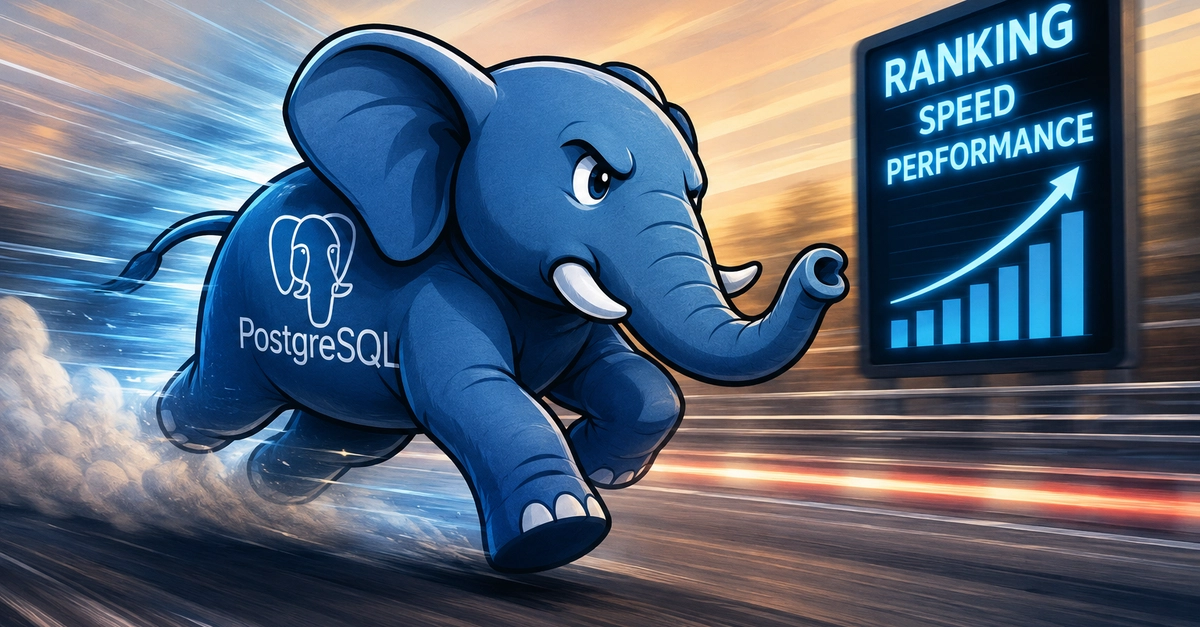
This isn’t just about identifying the slowest query; it’s about discerning the one that, if improved, yields the most significant operational benefit and possesses the greatest room for enhancement. This principle forms the bedrock of the query-ranking algorithm now integrated into pgAssistant. This tool moves beyond raw execution time, aiming to quantify the actual business or system impact of a query, thus guiding developers and DBAs towards optimizations that matter most.
The data doesn’t lie. When you look at aggregate execution times, you’re looking at a sum. A million tiny annoyances can add up to a significant burden, but so can one massive, infrequent bottleneck. The true cost isn’t just measured in seconds or milliseconds; it’s measured in user frustration, delayed transactions, and the sheer computational overhead that impacts every other process on the server.
Why Your Current PostgreSQL Optimization Strategy Might Be Flawed
For years, the database administration playbook has relied on a set of straightforward metrics. pg_stat_statements is an invaluable tool, providing granular insights into query execution. However, its raw output—primarily focused on duration and frequency—often leads to a tactical, rather than strategic, approach to performance tuning. Imagine a retail store manager solely focusing on the slowest checkout line, ignoring the fact that the fastest line is also the one with the longest queue, creating a massive bottleneck for customer throughput. The same logic applies here. Prioritizing a query that takes 500ms but runs 10,000 times a day is almost certainly more critical than one taking 5 seconds but running only 10 times. The former represents a persistent drag, a million tiny papercuts, while the latter is a rare, albeit potentially painful, event.
Is pgAssistant a Game-Changer for PostgreSQL Performance?
The introduction of pgAssistant signals a potential shift in how we conceptualize query optimization. By introducing an algorithm that weighs operational impact alongside execution metrics, it moves the needle from simply “what’s slow?” to “what’s most impactful to fix?”. This is a crucial distinction, especially in complex, high-throughput environments where every millisecond counts across thousands or millions of operations. It’s akin to shifting from a mechanic who only fixes the loudest engine knocking to one who analyzes the entire vehicle’s performance data to identify the most critical component for overall efficiency and reliability. The impact isn’t just about speed; it’s about system health and resource utilization.
The real question is not: Which query is the slowest? It is: Which query has the highest operational impact and the clearest optimization potential?
This statement, at the heart of pgAssistant’s philosophy, encapsulates the challenge. It implies a need to integrate not just database statistics but also application context and business logic into the optimization process. Without this broader perspective, optimization efforts can become a Sisyphean task, fixing one perceived bottleneck only to find another, equally or more impactful, issue lurking beneath the surface. The potential for pgAssistant lies in its ability to bridge this gap, offering a more holistic view.
The shift here is from a reactive approach—fixing what’s obviously broken—to a proactive one—identifying what could break or is subtly degrading performance system-wide. This requires more sophisticated data aggregation and analysis than simply pulling from pg_stat_statements. It necessitates understanding how query performance translates into user experience, revenue, or system stability. For instance, a query responsible for generating real-time analytics dashboards might have a moderate execution time but a profoundly high operational impact if it directly influences business decisions made by executives. Conversely, a background cleanup job might have a long execution time but minimal operational impact if it runs during off-peak hours and doesn’t affect foreground user experience. pgAssistant’s success will hinge on its ability to accurately model and quantify these varied impacts, moving beyond simplistic time-based sorting.
🧬 Related Insights
- Read more: Gemma 4 on Ollama: I Pushed All Four Sizes to Their Limits on Crappy Hardware
- Read more: From React Wrangling to Pipeline Wizardry: 5 Months as a DevOps Newbie
Frequently Asked Questions
What does pgAssistant actually do? pgAssistant is a tool that implements a query-ranking algorithm for PostgreSQL. It aims to help users prioritize query optimization by considering operational impact and potential for improvement, rather than just raw execution time.
Will pgAssistant replace pg_stat_statements?
No, pgAssistant is designed to work with and enhance the data provided by pg_stat_statements, not replace it. It uses the existing statistics but applies a more sophisticated ranking methodology.
How can I find the queries with the highest operational impact? Identifying operational impact often requires correlating database query data with application performance metrics, user experience data, and business objectives. Tools like pgAssistant are being developed to help automate this correlation by analyzing query behavior in a broader context.