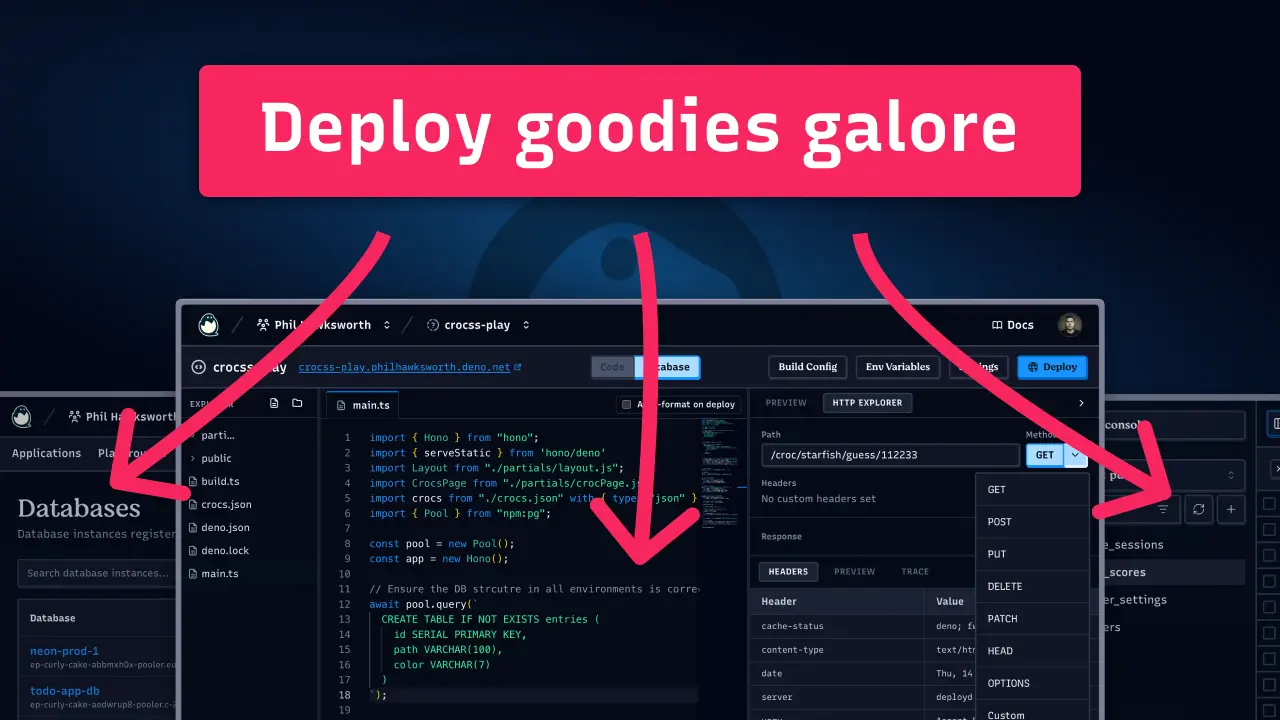
A Deno engineer hits ‘deploy’ on a rebuilt platform after months of secretive community testing—now live for all, no invites needed.
Deno Deploy’s relaunch isn’t some quiet patch. It’s a ground-up rewrite, chasing the flexibility Netlify baked into the edge computing playbook back when I covered their rise. The original post from the Deno team spells it out: they’ve ditched the clunky old flow where you’d build locally or in GitHub Actions, then shove artifacts over. Now? Integrated CI/CD right in the platform, with branch previews, rollbacks, and autodetect for your framework—static or dynamic.
Here’s the thing. Platforms like Vercel have owned this space for years, so Deno’s not inventing the wheel. But they’re tweaking it smartly: optimized builds that don’t force you into their box, plus controls for hosting models that feel bespoke without the hassle. Connect your GitHub repo, watch the pipeline hum with real visibility, and you’re shipping. It’s the kind of polish that screams ‘we learned from seven years at Netlify’—shoutout to the author’s cred there.
“Our build pipeline offers great visibility into the deployment process and your automated builds. Just connect a GitHub repo to your application and off you go.”
That quote nails the simplicity. No more wrestling external pipelines if you don’t want to—though they keep the option, wisely.
Why Deno Deploy’s Data Ramp Feels Like a Netlify Echo
Data headaches kill momentum. Deno gets it: start with Deno KV, their lightweight key-value store, using code so dead simple it’s almost poetic.
const kv = await Deno.openKv();
await kv.set(["preferences", "ada"], { username: "ada", theme: "dark" });
Boom—persistent storage, no vendor lock-in vibes. Deploy prompts you to link a KV store on upload, then scales you to Postgres as complexity hits. And here’s my unique take: this mirrors Netlify’s CMS evolution in 2018, where they hooked devs with git-based content before full headless DBs. Deno’s doing the same for full-stack TypeScript apps—low-friction entry, but with escape hatches. Smart, because it undercuts the ‘all-in-one trap’ critics lob at Vercel.
But wait—Deno doesn’t stop at KV sugar. They’ve wired in third-party DBs like Postgres, auto-provisioning separate instances per environment (dev, staging, prod). No data pollution sneaking from your hacky test scripts into live users. Code stays identical; env vars swap smoothly.
“It’s very helpful to know that the data in your development or staging environments will not pollute the data in your production environment. Deno Deploy just handles that for you.”
Love that. Prisma partnership throws in free provisioning from the console, schema migrations included. Poke your data via a built-in explorer—query across contexts without tab-switching hell.
One punchy caveat: they’re begging for database requests on Discord. Open to feedback, sure—but is that a feature or a todo list?
Is Deno Deploy’s CI/CD Actually Competitive?
Look, integrated builds aren’t novel. Netlify did it ages ago; Vercel refined it into an art form. Deno’s twist? Flexibility. Run builds in their high-perf env or your own. Autodetects frameworks, optimizes for static/dynamic splits. Branch deploys? Check. Rollbacks? Duh.
Yet here’s where I get skeptical. The old ‘Deploy Classic’ lingers for legacy fans—good call, avoids alienating users mid-pivot. But will this lure the masses? Market share says no, not yet. Vercel’s got 10x Deno’s traction per GitHub stars on integrations. Deno’s betting on TypeScript purity and edge simplicity to flip scripters from Node fatigue.
Numbers back the opportunity: Deno’s runtime downloads spiked 40% YoY (per their blogs), while serverless hosting market hits $20B by 2025 (Statista). If Deno nails pricing—spoiler, they haven’t detailed it here—that’s table stakes.
And the PR spin? It’s there, calling this ‘huge,’ but the author’s Netlify scars add cred. No blind hype.
Short para for rhythm: Bold move.
Now, the editorial knife: This isn’t revolutionary—it’s catch-up with flair. But in a world where devs bolt between Supabase for DBs and Railway for deploys, Deno’s console unification could snag indie hackers tired of API spaghetti. Prediction: Watch for 2x adoption in OSS repos by Q2 2025, especially Rust/TS hybrids. They’ve got the runtime edge; now the platform must deliver uptime north of 99.99%.
Why Does This Matter for TypeScript Devs?
TypeScript’s king—80% of new web projects (State of JS 2023). Deno was built for it, no config tsconfig.json nonsense. Deploy amplifies: serverless functions that just work, KV for state, Postgres ramps without infra Tetris.
Scale it out. Your solo side project starts with KV for user prefs. Hits 10k users? One-click to managed Postgres, env vars auto-magicked. No downtime migrations if you lean on their tools. That’s the dream they’re selling—and frankly, executing better than Fly.io’s scattershot approach.
Critique time. Corporate hype creeps in with ‘simpler, powerful’ buzz, but the code samples prove it. Still, third-party DB reliance (Supabase? Neon?) means no true zero-config like PlanetScale’s MySQL. They’re iterating—good—but don’t sleep on that gap.
Wrapping the deep dive: Deno Deploy’s relaunch positions it as the anti-Vercel for purists. Flexible CI/CD. Graduated data layers. Console data viz. If you’re greenfielding a TS app, test it. Incumbents won’t budge without pressure.
🧬 Related Insights
- Read more: Releases That Don’t Make You Want to Quit: Chasing the Mythical Safe Deploy
- Read more: Hjarni: The Brain OpenClaw Agents Desperately Need
Frequently Asked Questions
What is the new Deno Deploy? Rebuilt platform with integrated CI/CD, KV storage, auto-provisioned Postgres per env, and data explorers—all optimized for Deno’s TypeScript runtime.
Deno Deploy vs Netlify or Vercel? Deno offers more hosting model flexibility and easier KV-to-DB scaling, but trails in ecosystem size; best for TS-first edge apps.
How do I migrate to new Deno Deploy? Link your GitHub repo, pick integrated builds or external, associate KV/DB—old ‘Deploy Classic’ stays for smoothly transition.
Is Deno Deploy free? Core deploys are generous (like before), Prisma DBs free to start; scales paid—check console for tiers.