So, everyone expected more. More integration, more complexity, more services talking to each other like a panicked, overcrowded party. And what did we get? The usual mess. Tightly coupled scripts, brittle direct calls, and then, poof, the whole thing implodes when one tiny service hiccups.
That’s where API orchestration swoops in, or at least, that’s the pitch. Forget the messy choreography of services bumping into each other. Orchestration means a central conductor, a maestro making sure the right API gets called at the right time, with the right data, and — critically — with a plan for when things go spectacularly wrong. Think less free-for-all jazz improv, more carefully rehearsed symphony.
Why All the Fuss? It’s About Sanity.
Look, for years, developers have been duct-taping integrations together. You build a feature, it needs data from service A and service B. So you write a function that calls A, then calls B. Simple. Until you add service C. And D. And suddenly, your codebase looks like a ball of yarn that a cat has thoroughly enjoyed. Error handling? Good luck threading that through a dozen direct calls. Data consistency? Ha.
API orchestration aims to cut through that Gordian knot. It’s about defining a business process — like fulfilling an order — as a single, cohesive workflow. The orchestrator manages the state, tells service X to do its thing, waits for the result, then tells service Y to do its thing, maybe only if service X succeeded. It’s a bit like hiring a project manager for your code. Someone’s got to be in charge.
Who’s Actually Making Money Here?
This is where my ears perk up. These orchestration platforms, whether they’re open-source projects like Temporal or Cadence, or commercial offerings from integration platform giants, are clearly seeing a market. Why? Because the pain is real. Companies will pay to avoid those integration nightmares that kill developer productivity and, more importantly, revenue. A botched order process isn’t just an inconvenience; it’s lost sales and unhappy customers. So, the money’s in the stability, the reliability, the ability to actually manage the complexity.
It’s Not Magic, It’s Engineering.
Let’s not get too starry-eyed. Building a strong orchestrator, or even effectively using a framework, isn’t trivial. The original content spells out the key steps: you need a blueprint (mapping the whole darn thing out), you need to pick the right pattern (orchestration over chaotic choreography), and you need a solid engine. These aren’t just libraries you sprinkle in; they require architectural thought.
And the nitty-gritty: idempotency and retries. This is where many projects stumble. If you’re retrying a payment request, you absolutely do not want to accidentally charge the customer twice. Idempotency means a request can be made multiple times without changing the result beyond the initial application. Combine that with smart retry logic — not just banging your head against the wall, but waiting, scaling the waits (exponential backoff) — and you start to see some real engineering.
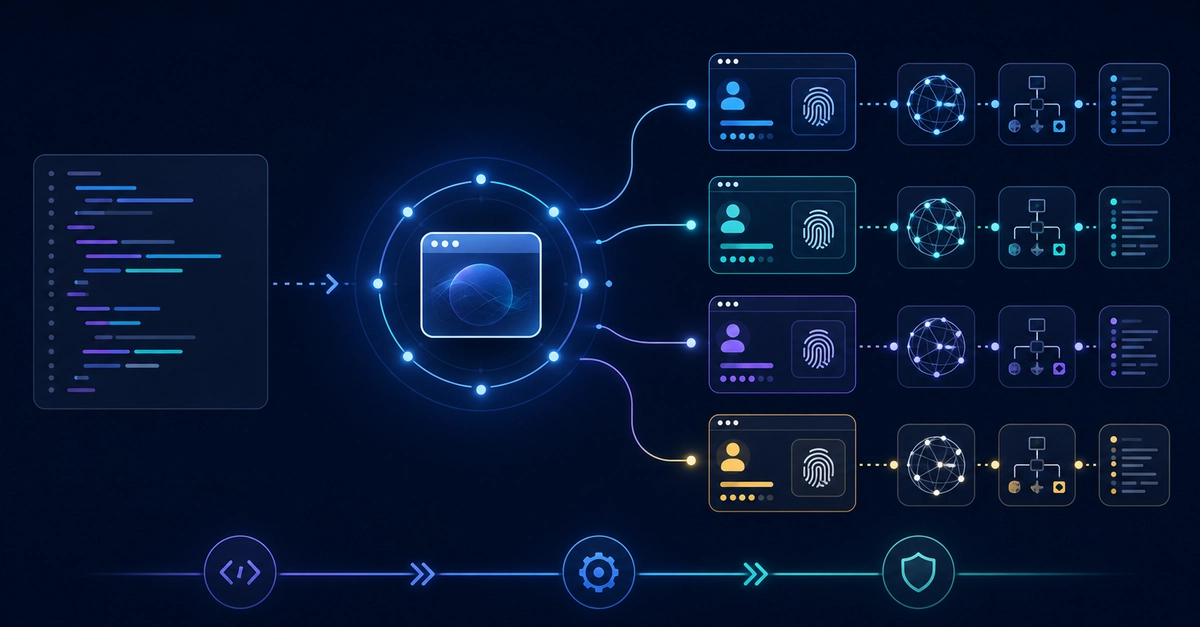
A central orchestrator service takes charge. This orchestrator defines, executes, and monitors the entire sequence of API calls, managing state, applying business logic, and handling failures, thus transforming a series of disparate calls into a cohesive, resilient workflow.
The original piece even throws in a Python snippet. Nice touch. It demonstrates the @retry decorator, a fundamental building block. But notice how even in this simplified example, you have to think about simulating failures. Because in the real world, they will happen. Your orchestrator needs to know what to do when the ERP service is down, or the payment gateway throws a fit.
A Word on Compensation: The Unsung Hero
This is often overlooked, but critical. What happens if your order process creates an ERP entry, processes payment, but then inventory fails? You can’t just leave the payment as is and have a pending order with no stock. Compensation actions — essentially, undoing previous steps — are vital for maintaining data integrity. It’s like a transactional rollback, but across multiple external services. Messy, but necessary.
Is this just another buzzword salad? For some vendors, sure. But the underlying problem is genuine, and the solutions offered by proper orchestration frameworks are the logical next step beyond ad-hoc integration scripting. It’s about bringing order to the inevitable chaos of distributed systems.
Does This Mean More Boilerplate?
Potentially. You’re replacing complex, scattered logic with a centralized workflow definition. The complexity doesn’t vanish; it’s just managed differently. Frameworks aim to reduce the boilerplate for defining those workflows, handling the retries, state management, and error handling automatically. The trade-off is often learning the framework and adhering to its patterns. It’s a classic engineering choice: more upfront architectural investment for long-term maintainability and resilience.
What’s the Alternative to Orchestration?
Choreography. That’s where services communicate directly, often via events. Think of it like a flash mob — everyone knows their part and reacts to cues, but there’s no single director. It can be highly scalable and responsive, but it’s incredibly hard to track, debug, and manage complex, multi-step business processes. If you need strict sequencing, state management, and strong error handling for a long-running business transaction, choreography alone often falls short. Orchestration provides that central control.
The Historical Parallel: The Rise of ORMs
Back in the day, developers wrote raw SQL for everything. It was powerful, direct, but a nightmare to maintain and prone to errors. Then Object-Relational Mappers (ORMs) arrived. They abstracted away the SQL, providing an object-oriented interface. Many developers initially scoffed – ‘It’s hiding the real work!’ But ORMs won because they drastically improved developer productivity and reduced common errors, even if they weren’t perfect for every edge case. API orchestration feels like a similar evolutionary step for service integration. We’re abstracting away the raw API calls into manageable workflows.
🧬 Related Insights
- Read more: Claude Code’s Limit Meltdown: Devs Torch $100 Plans in 30 Minutes
- Read more: HCP’s Multi-Owner Fix: Real Relief or HashiCorp Hype?
Frequently Asked Questions
What is API orchestration? API orchestration is a design pattern where a central service manages and sequences calls to other services to achieve a complex business process, handling state, logic, and errors.
Is API orchestration the same as choreography? No, orchestration uses a central controller to manage workflows, while choreography involves services communicating directly with each other, often through events, without a central coordinator.
When should I use API orchestration? Use API orchestration for complex, stateful workflows that require strict sequencing, transactional integrity, centralized error handling, and clear visibility into the execution process.