Seven years building apps for the global market. Seven years of watching perfectly decent ideas get tossed back by gatekeepers like Apple and Google. And you know what? Developers keep making the same dang mistakes.
This isn’t rocket science, but it sure as hell requires more nuance than just coding. We’re talking compliance and localization here, the gritty details that can sink an otherwise promising app before it even sees the light of day. Let’s break down the four biggest landmines developers are tripping over, again and again.
The Language Illusion
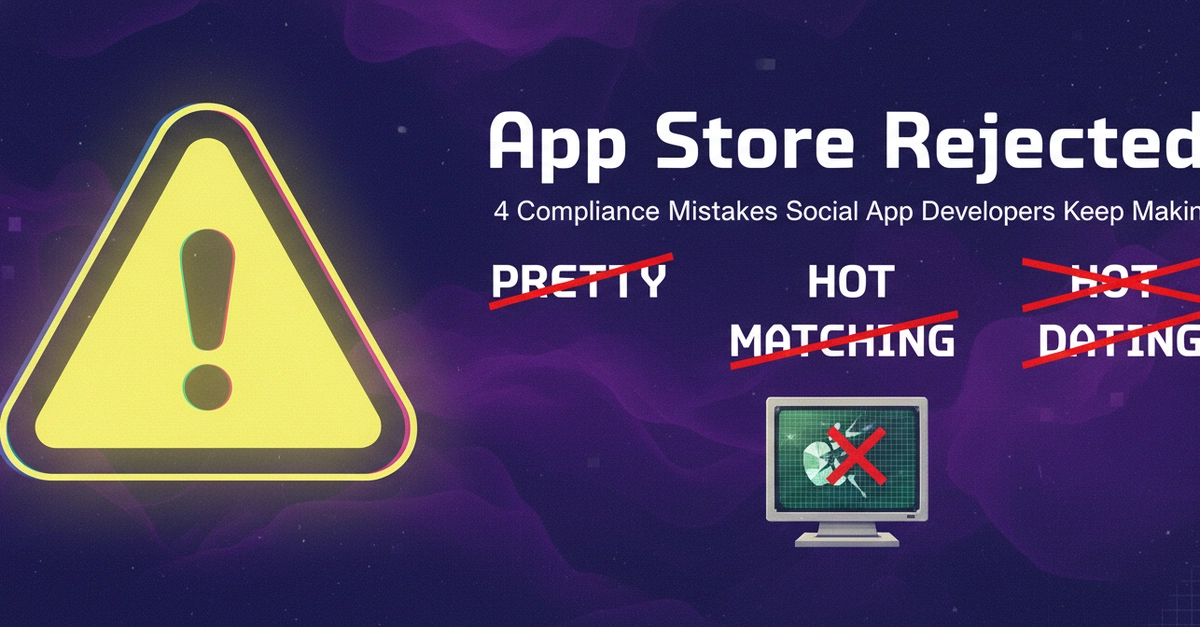
Most non-native English speakers (and even some native ones, frankly) vastly underestimate how loaded certain words are. Especially when they appear in your app’s metadata — think titles, descriptions, screenshots, even the ad copy you push out on Meta. Platforms are scanning this stuff. They’re running keyword scans. And certain words? They’ll automatically slap your app into a higher-risk category. Dating-suggestive. Objectifying. Even vaguely adjacent to paid companionship.
Here’s a taste of the blocklist I’ve cobbled together over the years, especially for video and social apps running on Meta ads. It’s a grim sort of poetry, isn’t it?
# Adjectives describing people (especially women)
pretty, hot, sexy, cute, lonely, beautiful
# Dating-implying verbs and nouns
like, dating, kiss, love, mate, matching, hookup
# Phrases
find couple, find love, ask her on a date, find your soulmate, meet locals
# Gendered targeting terms
girls, women, ladies (when paired with above)
And don’t even get me started on the visual cues. Heart icons, kissy-face emojis, personal info plastered all over screenshots like a cheap billboard. Names, IDs, ages, locations, ‘popularity scores’ — it’s like they want to get flagged. Cleavage, tight clothes, swimwear, sleepwear… beds in screenshots? Instant rejection. Single people with text like ‘hi,’ ‘call me,’ ‘meet me’? My god, the reviews have seen it all. Maps, location pins… suggesting offline meetings. It’s a minefield.
Reframe, Don’t Defend
This is where most developers flinch. They see their app as a dating service, or a hookup facilitator, and they lean into it in their descriptions. Bad move. Instead of pleading your case with words like ‘dating’ or ‘match,’ try this:
# Instead of dating language, use:
discover, connect, explore, conversation, community
# Instead of describing users, describe activity:
content creators, language exchange partners, cultural conversations
# Instead of "find love/match":
"find your community", "discover new perspectives"
See the difference? It’s not about lying; it’s about framing. Leading with the use cases your moderation systems are actually built around. Which, let’s be honest, should be the dominant use case of your app anyway, right?
This whole dance is particularly important when you’re pushing utility apps. Google Play, for instance, has a completely different set of trigger words. For them, it’s not about sexual content; it’s about functional fraud. Think words like ‘boost,’ ‘clean,’ ‘optimize’ for an app that doesn’t actually do that. It’s a different flavor of rejection, but just as painful. The key here is to understand the category your app falls into.
The Localization Labyrinth
Then there’s the localization code mess. You’ve got in for India, id for Indonesia. Sounds simple enough, right? Wrong. Mix those up, and you’re suddenly serving the wrong language or, worse, the wrong cultural context. It’s a simple mistake, but one that can have surprisingly far-reaching consequences for how your app is perceived and, ultimately, approved.
Content Moderation: Architecture, Not an Afterthought
This is the big one. Too many developers treat content moderation as a bolted-on feature, an afterthought they’ll get to after launch. Big mistake. It needs to be baked into the very architecture of your app. Think about it: if your app facilitates real-time connections between strangers, and you haven’t got strong moderation systems in place from day one, you’re inviting chaos. And the app store reviewers? They’re looking for that chaos. They’re looking for the riskiest version of your app first, especially if your reviewer notes have anything remotely suggestive.
Reviewer notes that surface the riskiest version of your app first.
Apple’s review process scans those notes before a human even touches the app. The vocabulary you use there sets the tone. Using words like ‘match,’ ‘strangers,’ ‘dates,’ ‘meet locals,’ ‘random’ signals to the reviewer: ‘This is a high-risk dating-adjacent product. Find me problems.’ Conversely, framing it as a ‘Video-based social platform’ where users ‘discover short-form video content’ and engage in ‘real-time conversation features’ signals a content platform with safety infrastructure. It’s the same app, just a different story.
Visual Conventions Matter More Than You Think
Beyond the words, the visuals are a minefield. Apple wants iPhone frames in your screenshots. Google wants Android. Trying to slip one past the other is a classic rejection trigger. It has nothing to do with the product itself, but everything to do with metadata conventions. If you’re submitting in multiple regions, get your reviewer notes dialed in for each. Don’t assume a blanket approach will fly.
Look, nobody likes getting rejected. It’s a pain in the backside. But most of these hiccups are avoidable. It’s about understanding the system, playing by its (often bizarre) rules, and framing your app intelligently. Stop treating compliance as a chore and start seeing it as part of the product development cycle. Your app store review will thank you. And so will your sanity.