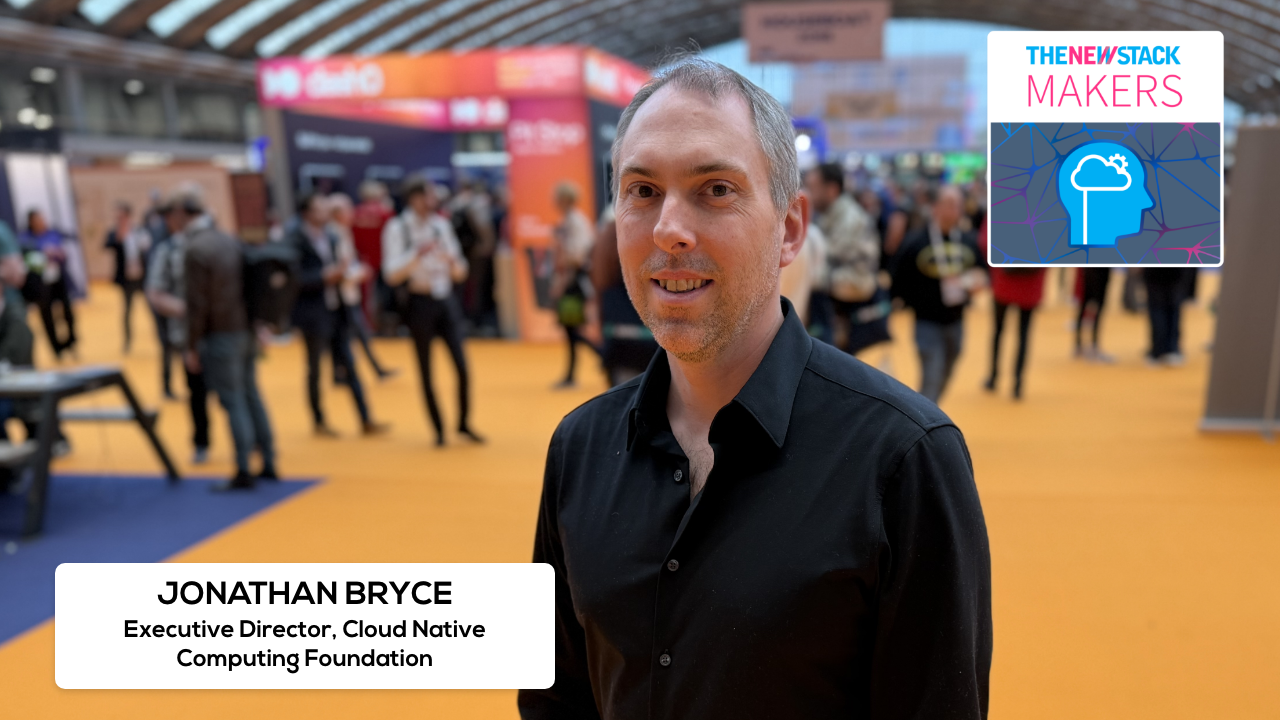
Spotlights pierce the cavernous hall at KubeCon Europe in Amsterdam, March 2026—Jonathan Bryce, CNCF’s executive director, grips the mic amid a sea of badges and laptops, announcing the first wave of Kubernetes AI conformance certifications.
Kubernetes AI conformance. That’s the phrase buzzing through the cloud-native crowd, finally bringing order to the chaos of deploying AI models across fractured cloud landscapes. Until now, what flew on AWS GPUs choked on GCP; autoscaling behaved like a drunk toddler from one provider to the next. But enterprises—80% already hooked on Kubernetes for traffic spikes—demand better. This program’s laser-focused on standardization, turning AI from lab toy to production beast.
Why Is AI Inference Suddenly Kubernetes’ Killer App?
Here’s the thing. Bryce drops a stat that hits like a freight train: by 2026’s end, two-thirds of AI compute will chase inference, not training—the ratio flipped from three years back. “93 gigawatts dedicated to inference by decade’s end,” he says, outpacing all other compute combined. Training? Batch jobs, overnight grinds. Inference? Always-on, real-time hunger. Jimmy Song from Dynamia.AI nails it: Kubernetes delivers elastic, cost-efficient serving with GPU-aware scaling, versioning, observability—the microservices playbook, just swap CPUs for GPUs.
“AI Inference is retracing the path of cloud-native microservices, only the underlying compute has shifted from CPU to GPU.” — Jimmy Song, Dynamia.AI
That quote? Pure gold. It underscores the architectural pivot: AI’s maturing, models trained once, served forever. But without conformance, you’re rebuilding wheels per cloud. Enter CNCF’s program, launched November 2025. Big dogs like AWS, Azure, Google Cloud, Red Hat, Nvidia snag first badges. Even OVHcloud joins, nodding to Europe’s sovereignty push. Bryce: “It’s just growing so rapidly that there’s plenty of demand.”
Short paragraphs hit hard. This isn’t hype—it’s necessity.
How Does Kubernetes AI Conformance Actually Work?
Start simple. Clusters must expose accelerators—GPUs, TPUs—standardly. Workloads declare: “Gimme X of these, for Y time.” Kubernetes’ DRA (Dynamic Resource Allocation), fresh from late 2025, makes it real. No more vendor hacks.
But it evolves. Networking, storage next. Certs expire; re-test. Automation’s brewing for easier validation. Bryce urges community input: “It’s really defined by the people who participate, to stay very close to real world needs.”
And llm-d? CNCF incubator star, March launch. Pre-integrated framework wedding vLLM (open-source inference engine) to Kubernetes. Opinionated deploys bridge high-level planes to low-level engines. Collaborates directly with conformance—interoperability on steroids.
“It integrates vLLM… into a Kubernetes cluster, where that makes a lot more specific decisions and opinionated deployment options that conformance program requires right now,” Bryce explains.
Wander a bit: Imagine the early Docker days, pre-Kubernetes conformance. Containers everywhere, but portability? Nightmare. Ports clashed, volumes vanished. Kubernetes conformance fixed that in 2017-ish, exploding adoption. This AI version? Same script. My bet—unique angle here—by 2028, it’ll spawn an edge inference boom, models serving from telco racks to factory floors, certified K8s clusters the universal runtime. Corporate spin calls it ‘maturity’; skeptically, it’s survival for open-source amid Nvidia’s grip.
Will Kubernetes AI Conformance Kill Vendor Lock-In?
Look. Portability’s the holy grail. One cluster spec across providers means no rip-and-replace for AI pipelines. But caveats—early tests skim basics. Full maturity? Years out, as requirements balloon. Red Hat, Nvidia lead because they built the plumbing. OVHcloud? Sovereignty flex, dodging US hyperscalers.
Challenges linger. Real-time inference demands sub-100ms latency; autoscaling mustn’t stutter. GPUs hog power—93 gigawatts? That’s a grid’s nightmare. Yet Kubernetes’ scheduler, battle-tested on web-scale, adapts via DRA, device plugins.
Deep dive: Architecturally, it’s device plugins evolving. Pre-conformance, Nvidia’s DCGM exporter or whatever proprietary. Now, standardized APIs. Workload says ‘nvidia.com/gpu: 4’; scheduler allocates, monitors. Failures? Pod evicts cleanly. That’s the ‘how’—predictable resource claims, like memory but for tensor cores.
Critique the PR gloss. CNCF touts ‘production readiness,’ but hundreds passed base conformance; AI’s nascent. Growth’s explosive—KubeCon’s biggest ever—but community buy-in’s key. Bryce calls for verticals (auto, finance) to shape it. Ignore that, and it ossifies.
One sentence: Standardization wins.
Then sprawl: Picture a bank deploying fraud-detection inference—needs 1000s of A100s, bursting on Black Friday traffic. Conformance ensures GCP-to-AWS lift without rewrite; observability (Prometheus, already K8s-native) tracks token throughput, hallucinations even. Cost? GPU sharing via multi-tenancy, slashing idle waste. Why now? Inference’s 2/3 compute share forces it—training’s centralized (xAI clusters), serving decentralizes.
Why Does Kubernetes AI Conformance Matter for Open-Source Devs?
Devs rejoice. No more cloud-specific SDKs. vLLM on llm-d? Drop YAML, kubectl apply. Observability baked—metrics for queue depth, throughput. Autoscaling? Keda or Karpenter, GPU-tuned.
Bold prediction: This conformance ignites open-source inference wars. Ray, KServe evolve; llm-d leads. By 2027, expect 90% production inference on certified stacks—historical parallel to OCI images standardizing containers, birthing Docker Hub empires.
Skepticism: Nvidia’s CUDA moat remains. Conformance standardizes access, not engines. But open engines (vLLM, TensorRT-LLM) gain.
Medium para. Europe’s buzzing—GDPR-compliant sovereignty via OVH. US giants certify to stay relevant.
Fragment. Pace accelerates.
Expansive close: Community working groups shape it—join, lest hyperscalers dictate. Testing automation looms, easing certs. From Amsterdam’s floor to your cluster, this is AI’s cloud-native coming-of-age.
🧬 Related Insights
- Read more: Zero AWS Experience to CLF-C02 Certified: The Cloud Door Just Opened for You
- Read more: Taste Isn’t Vibe—It’s the Moat AI Can’t Cross
Frequently Asked Questions
What is Kubernetes AI conformance?
CNCF program certifying clusters handle AI workloads—GPUs, TPUs—portably across clouds via standards like DRA.
Does Kubernetes AI conformance prevent vendor lock-in for AI?
Yes, by standardizing resource exposure and scheduling, letting workloads run unchanged on certified AWS, GCP, or OVH clusters.
When will Kubernetes AI conformance cover networking and storage?
Expanding now; initial focus on accelerators, with re-certification as tests mature—likely 2026-2027 full suite.