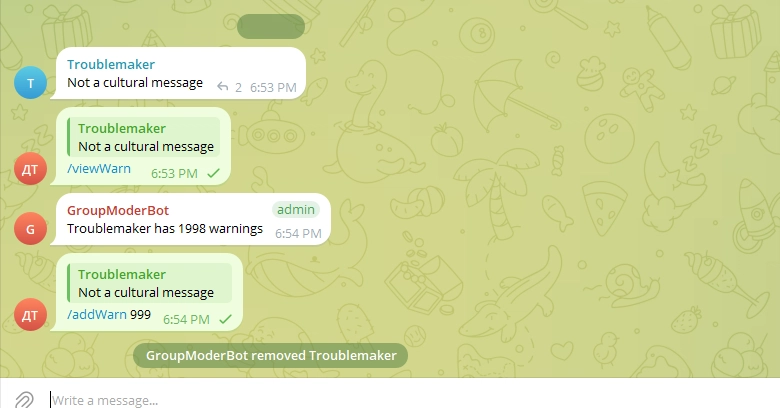
Five months. That’s the stark reality check a C++ Telegram bot developer faced after underestimating the scope of a seemingly simple project. What began as a quick dive into the niche world of Telegram bots using C++ devolved into a monolithic main() function, a common pitfall for solo developers, before a deliberate architectural overhaul took hold.
This wasn’t just about building a Telegram bot; it was a deep dive into the practical application of software engineering principles. The project, GroupModerBot, started as an exploration, a way to solidify C++ skills after a prior project. The initial tech stack was straightforward: C++20, the tgbot-cpp library for Telegram API interaction, and SQLiteCpp for database persistence.
The “It Works” Trap
Like many nascent projects, the early version embraced the “as long as it works” mantra. All logic resided within a colossal main() function in TestTGBot.cpp. Yet, even in this nascent stage, glimmers of good practice emerged. Configuration was wisely externalized to a DataForBot.txt file, sidestepping the need for recompilation for simple changes like bot tokens or database paths. This is a pragmatic approach, often overlooked in the rush to get a prototype running.
Furthermore, database integrity was considered early on. A const unordered_map (though the name, admittedly, could be better) was used to define expected database tables and columns. The bot would then check for their existence before executing queries, throwing <a href="/tag/sqlite/">SQLite</a>::Exception for any discrepancies. This proactive approach prevents runtime crashes due to schema mismatches—a common source of frustration.
Owner authentication was another early win. A Managers table, coupled with an isTableEmpty check and a unique confirmation code system, provided a surprisingly strong method for establishing bot ownership, preventing unauthorized access. It’s a simple, yet effective, guardrail.
Despite these good solutions, the monolithic
main()became difficult to read, even though I tried to add delimiters in the code.
But the core problem persisted: the main() function had ballooned into an unmanageable beast. The author notes the difficulty in reading and maintaining this monolithic structure, even with attempts at code separation. This is where the true evolution began.
Architects of Code
The narrative takes a sharp turn as the developer acknowledges the project’s underestimation and commits to a structured plan. The goal? To transform the ‘spaghetti’ code into a well-defined architecture, embracing Object-Oriented Programming (OOP), an in-memory cache, and more sophisticated moderation algorithms. This pivot is critical. It’s the difference between a personal script and a maintainable application.
The move towards OOP is more than just a stylistic choice; it’s about modularity and scalability. Breaking down the bot’s functionalities into distinct classes—each responsible for a specific aspect of its operation—makes the codebase easier to understand, test, and extend. This is crucial for any project with ambitions beyond a simple hobbyist endeavor.
An in-memory cache, for instance, can dramatically improve performance by reducing redundant database queries for frequently accessed data. Imagine a bot that constantly needs to check user permissions or group settings; caching these values can offload significant pressure from the database, leading to faster response times and a more fluid user experience.
The mention of “non-standard user punishment algorithms” hints at a desire for more nuanced moderation than simple bans or mutes. This suggests a move towards configurable rules, perhaps incorporating temporary restrictions, reputation systems, or even AI-driven analysis of user behavior—all requiring a more complex, structured backend than a single main() function could ever support.
Why Does This Matter for Developers?
This project’s evolution is a microcosm of a broader trend in software development: the necessity of strong architecture, even for seemingly niche applications. The initial phase, while functional, is inherently fragile. As complexity grows, a monolithic structure becomes a bottleneck for innovation and a breeding ground for bugs. The developer’s decision to invest time in refactoring—moving from a procedural main() to an OOP design—is a proof to the long-term value of good software engineering practices.
It underscores that for any tool intended for more than trivial use, planning and architectural foresight are not optional luxuries but fundamental requirements. The C++ Telegram bot’s journey from chaos to structure offers a valuable lesson: don’t let convenience today become a technical debt burden tomorrow.
🧬 Related Insights
- Read more: UAE Business Setup: Is IRHA the Missing Piece?
- Read more: [War Story] Ditched Slack for Discord, Saved 30% on Comms
Frequently Asked Questions
What is tgbot-cpp?
tgbot-cpp is a C++ library designed to interact with the Telegram Bot API, allowing developers to create bots that can send and receive messages, manage groups, and perform other Telegram-related actions using C++.
Is OOP essential for every Telegram bot? While not strictly essential for very simple bots, Object-Oriented Programming (OOP) becomes increasingly beneficial as the bot’s functionality grows. It helps organize code, improve maintainability, and scale the application more effectively, especially for complex moderation tasks.
How can an in-memory cache improve a Telegram bot? An in-memory cache stores frequently accessed data (like user permissions or group settings) directly in the bot’s RAM, rather than repeatedly querying the database. This significantly speeds up response times, reduces database load, and enhances the overall performance of the bot.