The hum of a laptop fan, a late-night coding session, and the sudden clarity of a fundamental concept clicking into place.
For anyone looking to truly grasp REST APIs, the impulse to jump straight into frameworks like FastAPI or Flask is understandable. They promise efficiency, abstraction, and a faster path to production. Yet, a growing number of developers are discovering that the most profound understanding often emerges not from the polished end product, but from peeling back the layers to reveal the bedrock.
This is precisely the path taken by a developer who recently documented their journey building a miniature HTTP server in Python. Their experiment, detailed on a personal blog, eschewed high-level theory for hands-on, byte-level interaction, revealing the granular mechanics that power the web’s most ubiquitous communication protocol.
Is This Tiny Server Actually Useful?
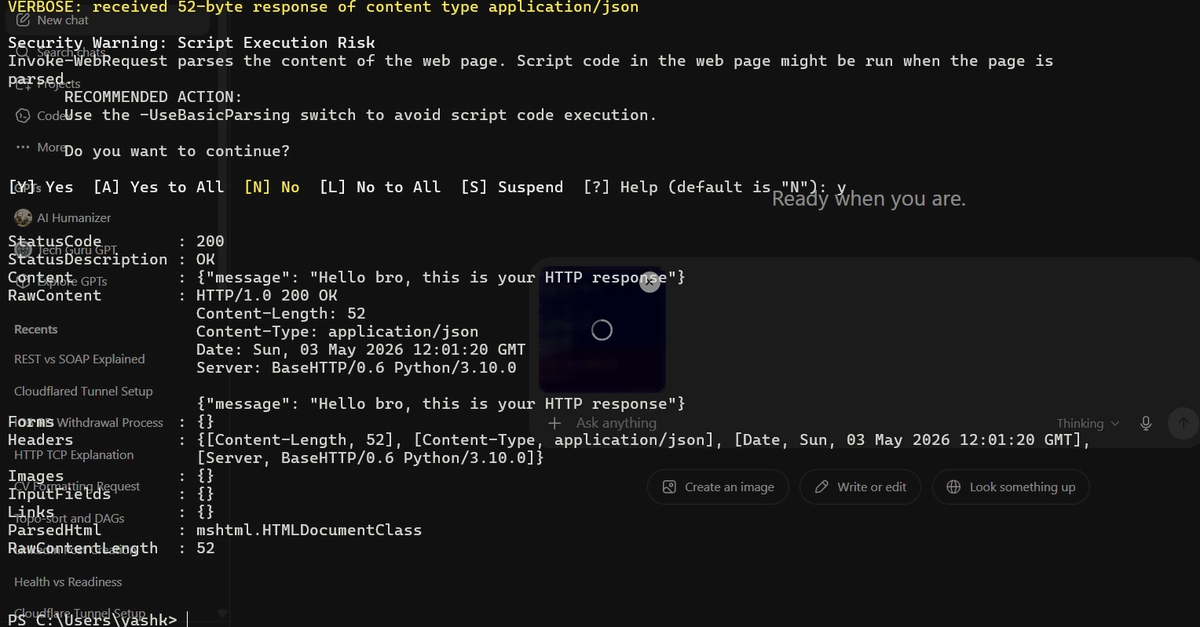
Let’s be clear: this isn’t about replacing your production-ready backend. The BaseHTTPRequestHandler in Python, while functional, is a far cry from the feature-rich, performance-optimized frameworks available today. However, its utility lies not in its capabilities, but in its educational transparency. By spinning up a server on localhost:8000 and hitting it with <a href="/tag/curl/">curl</a> -v http://localhost:8000/, the developer witnessed the unadorned truth of an HTTP request and response.
The output from curl was not just data; it was a blueprint. Seeing the HTTP/1.0 200 OK status code, followed by headers like Content-Length: 52 and Content-Type: application/json, and then the actual JSON body {"message": "Hello bro, this is your HTTP response"}, provided an invaluable, tangible lesson.
This helped me understand that an HTTP response is not just data. It has multiple parts: Status code, Headers, Body
This dissection is critical. It demystifies the magic that frameworks often perform. Understanding that a response is a structured sequence of status, headers, and body is foundational. It’s the difference between knowing that an API works and knowing how it works.
Why Does This Matter for Developers?
In an industry that constantly pushes for faster development cycles and more abstract tooling, there’s a tangible risk of losing sight of core principles. Frameworks abstract away the nitty-gritty: connection management, request parsing, routing logic, response serialization. While this abstraction is a superpower for productivity, it can also become a crutch, masking a fundamental lack of understanding.
This Python experiment offers a powerful antidote. It underscores the learning points: how clients send requests, how servers parse them, the significance of routing, and the indispensable role of status codes and content-type headers. These aren’t abstract concepts; they are the gears and levers of web communication. The verbose output of curl acts as a powerful debugger, illuminating the invisible handshake between client and server.
The developer’s progression is telling: moving from this basic server to FastAPI signifies a logical next step, armed with a clearer picture of what the framework is abstracting. It’s not about starting with the framework; it’s about understanding what’s happening underneath the framework. This approach builds a more resilient and adaptable developer, one who can troubleshoot effectively and innovate more meaningfully.
Historically, this kind of foundational exploration was more common. Early web developers often built things from the ground up, gaining an intimate knowledge of protocols. While we’ve moved past that necessity for most applications, the educational value remains immense. It’s akin to a mechanic understanding how an engine works internally before they start working with advanced diagnostic tools.
While the original post doesn’t offer a direct comparison of performance metrics between its tiny server and a modern framework, the implied takeaway is that the clarity gained outweighs any perceived inefficiency of the learning exercise. The market dynamics here are shifting; as AI tools become more adept at generating boilerplate, the unique value of human understanding of first principles will only increase. This isn’t just about learning to code; it’s about learning to engineer.
🧬 Related Insights
- Read more: Model Flop Utilization: The Metric Exposing AI Networks’ Hidden Waste
- Read more: Kubernetes Debugging: Secure, Swift, and Actually Auditable
Frequently Asked Questions
What is BaseHTTPRequestHandler in Python?
BaseHTTPRequestHandler is a base class provided by Python’s http.server module that allows you to easily create simple HTTP servers. It handles parsing incoming HTTP requests and provides methods to respond to them.
Why is understanding HTTP headers important for API development? HTTP headers contain vital metadata about the request or response, such as the content type, caching directives, authentication tokens, and more. Understanding them is crucial for debugging, security, and optimizing API performance.
Will learning basic HTTP servers help with modern frameworks like FastAPI? Absolutely. While frameworks abstract many details, understanding the underlying HTTP protocol, request/response structure, and status codes provides a strong foundation, making it easier to grasp how frameworks work and to troubleshoot issues.