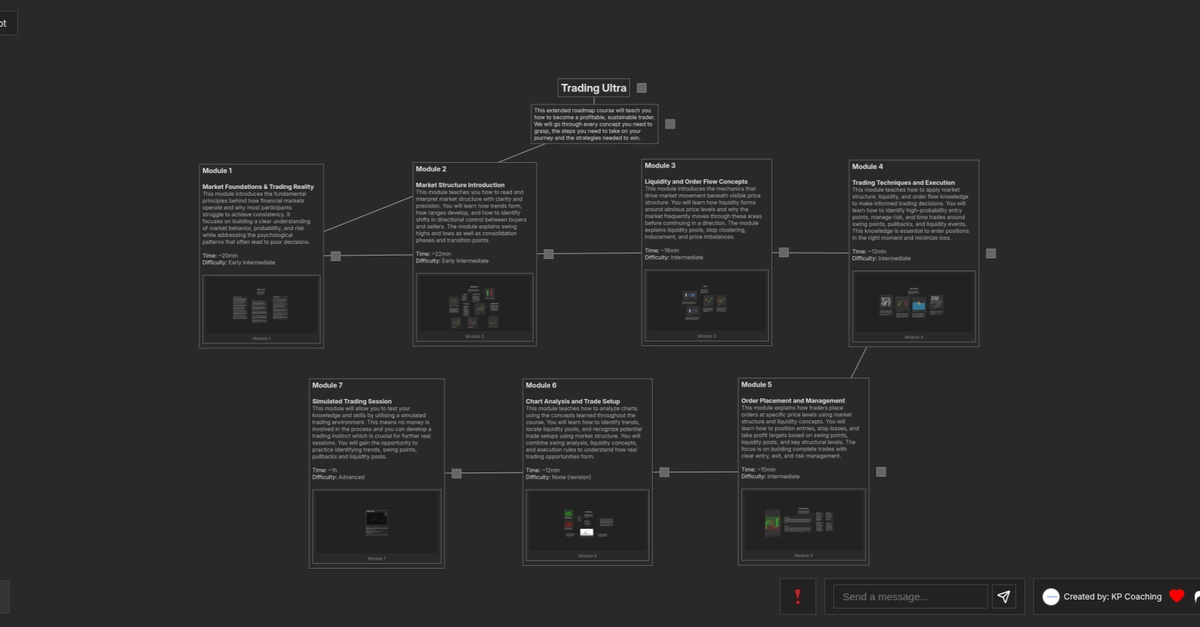
Are we still watching long, boring videos to learn? Seriously, who has the time? Pathmind’s creator certainly doesn’t seem to think so, which is why they built a course platform that ditches the screen-filling lectures for something… dare I say it… visual. Interactive mind maps. It’s a bold swing at a market that’s long overdue for a shake-up.
The premise is simple, and frankly, long overdue. Traditional online courses are a slog. Planning, recording, editing – it’s a production nightmare for creators and a patience-tester for learners. Pathmind claims to strip all that away. Lessons in under 20 minutes? No video required? This is the siren song of efficiency, and frankly, I’m listening. They moved from a simple Chrome extension to a full-blown website, building out the course functionality after the initial user surge. 2,000+ maps later, some are already publishing. It’s not just an idea anymore; it’s a burgeoning ecosystem.
Why Ditch the Videos?
The justification is laid out plain: speed and engagement. Creators can churn out content faster. Learners get to, as they put it, “navigate topics visually instead of sitting through a long video.” It’s a direct jab at the passive consumption model that plagues so much online learning. The mind map format, at its core, is about connections. It’s about seeing how pieces of information relate to each other, not just in a linear fashion. This is precisely where traditional video courses often fail. They present information sequentially, forcing the learner to build the connections in their own head, if they’re even paying attention.
The mind map format also helps learners since they can navigate topics visually instead of sitting through a long video.
This is the core promise. A promise that sounds fantastic on paper. But the devil, as always, is in the execution. Can a visual, node-based system truly replace the depth and nuance that a well-structured video lecture can provide? Can it handle complex, abstract topics without devolving into a confusing web of disconnected thoughts? That remains the million-dollar question. It’s not just about creating faster; it’s about learning effectively. And that’s a much harder nut to crack.
Is This Just Another Shiny Object?
This isn’t the first time someone has tried to innovate in the course creation space. We’ve seen platforms gamify learning, integrate AI tutors, and push for micro-learning modules. Most of these efforts, while well-intentioned, have largely served as additions to the established order rather than replacements. Pathmind’s approach feels different. It’s not adding a feature; it’s fundamentally altering the structure. This is where the real risk, and potential, lies. It’s akin to ditching the printed page for a scroll— a radical departure that demands a complete rethinking of how information is delivered and consumed.
The risk here is that mind maps, for all their visual appeal, can become overwhelming. A sprawling mind map can be just as disorienting as a long video, perhaps even more so if the connections aren’t clearly defined. The creator mentions interactive nodes, which is a good start. But what does that interactivity entail? Is it just clicking to expand? Or is there a deeper layer of engagement that mimics the guided discovery of a good lecture? We need to see more than just the structure; we need to understand the pedagogical underpinnings.
What’s Next for Mind Map Courses?
Pathmind’s journey from a Chrome extension to a course platform is a proof to iterative development. They saw a problem — the inefficiency of course creation — and built a solution. They’re now at a point where they’re actively seeking feedback, which is smart. The true test will be whether this format can scale. Can it accommodate advanced subjects? Can it foster deep understanding, not just superficial recognition?
Ultimately, Pathmind’s success hinges on a single, terrifying question: are people willing to learn differently? We’re creatures of habit. We’ve been trained to consume information in linear, passive ways for decades. Asking learners to actively navigate, connect, and construct knowledge visually is a big ask. If they can pull it off, they won’t just have built a new course platform; they’ll have nudged the entire education technology industry forward. If they fail, they’ll be another interesting experiment in the graveyard of educational innovation. It’s a high-stakes gamble.
🧬 Related Insights
- Read more: 3.1 Seconds to Boil: The Precise Mind of George Goble Fades Out
- Read more: Zero Dollars to SEO Hero: Prerendering My React SPA on AWS Without the Bill
Frequently Asked Questions
What is Pathmind? Pathmind is a course creation platform that uses interactive mind maps as its primary format, aiming to make content creation faster and learning more visual.
Will this replace video courses? It’s too early to tell, but Pathmind’s core innovation is offering a visual, node-based alternative to traditional video lectures, which could appeal to creators and learners seeking efficiency and a different learning style.
How fast can you build a course on Pathmind? The creator claims lessons can be put together in under 20 minutes without recording any video, a significant reduction compared to traditional course production timelines.