The cursor blinks. You type: “Is buying a Tesla a good investment in 2026?” And then you wait. You expect the usual. A carefully manicured, LinkedIn-ready synthesis. A hedged bet. A perfectly neutral answer that tells you absolutely nothing definitive.
But here’s the thing: that’s not what happens. Not with AgentMesh. Because AgentMesh doesn’t just give you an answer. It gives you the argument. It’s an architecture that shatters the illusion of monolithic AI opinion, forcing disagreement into the light.
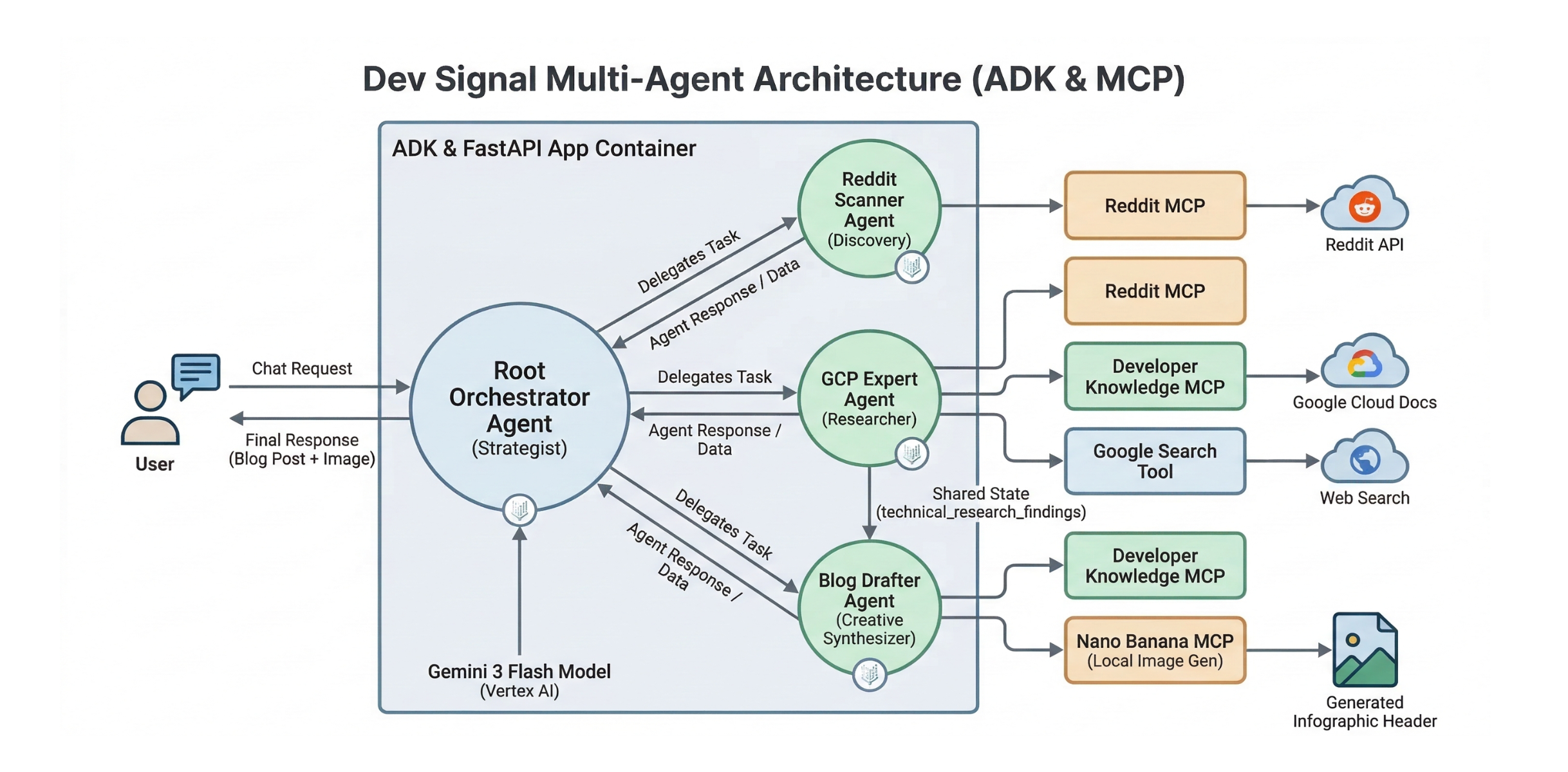
Forget single-shot LLMs that collapse to a single, bland voice. AgentMesh, built on Google’s Gemma 4, injects genuine friction into the AI’s process. Three agents. Three distinct roles. An advocate, a skeptic, and a pragmatist. Each tasked with tackling an opinionated prompt, not to find consensus, but to excavate the edges of debate. They rummage through Wikipedia and Hacker News comments in parallel, digging for evidentiary soil. Then, a synthesizer steps in, laying bare the fault lines. Where did they agree? Where did they diverge? And crucially, how does it all reconcile? You’re not just getting a conclusion; you’re witnessing the messy, human-like process of reaching one.
Why This Architecture Matters
This isn’t just a neat parlor trick. It’s a structural rebellion against the prevailing trend of LLMs smoothing over complexity. The typical AI response, lauded for its “balance,” often amounts to a statistical averaging of its training data. It’s the equivalent of a politician giving a press conference – every potential angle covered, but with no genuine conviction to be found. AgentMesh, on the other hand, exposes the inherent contradictions and competing pressures that lie beneath any opinionated topic.
Think about it: most LLMs are trained to be helpful and harmless. That often translates to avoiding strong stances, hedging bets, and presenting a neutral facade. It’s a safety mechanism, perhaps, but one that actively suppresses the very nature of debate and critical thinking that we, as humans, rely on. AgentMesh flips this. It’s designed to encourage conflict, to highlight where the evidence thins, where biases creep in, and where practical realities clash with idealistic aspirations.
The model is averaging perspectives behind the scenes. AgentMesh forces the disagreement to surface, with three agents each holding a fixed stance and a synthesizer that calls out where they parted ways.
This approach directly tackles the ‘hallucination problem’ not by preventing it, but by making its boundaries clear. When an agent is forced to defend a stance, and the evidence is thin, it’s more likely to admit that, or to rely on broader, less substantiated reasoning. The synthesizer’s job is then to categorize these claims: this is backed by research, this is a widely-held belief, this is pure conjecture. It turns the AI’s limitations into a feature, offering a more transparent and, ironically, more trustworthy output.
Under the Hood: Browser-Native Power
What’s truly compelling is how AgentMesh achieves this, especially its commitment to privacy. The entire architecture runs in the browser, no servers contacted by the developers. This is achieved through two primary modes: local inference using Gemma 4 E2B via WebGPU and Transformers.js, and a cloud-based option that routes directly to the Gemini API using your own Google AI Studio key. This means users can opt for complete privacy with local execution—at the cost of speed—or use Google’s powerful cloud models for faster results, all without data leaving their browser.
This dual approach highlights a critical trade-off in the AI landscape: privacy versus performance. Running models locally offers unparalleled data security, a significant concern for sensitive queries. However, it often means slower processing times and reliance on available hardware. Cloud-based solutions, conversely, provide near-instantaneous results and access to larger, more capable models, but necessitate trust in third-party infrastructure and data handling. AgentMesh elegantly navigates this by offering users the choice, allowing them to tailor their experience to their specific needs and comfort levels.
Why Gemma 4?
The choice of Gemma 4 isn’t arbitrary. The developer points to three key properties: strong instruction following, a refusal to invent facts when notes are thin, and a unified architecture across browser and server. Smaller models, they note, often drift, hedge, or fail to maintain their assigned persona—a critical failure for a multi-perspective system. Gemma 4’s ability to stay sharp, to anchor in research, and to admit when information is weak, is what makes AgentMesh’s output genuinely insightful rather than just a theatrical performance.
It’s a smart move, architecturally. By using the same model family, the transition from local to cloud requires no fundamental rework. This agility is key for developers trying to balance cutting-edge capabilities with accessible deployment. The 128K context window offers substantial headroom for future enhancements, like feeding entire documents directly to the agents, promising even deeper analysis.
The Future of AI Debate
AgentMesh feels like a prescient step. As AI models become more integrated into our decision-making processes—from investment choices to policy debates—the ability to see the process of arriving at a conclusion, rather than just the conclusion itself, becomes paramount. It’s a call to arms against the seductive simplicity of AI-generated consensus, urging us to engage with the messier, more revealing reality of competing perspectives. The AI bubble might burst, or it might transform, but understanding why different experts argue about it is far more valuable than a simple yes or no.
Will This Replace My Job?
No, AgentMesh is not designed to replace human jobs. Instead, it acts as a sophisticated thinking partner. By surfacing arguments and counter-arguments, it aims to augment human analysis, helping users make more informed decisions by understanding the nuances and disagreements inherent in complex topics.
How Does AgentMesh Ensure Privacy?
AgentMesh prioritizes privacy by running entirely in the browser. When using the local mode, all processing happens on your device with zero data sent to any servers. The cloud mode routes queries directly from your browser to the Gemini API using your personal key, bypassing any backend infrastructure controlled by the developer.
What are the Key Components of AgentMesh?
AgentMesh consists of three distinct AI agents—an advocate, a skeptic, and a pragmatist—who explore different stances on a given prompt. These agents gather evidence from sources like Wikipedia and Hacker News. A synthesizer then analyzes their findings, highlighting points of agreement and disagreement, and reconciling their perspectives into a cohesive overview.