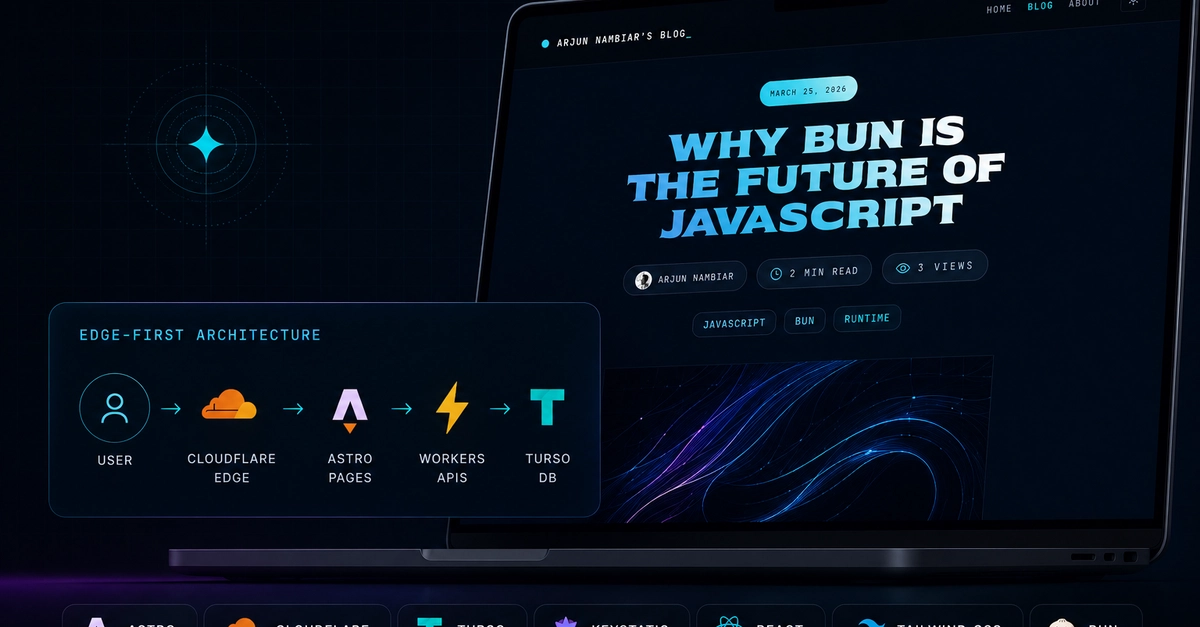
Whoa, hold up. You can build a globally distributed blog platform for about a dollar a month? My wallet just perked up, but my BS detector went into overdrive. Twenty years in this racket, and anything that smells this cheap usually means someone’s getting a raw deal, or the folks slinging the tech are lining their pockets with VC cash, not actual customer revenue. Let’s peel back the layers on this $1/month marvel.
So, the idea is a dev blog that’s less “slapped-together WordPress template” and more “engineered marvel.” Think: lightning fast, content-centric, interactive without feeling like a bloated React app, dirt cheap, and entirely yours. The author’s weapon of choice? Astro, Cloudflare Workers, Turso, React islands (of course), Pagefind for search, Giscus for comments, and a whole lot of front-end tinkering. Sounds ambitious. Or maybe just like another weekend project designed to generate some LinkedIn cred.
Is $1/Month Even Possible? A Skeptic’s Take
The pitch is simple: get that global speed, keep it cheap, and have full control. The author lists Astro, Cloudflare Pages, Workers, and Turso as the backbone. And yeah, on paper, these components can be incredibly cost-effective, especially for a low-traffic personal blog. Cloudflare Pages offers a generous free tier, and their Workers are priced per request – if you’re not getting Slashdotted daily, you’re probably under their free limits. Turso, the distributed SQLite darling, is also pitched as super cheap for its scale. But here’s the rub: the real cost isn’t just the monthly bill. It’s the engineering time, the learning curve, and the potential hidden complexities when things inevitably go sideways.
What’s the catch? Well, you’re tying yourself to a specific ecosystem. Astro’s popularity is undeniable, especially post-Cloudflare acquisition. It’s designed for this edge-first world. The author even admits that Astro felt like the natural fit, allowing static HTML by default and only sprinkling in JavaScript (React islands, naturally) where absolutely necessary. This keeps the JS payloads tiny, initial loads snappy, and Lighthouse scores soaring. It’s a smart approach, for sure, but don’t pretend it’s a magic bullet. It’s a tradeoff, and like all tradeoffs, someone, somewhere, is making bank on your choice.
Early on, I was throwing React islands everywhere for convenience. Over time, I started stripping hydration back aggressively and only keeping interactivity where it genuinely improved the experience.
This quote, buried in the original piece, is a goldmine. It’s the classic “add more features, then realize you need to remove them for performance” cycle. The author admits to over-engineering with React islands, a classic symptom of falling for the latest frontend fad. The biggest performance gains? Stripping stuff out. Amazing how that works, isn’t it? It’s not about adding more magic; it’s about removing the unnecessary bloat. And who benefits? The framework creators, the library maintainers, and the cloud providers who love you running their JS.
The Cloudflare Conundrum
Cloudflare Pages and Workers are undeniably powerful for this kind of deployment. Global edge delivery, automatic deployments, built-in caching, SSL, DDoS protection – it’s a slick package. But let’s not gloss over the friction. The author ran into a nasty bug where database calls silently failed in production on Cloudflare Workers, only to work perfectly locally. Why? Runtime differences. Node.js vs. Workers. This isn’t a minor hiccup; it’s a fundamental architectural challenge that forced a rethink of the local development setup. Splitting adapters, introducing shims – this is the hidden cost of chasing the edge dream. It’s a proof to how much we still don’t understand about distributed systems, even when they promise simplicity.
This experience is precisely why I’m always wary of the latest shiny object. The promise of simplicity often hides a deep well of complexity, and developers end up spending more time fighting the platform than building features. The author learned more about edge runtimes from this one bug than from any tutorial. That’s the kind of learning that sounds good on a resume, but it translates to actual, painful development hours. And who’s paying for those hours? You are.
Turso: The Distributed SQLite Siren Song
And then there’s Turso. A distributed SQLite database. For a content platform, it’s pitched as a good fit for things like page views, analytics, interaction systems, and likes. Instead of wrestling with a monolithic Postgres instance, you get… what? A distributed database that’s still relatively niche. While the author sings its praises for avoiding a centralized instance, the reality is that distributed databases, even SQLite-based ones, bring their own set of headaches. Consistency, replication, query performance across nodes – these are not trivial problems to solve. For a simple blog, it’s overkill. For anything more complex, you’re venturing into territory where the dollar-a-month price tag might start to look like a bad joke when you factor in debugging time and potential data integrity issues.
The Real Cost: Beyond the Dollar Sign
Look, building a cool, fast, globally distributed blog for a dollar a month is a neat technical flex. It’s the kind of thing that gets you noticed on Hacker News. But let’s be clear: this isn’t a scalable business model for anyone but the companies providing the underlying infrastructure. Cloudflare wins by getting developers hooked on their edge services. Turso wins by showcasing their distributed database. Astro wins by proving their framework’s capabilities. The end-user – the blogger – wins… well, they get a cheap blog. But at what cost to their sanity and their precious development hours? It’s the classic Silicon Valley playbook: offer a seemingly unbeatable price, lock users into an ecosystem, and then figure out how to monetize them later. This isn’t about empowering creators; it’s about building an ecosystem. And in that ecosystem, the platforms are the ones truly making money.
Lessons from the Edge
This whole exercise boils down to a few core takeaways:
- Edge is the new Normal (for some): Cloudflare’s ecosystem is clearly positioning itself as the default for modern web development, especially for performance-conscious builders.
- Complexity Hides in Simplicity: The promise of a cheap, fast, global blog is enticing, but the underlying engineering and potential debugging are anything but simple.
- React Isn’t Always the Answer: Even the author admits to overusing React islands, a reminder that sometimes simpler solutions are better.
- Ecosystem Play: Building a platform like this is less about the end-user’s savings and more about the infrastructure provider’s ecosystem growth.
🧬 Related Insights
- Read more: rs-trafilatura Meets spider-rs: Finally, Crawling That Doesn’t Suck
- Read more: Vector Graph RAG: Multi-Hop Reasoning Powered Purely by Vectors
Frequently Asked Questions
What does Astro actually do? Astro is a web framework that lets you build fast, content-focused websites. It’s known for shipping static HTML by default, with optional interactivity added via components (like React islands). This approach prioritizes performance and SEO.
Is Cloudflare Workers a replacement for Node.js? Cloudflare Workers are a serverless execution environment that runs JavaScript, TypeScript, and WebAssembly at the edge, close to your users. While they can handle many backend tasks, they operate in a different environment than Node.js, with different APIs and limitations, making them suitable for edge computing rather than a direct Node.js replacement for all use cases.
Is this blog platform suitable for businesses? For a high-traffic business website, this specific architecture might require significant scaling and operational overhead. While the core technologies are strong, the ‘$1/month’ operational cost is likely only achievable for low-traffic personal projects. Scaling to enterprise levels would involve different cost structures and dedicated infrastructure management.