Here’s a number that should make you pause: 50%. That’s roughly how many enterprise applications, according to some industry estimates, still struggle with permission management, leading to security headaches and development slowdowns. Twenty years in this gig, and I’ve seen countless solutions pitched, each promising to finally wrangle the beast of user access. Most fizzle out, drowning in jargon and corporate spin. But this time, with the push towards Attribute-Based Access Control (ABAC), there’s a genuine shift happening, and it’s about time we talk about it without the fluff.
Remember when Admin, Editor, and Viewer were enough? Cute, right? That worked for your buddy’s personal blog or a small internal tool. But then came scale. Suddenly, managers can only tweak their own department’s TPS reports, support staff have a magical work_hours firewall around ticket access, and contractors get the digital boot the moment their project wraps. Traditional Role-Based Access Control (RBAC) just can’t hack it. It starts simple, then metastasizes into a nightmarish tangle of RegionalAdmin, FinanceManagerEU, and every other Frankenstein role you can imagine.
Every special-case role is usually a hidden architecture problem.
That quote, buried in the original material, hits the nail on the head. These custom roles aren’t elegant solutions; they’re duct tape on a fundamentally brittle system. You end up with duplicate permissions, hardcoded logic that’s a developer’s worst nightmare to untangle, and audits that require a forensic accountant and a crystal ball. It’s chaos.
Why ABAC is the Necessary Evolution
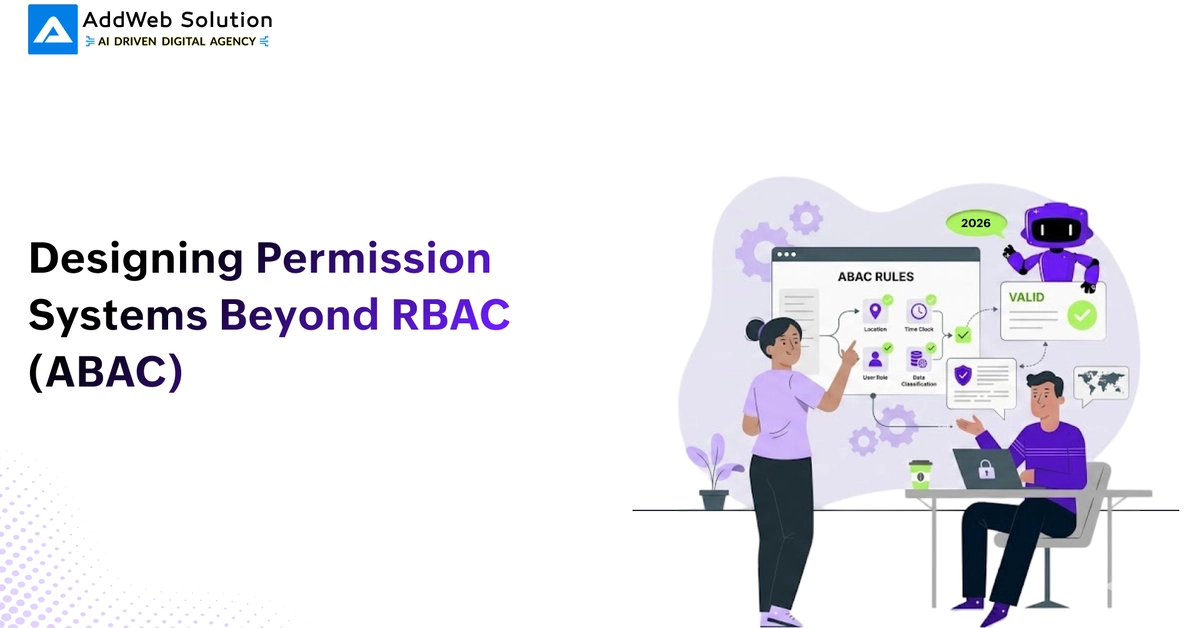
So, what’s the alternative? Enter ABAC. Instead of asking, “Is this user an Admin?”, ABAC asks the far more nuanced question: “Should this specific user, with these attributes, perform this action, on this resource, under these environmental conditions?” It’s a subtle but profound shift. It means your permissions aren’t tied to a static label but to a dynamic set of attributes.
Think about it: user attributes like department = finance, region = EU, employmentType = contractor. Resource attributes like document.ownerId or document.region. Action attributes like read, write, approve. And critically, environment attributes like currentTime, IP address, device type. Suddenly, your permission system can behave like a smart gatekeeper, not a bouncer with a clipboard.
Designing Authorization for the Real World
This isn’t just theory; it’s practical engineering. The folks behind this push advocate for a centralized policy engine. No more scattering permission checks like confetti. You want authorizationService.can(user, 'delete', project), not a thousand if (user.role === 'admin') statements scattered across your codebase. This makes your system auditable, maintainable, and frankly, sane.
And the principle of least privilege? It’s not just a buzzword; it’s foundational. Give users only what they need. Deny by default. If there’s no explicit rule allowing an action, access is denied. Period. This minimizes your attack surface and stops those embarrassing data leaks that make headlines for all the wrong reasons.
The Tech Stack Behind Smart Permissions
The recommended architecture looks like a familiar pattern: Client -> API Gateway -> Authorization Layer -> Policy Engine -> Attribute Store. It’s about isolating the authorization logic, making it a core piece of infrastructure, not an afterthought tacked onto your UI. Policy engines evaluate decisions based on those attributes we talked about. For instance, a policy might state that a user can ‘edit’ an ‘invoice’ only if user.department === resource.department and user.clearanceLevel >= 2.
But here’s where the rubber really meets the road: attribute modeling. Poor design here creates long-term pain. Storing canEditInvoices = true? That’s a rookie mistake. Storing department = finance and role = manager is the better path, leading to more flexible and scalable policies.
And for all you SaaS builders out there, the multi-tenant aspect is critical. Tenant A’s data must never bleed into Tenant B’s view. Every check needs resource.tenantId === user.tenantId. Missing this is a fast track to a headline-grabbing security breach.
Real-time authorization is another beast. Permissions can change in an instant – a user is suspended, a subscription expires. This throws a wrench in stale JWTs and cached data. Solutions involve short-lived tokens and strong server-side validation, but it’s a constant dance.
Is ABAC the Magic Bullet?
Look, no system is perfect. ABAC introduces its own complexities, particularly around managing and updating those attributes effectively. Performance and caching remain paramount. Getting authorization wrong can tank your application’s responsiveness. The original material emphasizes designing for scale and performance from the outset.
But compared to the RBAC quagmire, ABAC offers a path forward. It’s a more intelligent, context-aware approach that aligns with the demands of modern, complex applications. It’s about building systems that understand why access should be granted, not just who has a certain label. For developers building the next generation of enterprise software, understanding this shift isn’t optional; it’s survival.
🧬 Related Insights
- Read more: Forget Frameworks: Real Dev Income in 2026
- Read more: Sendkit: Finally, Email Infrastructure That Thinks Like a Dev — With AI Magic
Frequently Asked Questions
What does ABAC stand for? ABAC stands for Attribute-Based Access Control.
Will ABAC replace my job? No, ABAC is a sophisticated system that requires skilled developers and architects to design, implement, and maintain. It shifts the focus from managing roles to managing attributes and policies.
Is ABAC harder to implement than RBAC? ABAC can be more complex to set up initially due to the need for attribute management and policy definition. However, it offers greater flexibility and scalability, making maintenance easier in the long run for complex systems compared to sprawling RBAC configurations.