So, we’ve got new shiny forecasting models out there, Chronos and Toto, supposedly making our lives easier. But let’s cut through the marketing fluff for a second. What does this actually mean for the poor sod stuck on incident response at 3 AM, or the engineer trying to predict cloud costs for next quarter? It means potentially fewer panicked pages for sudden spikes, and maybe, just maybe, a slightly less chaotic capacity planning meeting. That’s the dream, anyway.
The real question, as always, is who’s making money off this and is it truly better, or just another buzzword bingo square? The folks behind Chronos are touting its zero-shot capabilities. In plain English? It’s supposed to work reasonably well right out of the box, without needing to be painstakingly trained on your specific, messy data. That sounds great, assuming it actually delivers. Because nobody has time to babysit a forecasting model like it’s a teething toddler.
Does It Actually Forecast Better Than My Cat Chasing a Laser Pointer?
This whole benchmark boils down to proving one thing: can these models predict future data points better than just… guessing? Or, as the academics put it, beating a ‘naive baseline’. It’s like saying your new chess engine can beat a beginner who just moves pieces randomly. Okay, cool. But the real challenge isn’t just saying ‘it’s sunny tomorrow.’ It’s knowing how sunny, and what to do if it suddenly starts raining cats and dogs.
That’s where the two metrics they’re using, MASE and CRPS, come in. MASE is your basic ‘how close is the guess to the real number’. If it’s less than 1, congrats, you’re smarter than just looking at the last data point. CRPS, on the other hand, is the more interesting one. It measures the quality of your predictions, especially how well you’ve accounted for the uncertainty. Think of it as the difference between saying ‘it might rain’ and saying ‘there’s a 70% chance of moderate rain between 2 and 4 PM, with a small chance of hail’. For operations folks, that latter kind of detail is gold. It tells you when to batten down the hatches, and when to just grab an umbrella.
“Bands, not just point lines, are critical in operations. The quantile envelope translates uncertainty into action: alert thresholds can follow the 0.9 band on spike‑prone services, while budgetary plans anchor around the median or 0.8.”
They tested Chronos and Toto on data from OpenTelemetry Demo, specifically memory usage from Prometheus and CPU usage from OpenSearch. Now, these aren’t your perfectly behaved, textbook time-series. Memory usage on Prometheus at 5m or 10m aggregation? That’s generally chill, with predictable cycles. OpenSearch CPU, though? That’s the wild child. It’s spikey, unpredictable, and prone to sudden outbursts that make the average look like a lie. Two very different beasts, and how the models handle them tells you a lot.
Why Does This Matter for Developers and SREs?
Look, nobody wants to be woken up by an alert because a forecasting model thought everything was fine, when suddenly the system decided to throw a tantrum. Long-horizon forecasting, they claim, helps with capacity planning. You know, the boring stuff like figuring out how much storage you’ll need next year or when to buy more servers. If your forecast is garbage, your capacity plan is garbage, and you end up scrambling at the last minute. The quantiles—those probability bands—are where the real operational magic supposedly happens. Want to set alert thresholds that don’t go off every five minutes? The upper quantile bands might help. Need to justify a budget for cloud spend? The median or 0.8 quantile could be your best friend.
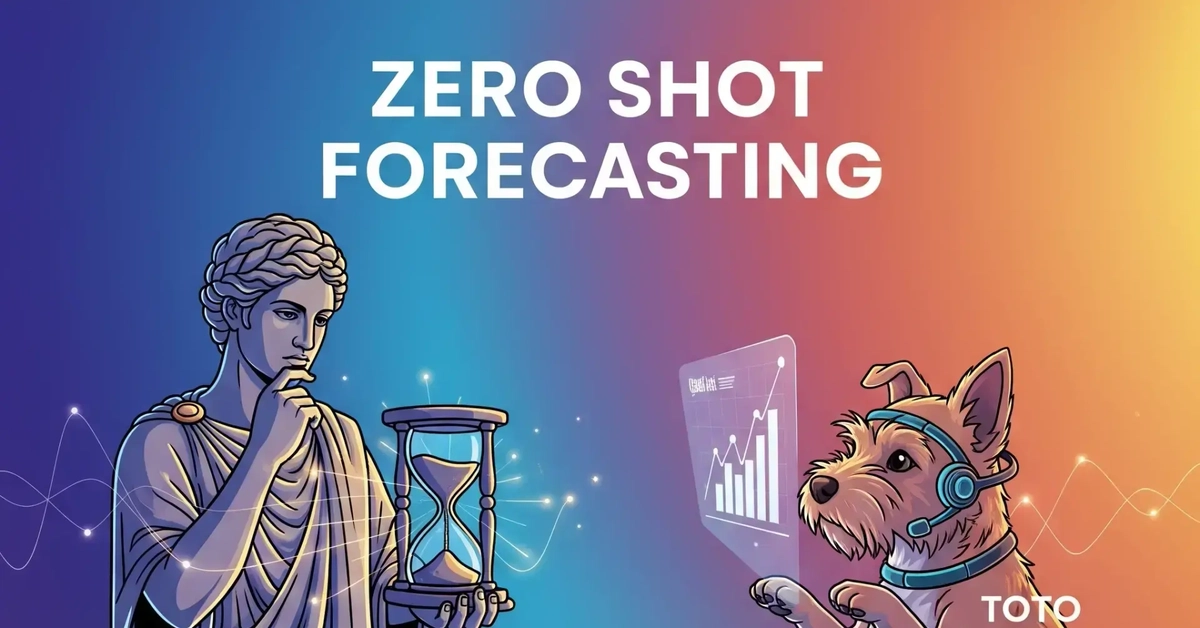
The key here is “zero-shot.” It means the models are supposed to generalize. They’re not being fed a massive amount of your specific historical data to learn your system’s quirks. This is crucial because who has the time and resources to meticulously label and train models on terabytes of telemetry? Not me, and probably not you either. So, if Chronos or Toto can actually perform well without that hand-holding, that’s a win. A small win, maybe, but a win nonetheless.
This benchmark is designed to see how well these models behave when they’re dropped into a new, unseen environment. It’s the ultimate test of whether they’re generalists or just fancy specialists. The original article mentions that Chronos emits calibrated 0.1–0.9 quantiles. This sounds like fancy talk, but it means it’s trying to give you a probability distribution, not just a single number. The hope is that when the bands widen, it’s a real signal that things are getting dicey, even if the main forecast line looks smooth.
This isn’t just about academic purity; it’s about reducing operational noise. If a model can reliably tell you, ‘Hey, things might go sideways in a few hours, but it’s not a certainty,’ you can prepare. You can nudge your team, run some extra checks, or just have that coffee ready. If it just says, ‘Everything’s fine,’ and then the whole thing implodes, well, that’s the kind of model you want to forget about.
What’s the unique insight here? The insistence on CRPS over MASE as the “real” metric for operational folks. MASE is just proving you’re not dumb. CRPS is proving you understand the risk. And in the world of SRE and platform engineering, understanding and quantifying risk is half the battle. This isn’t about predicting the future with perfect certainty—that’s a fool’s errand. It’s about understanding the range of possible futures and making smart decisions based on that understanding. The zero-shot aspect is also critical. If these models can truly generalize, they democratize good forecasting. If not, they’re just another niche tool for the data science elite.
🧬 Related Insights
- Read more: Meta’s Alexandr Wang Pledges Open AI Models — But Leaders Aren’t Buying It
- Read more: Twelve Bucks Buys an AI That Actually Works
Frequently Asked Questions
What does Chronos do? Chronos is a forecasting model designed to predict future time-series data without needing to be fine-tuned on specific datasets. It aims to provide both point forecasts and calibrated uncertainty estimates.
Will this replace my job as an SRE? Unlikely. While better forecasting tools can help reduce alert fatigue and improve capacity planning, they are unlikely to replace the critical thinking, troubleshooting, and incident management skills that SREs provide. Think of it as a tool to augment, not replace.
Is zero-shot forecasting truly new? No, zero-shot learning has been a concept in machine learning for some time. Applying it effectively to time-series forecasting in an operational context, however, is a significant area of development.