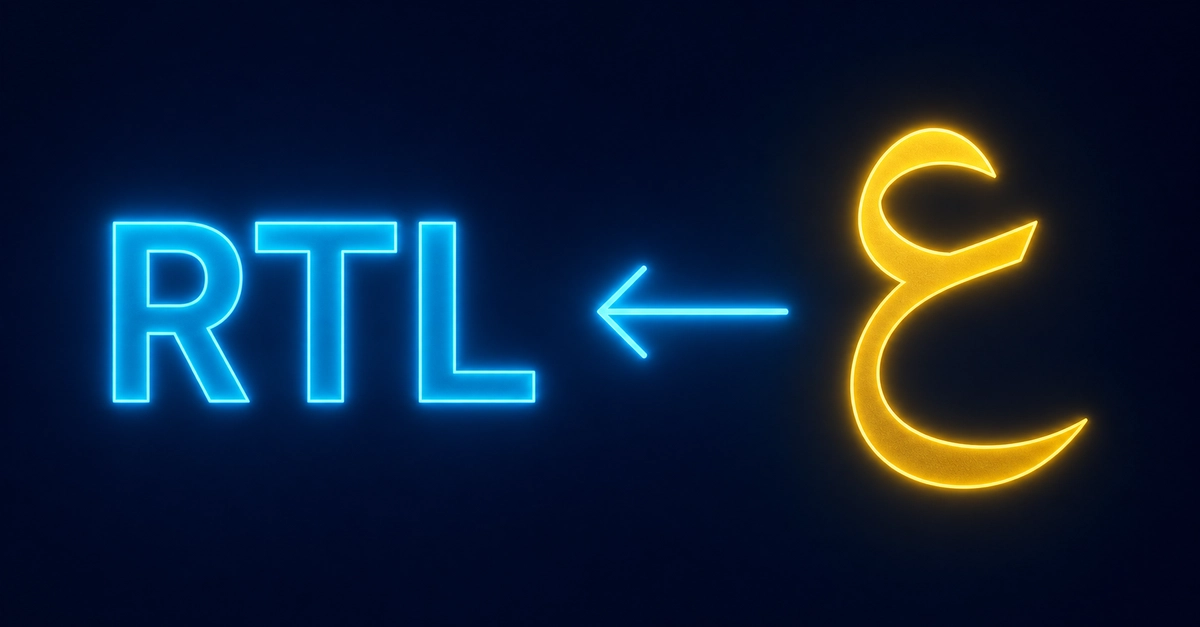
Text direction fixed.
It’s a problem many developers and users have bumped into: writing in Arabic and English simultaneously in a browser often leads to a digital traffic jam. That seemingly innocuous sentence, ‘مرحبا API بتاعك كويس’ – where API is the English intruder – gets flipped, garbled by the underlying Unicode Bidi Algorithm. It’s not a bug in one website; it’s a persistent annoyance across the web, even impacting major AI chat interfaces like Claude.ai and ChatGPT themselves. They’re wrestling with it, just like the rest of us.
But what if we could go beyond the superficial dir="rtl" tag and actually understand the text? That’s precisely what this new, open-source Chrome extension promises. Instead of just telling a block of text to go right-to-left, it builds a genuine BiDi parser. Think of it like this: the browser previously just saw a string of characters and, based on the last language it detected, decided the direction. This new tool, however, dissects the sentence, identifies the Arabic and English chunks separately, and then intelligently renders them using <bdi dir="ltr"> elements. That’s right, it wraps each English word in a tag specifically designed to isolate its text direction. It’s a sophisticated approach to a surprisingly stubborn problem.
Why This Matters for the Future of AI Chat
Major AI platforms like Claude.ai and ChatGPT, which render responses character by character, trigger the MutationObserver hundreds of times per second. This constant flux used to make fixing the text direction a chaotic, inefficient dance. The solution here? A smart debounce of 300ms. It’s a simple yet elegant delay, allowing the streaming response to finish before the extension swoops in for a single, comprehensive fix. This batch processing dramatically improves performance and stability.
This isn’t some niche, single-site hack. The extension is designed to work automatically on any website. It even handles inputs as you type, ensuring your mixed-language sentences remain coherent. Dynamic sites built with frameworks like React, Vue, or other SPAs (Single Page Applications) are also supported. And here’s the best part for us tech-focused folks: it’s light. Absolutely no servers, no tracking, just pure, client-side JavaScript goodness. It’s a proof to how powerful and focused a small piece of open-source software can be.
Is This the Ultimate Bidi Solution?
What’s truly exciting is the fully open-source nature of this project. The developer is actively soliciting feedback and bug reports on GitHub. This collaborative spirit is precisely what accelerates innovation in the developer tool space. Imagine; a tool that silently fixes a pervasive, irritating web problem, and then asks for your input to make it even better. It’s a model we should all be cheering for.
My own experience across several complex web applications has been surprisingly smooth. Websites that previously felt like navigating a linguistic minefield now present clear, readable Arabic and English side-by-side. The smoothly integration means you barely notice it’s there – until you realize your text isn’t jumbled anymore. It’s that subtle, yet profound, shift that marks a true platform improvement. We’re not just patching a problem; we’re building a better, more inclusive web experience, one character direction at a time.
This isn’t just about Arabic. This fundamental approach to parsing and rendering mixed-direction text could have broader implications for how we handle multilingual content online. The Unicode Bidi Algorithm is a complex beast, and tools that can wrangle it effectively are invaluable. The concept of a dedicated parser, rather than relying on browser defaults, feels like a necessary step forward. It’s the kind of foundational fix that, once implemented, makes you wonder how we ever lived without it.
Sites like Claude.ai and ChatGPT render responses character by character, so the MutationObserver is triggered hundreds of times per second. The solution was debounce 300ms — we wait for the streaming to finish, then fix it once.
If you’re a developer who works with multiple languages or just someone tired of jumbled text, this extension is an absolute must-have. It’s a reminder that sometimes the most impactful innovations come not from massive corporations, but from dedicated individuals and open-source communities identifying and solving real-world problems with elegant code.
🧬 Related Insights
- Read more: React 19’s useActionState: The Hook That Makes Forms Finally Fun
- Read more: LAB3’s HashiCorp Workflows Turbocharge Cloud Modernization
Frequently Asked Questions
What is the Unicode Bidi Algorithm? The Unicode Bidi Algorithm is a complex set of rules that determines how to display text composed of characters from different writing systems that have different directionalities (like Arabic, which is right-to-left, and English, which is left-to-right). It can sometimes struggle with mixed-language content, leading to display errors.
How does this Chrome extension fix the text direction issue?
The extension uses a custom BiDi parser to analyze text, identify individual words or segments based on their directionality, and then applies specific HTML tags (<bdi>) to ensure correct rendering. It’s more strong than simply setting a general direction for a block of text.
Is this extension safe to use on all websites? Yes, the extension is designed to be lightweight and operate entirely on the client-side without tracking or server interaction. It’s open-source, allowing anyone to inspect its code for safety and functionality.