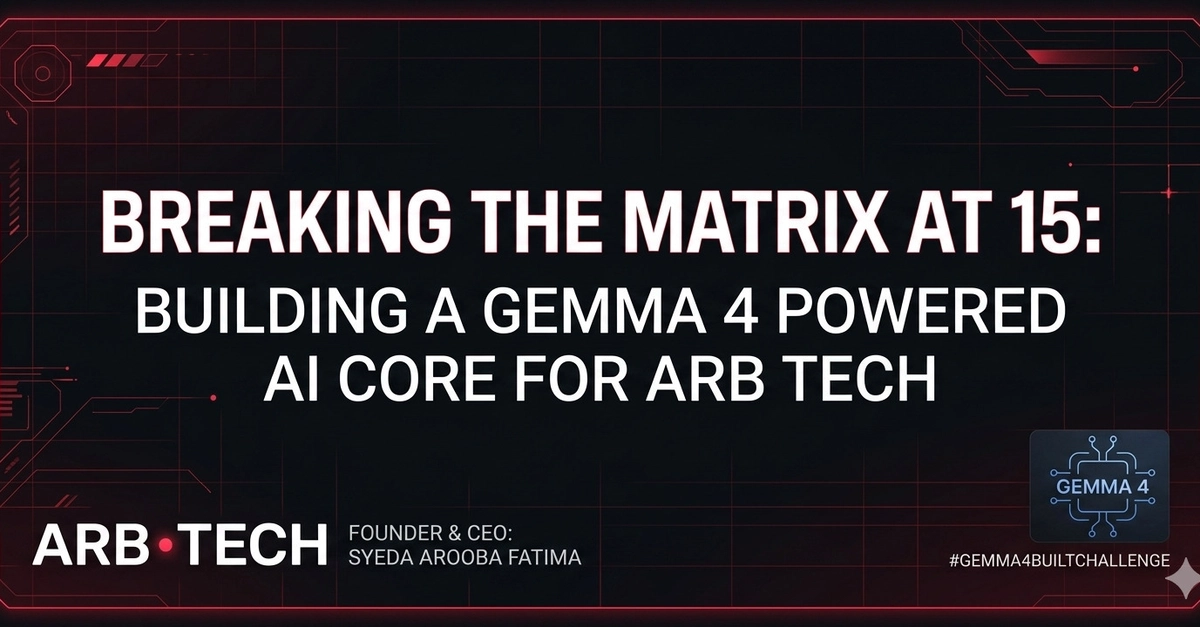
So, the collective tech industry was buzzing, right? We’d been promised an AI revolution, a tidal wave of generative prowess that would reshape workflows. We pictured massive cloud farms, complex server architectures, and developers juggling complex API calls like a circus act. And then, from out of nowhere – or rather, from the brilliant mind of a 15-year-old named Syeda Arooba Fatima – comes a project that doesn’t just nudge the needle; it snaps it clean off the dial.
This isn’t just another AI chatbot. This is a foundational shift, a seismic event disguised as a personal portfolio. Fatima, the CEO of ARB TECH, has delivered a sovereign, cyber-aesthetic AI Assistant Core that’s not just production-ready, it’s blisteringly fast and entirely client-side. Think of it like this: instead of building a sprawling, multi-story office building to house your receptionist, Fatima has built a hyper-efficient, sleek, self-contained kiosk that does the job better, faster, and without the massive overhead. It’s a paradigm shift in how we can conceive of and deploy AI.
Why does this matter so profoundly? Because most of what we’ve seen, the much-hyped enterprise AI solutions, rely on hefty server infrastructure. They’re like those old, monolithic mainframes that took up entire rooms. Fatima’s approach? It’s like miniaturizing that power into a smartphone, but without sacrificing capability. She’s taken Google’s Gemma 4 model, strapped it onto the lightning-fast Groq inference engine, and housed it all within a single, self-contained web document. The result? A practically invisible layer of intelligence that loads in a single second.
Zero Latency, Maximum Impact
Her project, built for the Gemma 4 Built Challenge, isn’t just about pretty aesthetics (though the cyber-aesthetic vibe is undeniably cool). It’s about security, efficiency, and an almost defiant independence from traditional cloud dependencies. The AI assistant isn’t just a conversational front; it’s a smart gatekeeper.
If a user tries to hijack the model to write code scripts or solve physics homework, the assistant politely shuts it down. The model remains strictly in-character as an executive brand representative. Instead of setting up random, unverified automated calendar invites, the AI successfully routes corporate inquiries directly to my private, secure ProtonMail network.
This is where the real magic happens. Fatima has implemented Anti-Exploit Guardrails and Absolute Context Locking. This isn’t just about preventing misuse; it’s about creating a genuinely secure and controlled brand experience. Imagine a sales bot that actually works, filtering leads and directing genuine inquiries without the usual spam and misfires. That’s what she’s built.
Now, it wasn’t a straight line to this sleek finish. Fatima initially dabbled with a Node.js serverless backend on Netlify. But here’s the messy human touch we love: it hit a wall. Mobile-build compilation barriers caused sync issues during rapid prototyping. Instead of throwing her hands up, she executed a brilliant Pivot Strategy. She said, ‘Nope, not today,’ and stripped away the backend entirely, hardcoding authorization strings directly into the document and routing straight to Groq. This is the kind of ingenuity that fuels true innovation – adapting, not just accepting.
Is Age Really Just a Number?
This project is a searing indictment of the ‘experience required’ mindset that plagues so many industries. Fatima, at 15, is architecting solutions that many seasoned engineers would struggle to conceptualize, let alone execute. Her Logic-First Programming Paradigm isn’t just a buzzword; it’s the engine driving this entire operation. She’s not layering AI onto existing systems; she’s building AI-native systems from the ground up.
This isn’t just about a personal portfolio. This is a blueprint for a new era of AI development. It demonstrates that with the right conceptual framework and the courage to innovate, we can build highly sophisticated, secure, and performant AI applications without the immense infrastructure costs and complexities that have thus far defined enterprise AI. It’s like discovering a cheat code for building powerful digital experiences.
The implications are vast. For developers, it’s a wake-up call to think client-side first, to explore the capabilities of local inference and highly optimized model execution. For businesses, it’s a glimpse into a future where enterprise-grade AI can be deployed with unprecedented speed and cost-effectiveness. We’re talking about a shift from buying massive server farms to essentially carrying potent AI assistants in our pockets, powering secure and intelligent interactions on the fly.
Fatima’s work with Gemma 4 and Groq is more than just a technical achievement; it’s a philosophical statement. It says that the future of AI isn’t necessarily bigger servers, but smarter, more efficient, and more accessible deployment strategies. She’s not just breaking the matrix; she’s rewriting its code for a new, more exciting reality.
🧬 Related Insights
- Read more: Gemma 4: Local AI Hits the Sweet Spot for Developers
- Read more: Ditching querySelector: How Native DOM Traversal Builds Bulletproof JS Apps
Frequently Asked Questions
What is Gemma 4?
Gemma 4 is a family of lightweight, state-of-the-art open models built by Google, designed for responsible AI development and easy integration into various applications.
How does Groq make AI faster?
Groq utilizes custom-designed hardware, specifically their Language Processing Units (LPUs), which are optimized for the high-speed inference of large language models, leading to dramatically reduced latency.
Will this client-side AI replace traditional enterprise AI?
It’s more likely to augment and offer an alternative for specific use cases, especially where speed, cost, and client-side security are paramount. Massive enterprise-wide deployments might still require server-side solutions, but this approach opens up new possibilities.