The grind. You’ve just finished a killer video, polished a carousel, or crafted a thoughtful thread. Now comes the real work: adapting it for Instagram’s visual-first scroll, TikTok’s rapid-fire sound-on culture, LinkedIn’s professional discourse, X’s ephemeral brevity, and half a dozen other digital watering holes.
It’s an absurdly inefficient bottleneck, a time sink that actively discourages creation. And that’s precisely where the new Claude Code and Zernio integration wades in, promising to slash post-production time from hours to minutes.
The Automation Engine Roars to Life
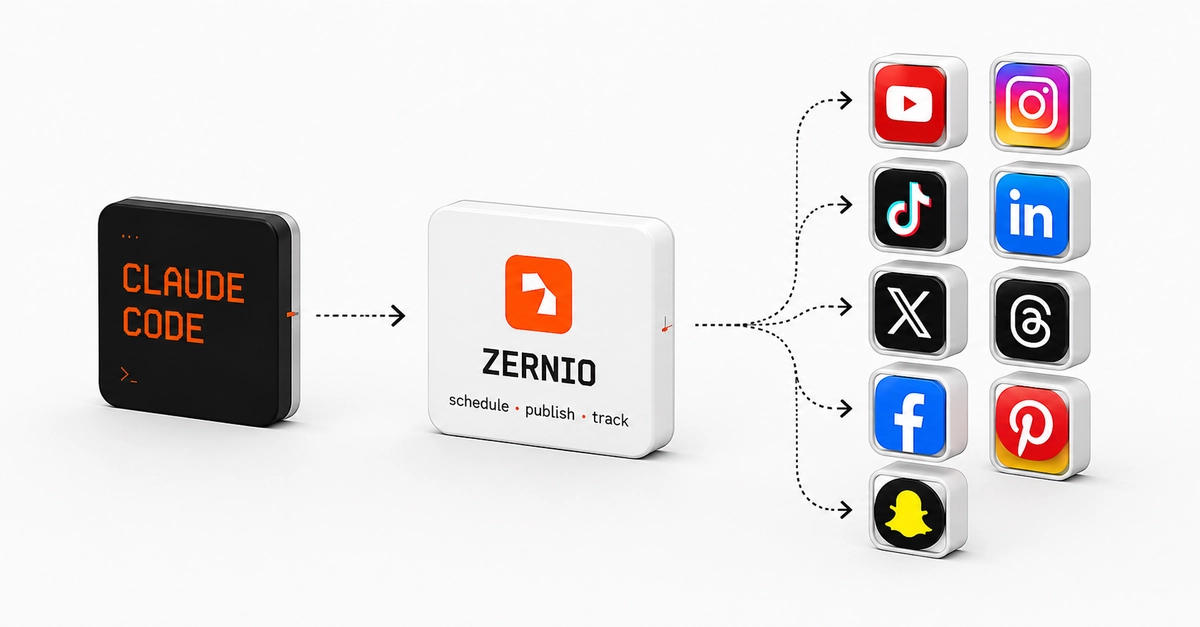
At its core, this isn’t just about hitting ‘publish’ nine times. It’s about intelligent content transformation and distribution. The setup uses Claude Code—Anthropic’s AI assistant for developers—to analyze raw media (videos, images, carousels) and then use Zernio, a platform integration service, to handle the thorny complexities of cross-platform publishing.
This is where the true architectural shift lies: abstracting away the platform-specific API hell. Forget building individual OAuth flows, meticulously managing rate limits, and deciphering unique content guidelines for each social network. Zernio acts as the universal translator, speaking directly to Claude’s output and then orchestrating the delivery across your connected accounts.
With Zernio, that’s already done. Claude talks to one API; Zernio handles the cross-platform part.
Setting up Zernio is straightforward: a few clicks to connect accounts, and you’re off. The real magic, though, is in the Claude skill downloaded from the Zernio GitHub repository. This skill bundle comes pre-loaded with platform-specific nuances – from hashtag rules and character limits to formatting expectations and even tonal cues. It’s not training an AI from scratch; it’s deploying a specialist.
How the Sausage Gets Made (and Published)
The process begins with a simple prompt to Claude Code. You point it to your media file (a local video, a cloud link) and specify the target platforms. Claude then dives in. It analyzes the content, generating platform-optimized captions, relevant hashtags, engaging titles, and even first comments designed to spark interaction. Crucially, before anything goes live, you get a preview. This is your last chance to tweak, refine, or reject.
This preview stage is more than just a sanity check. It’s where you might spot subtle but important AI-generated hooks or format conversions. For instance, a carousel might be intelligently transformed into a video for platforms that don’t natively support multi-image posts in the same way.
Once approved, Claude orchestrates the batch publishing. A single video can morph into nine distinct, platform-native posts, all scheduled and ready to go. The time saved here isn’t just a marginal gain; it’s a fundamental reallocation of creative energy.
My Take: Beyond the Hype, A Glimpse of the Future Workflow
While the headline might scream ‘autopilot social media,’ the real story is the architectural pattern it represents. We’re witnessing the maturation of AI as a workflow orchestrator, not just a content generator. The challenge with AI, historically, has been connecting its output to the messy reality of operational execution. Zernio, in this context, isn’t just a connector; it’s a sophisticated adapter, translating AI’s boundless potential into concrete, scheduled actions across diverse digital environments.
This integration highlights a growing trend: companies aren’t just building smarter AI models; they’re building smarter workflows powered by AI. The value isn’t solely in the LLM’s ability to write a caption, but in its ability to understand context, adhere to constraints, and then trigger an external service (like Zernio) to execute a complex multi-step operation.
It’s a model that, if broadly adopted, could redefine creative productivity. Imagine this pattern applied to email marketing, content localization, or even internal documentation updates. The manual grunt work, the repetitive formatting tasks, the tedious scheduling – these are precisely the kind of operational burdens that AI, coupled with strong integration layers like Zernio, is poised to eradicate. It’s less about replacing creators and more about supercharging them, freeing them from the digital equivalent of factory floor drudgery.
The Practical Implications for Creators
The immediate benefit is obvious: reclaiming hours each week. A task that consumed two hours can now be approximated in five minutes of setup and approval. This compounds rapidly, freeing up significant bandwidth for actual content creation, strategy refinement, or community engagement.
Furthermore, the system’s ability to handle format conversions and batching means you can push a single, high-quality asset across a wider net without sacrificing its effectiveness on each platform. This isn’t just about volume; it’s about intelligent reach.
🧬 Related Insights
- Read more: AI Bots Build Production-Ready Code in 6 Hours
- Read more: Taste Isn’t Vibe—It’s the Moat AI Can’t Cross
Frequently Asked Questions
What exactly is Zernio? Zernio is a service that handles integrations with various social media platforms, allowing other tools or AI models to publish content without needing to build individual connections for each one.
Can I use this with other AI models besides Claude Code? While this specific skill is designed for Claude Code, the underlying principle of Zernio as an integration layer could potentially be adapted for other AI assistants or custom scripts that can interact with APIs.
Will this replace my job as a social media manager? This tool is designed to automate repetitive posting tasks, freeing up social media managers to focus on strategy, analytics, community engagement, and creative oversight, rather than manual execution.