Everyone expected the usual parade of incremental updates at Google I/O 2026. More AI. Better AI. Faster AI. We got it. But the narrative spun this year wasn’t just about the bleeding edge; it was about handing the bleeding edge to the masses. Or so they say.
This year, the big pitch was making AI development accessible to, well, everyone. Students. Indie developers. The little guy. The promise? Moving beyond learning AI to actually building with it. It’s a nice thought. A very, very nice thought.
Why Google I/O 2026 Felt Inspiring (If You Squint)
AI moves at a breakneck pace. Every other week, a new model or framework drops. It’s enough to make your head spin. And for students, trying to translate bright ideas into actual projects? That’s the real bottleneck. Complicated setups. Scarce resources. Confusing workflows. The usual suspects.
Google’s big I/O 2026 message: they’ve supposedly smoothed those rough edges. Made the ecosystem more beginner-friendly. More practical. Focused on getting developers experimenting, not wrestling with infrastructure. A noble goal, if they can pull it off.
The Kind of AI That (Supposedly) Matters
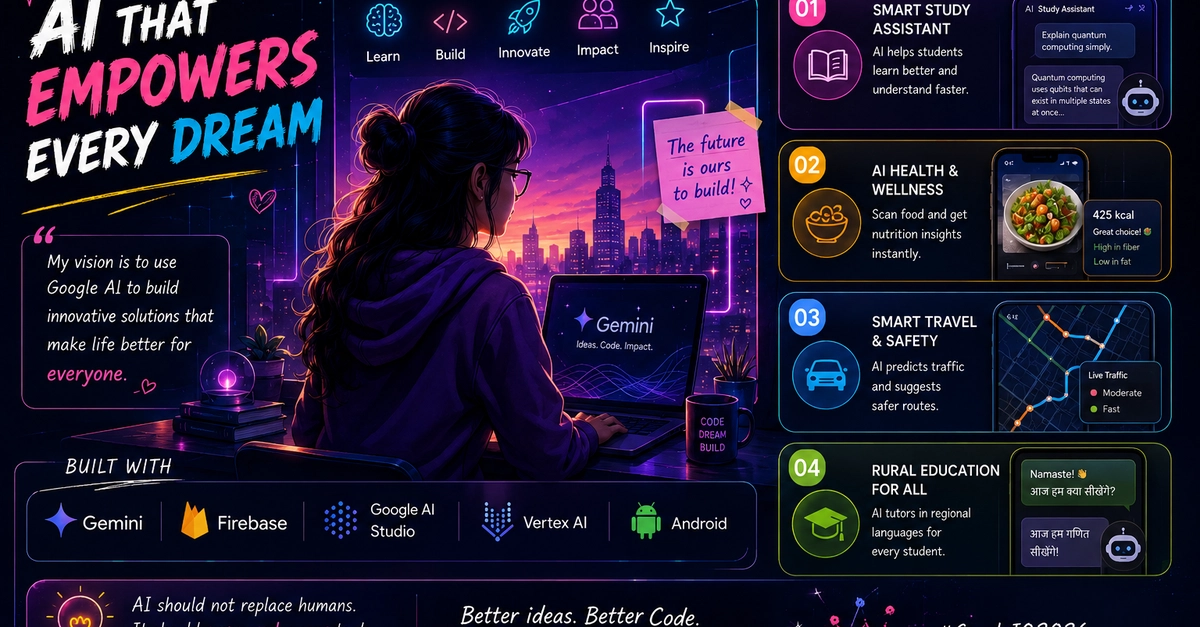
Technology only lands when it solves real problems. The author’s vision? “AI That Empowers Every Dream.” Not replacing humans. Helping them. Learning better. Living easier. Creating opportunities. It’s a warm fuzzy sentiment. Almost too warm.
This vision fuels ideas like a smart study assistant Bottom line: notes and explain tough concepts. Or a health and wellness AI that scans your food for nutritional info. Even smart traffic systems for cities. And, most touchingly, rural education in local languages. These are good ideas. The kind that sound good on a slide deck.
Why Google AI Studio (Allegedly) Caught Attention
The evolution of Google AI Studio and the Gemini ecosystem. Faster experimentation. Easier workflows. Beginner-friendly. Quicker prototyping. For the little guy without a datacenter in his basement, these are the selling points. Platforms that simplify complexity. They make innovation feel achievable.
Why This Matters for Students (The Official Line)
Students face tight budgets. Limited computing power. A distinct lack of experienced mentors. Modern AI tools, Google claims, are chipping away at these barriers. Hackathons. Projects. Turning ideas into reality. It’s an open, accessible future. Or at least, that’s the marketing brochure.
One Thing I Hope Improves (Because It Needs It)
Despite the shiny promises, beginners still face an avalanche of models, APIs, frameworks, and tools. It’s a lot. More beginner-focused learning paths, templates, and guided projects. That’s what’s needed to build confidence. Without it, the accessibility promise starts to look pretty thin.
Final Thoughts
Google I/O 2026 certainly generated buzz. The tech is evolving. The accessibility narrative is strong. But the real test isn’t in the keynote speeches. It’s in whether these tools genuinely cut through the complexity. Whether they empower the next wave of builders, or just another layer of well-funded marketing jargon. I’m watching. Skeptically.
For the first time, it feels like students can move beyond just learning AI and actually start building meaningful solutions with it.
This statement, while optimistic, glosses over the persistent realities of development. Access is one thing; true empowerment requires more than just a simplified UI.
Is Google’s AI Push Truly Democratizing Development?
It’s a fair question. Google AI Studio and Gemini’s advancements do appear to lower the initial hurdle. The drag-and-drop interfaces and pre-built templates are undeniably helpful for those new to the AI game. But the underlying complexity of AI – the data wrangling, the model tuning, the ethical considerations – these haven’t vanished. They’ve merely been tucked away, perhaps too effectively. For a student or an indie developer to truly innovate, they eventually need to peel back those layers. The risk here is creating a generation of users who can assemble AI solutions without truly understanding how they work or where their limitations lie. That’s not empowerment; that’s reliance.
Why Does This Matter for Developers?
This shift, if it holds, has massive implications. It means a broader pool of talent can enter the AI development space. More individuals can experiment, prototype, and perhaps even launch products with less upfront investment in infrastructure and specialized knowledge. For established developers, it might mean competing with a wider range of innovative solutions. More importantly, it shifts the focus. Instead of spending cycles just building the AI infrastructure, developers can focus on the novel applications and the unique problems AI can solve. It’s a move from building the engine to designing the vehicle.
🧬 Related Insights
- Read more: AI Comics Dodge Garbled Text: 70% Retry Rate Slashed to 0% with 200 Lines of Code
- Read more: st-core.fscss: Pure CSS Trading Dashboards That Ditch JavaScript Entirely
Frequently Asked Questions
What is Google AI Studio? Google AI Studio is a web-based tool for prototyping with Google’s generative AI models, designed to simplify the process of building AI-powered applications.
Will Google’s new AI tools make me an AI expert? These tools aim to lower the barrier to entry for building AI applications, making it easier to experiment and create. However, deep AI expertise still requires dedicated study and practice.
Can I use these tools for commercial projects? Yes, Google’s platforms typically allow for commercial use of applications built with their AI models, though specific terms and conditions apply and should be reviewed.